















Article Contents
Article ID: CM2622101031
Views: 30The Effect of Algorithmic Management on Psychological Well-Being of Gig Workers: Moderating Role of Perceived Autonomy
 DOI:
 PDF
⬇ Downloads: 1
1Jinnah Sindh Medical University, Karachi, Pakistan
Received: 01 June, 2026
Accepted: 14 September, 2026
Revised: 18 August, 2026
Published: 15 October, 2026
ABSTRACT:
Introduction: Algorithmic Management (AM) is a novel form of work organisation that has emerged in recent times as a tool for the growing gig economy, which can be found in the ride-sharing and online freelancing sectors. This study analysed the perceived level of algorithmic management practices and their association with the psychological well-being of gig workers, specifically perceived autonomy.
Methodology: A quantitative research design was used to gather data from 342 active gig workers from different digital labour platforms in Pakistan. Data were collected online from gig worker community groups and social media over six weeks in Pakistan. A structural equation model (SEM) was used to test the hypothesised relationships using SmartPLS version 4.0.
Results: The results showed a statistically significant negative association between algorithmic management and PWB. However, this negative association was moderated by perceived autonomy, meaning that when perceived autonomy was higher, the negative association between algorithmic management and PWB was weaker, thus protecting workers from psychological strain. Based on the Job Demands-Resources (JD-R) theory, these results were interpreted by conceptualising algorithmic management as a job characteristic that generates or intensifies specific job demands, such as surveillance, performance evaluation, and reduced discretion.
Conclusion: Perceived autonomy is considered an important job resource in the digital labour environment. The study provides contextual evidence using a multi-platform sample and perceived level of algorithmic management, and calls on algorithmic management platform designers and policymakers to prioritise well-being in algorithmic management by engaging mechanisms that encourage worker autonomy.
Keywords: Algorithmic management, gig workers, psychological well-being, autonomy perception, job demands-resources model.
1. INTRODUCTION
The digitisation of the labour market has substantially transformed the nature of labour and resulted in the formation of what is called the gig economy, where temporary and situational interactions are fully digitalised (Crisan et al., 2023). A key aspect of this change is the introduction of algorithmic management (AM), which can be described as deploying software algorithms to assign, track, organise, and assess work (Parent‐Rocheleau & Parker, 2022). AM systems have taken over the everyday lives of millions of workers, whether on a ride-hailing app or an online freelancing platform, determining how workers are assigned tasks, how their performance is evaluated, and how their accounts are terminated (Zhang et al., 2025). Although AM has brought efficiency and scalability to platform operators, it has sparked great academic discussion around the Psychological Well-being (PWB) of workers. Empirical studies conducted over the past few years indicate that the constant and intrusive surveillance inherent in AM can exacerbate stress, anxiety and emotional fatigue (Félix et al., 2023; Zhao & Liu, 2024). This phenomenon could be linked to a “chilling effect”, in which knowledge of the permanent algorithmic surveillance causes employees to police themselves and restrict behaviours even when there is no actual sanction. This phenomenon tends to increase psychological pressure. The widespread use of algorithmically mediated management creates a distinct psychosocial environment in which human managerial judgment is partly replaced by automated and often opaque decision-making. These practices can generate feelings of powerlessness, commodification, and dehumanisation (Zha et al., 2026; Spreitzer et al., 2017; Wan et al., 2024a; Parent‐Rocheleau & Parker, 2022), each of which may impose distinct cognitive and emotional demands on workers. In this study, algorithmic management (AM) refers to workers’ perceived exposure to algorithmically mediated monitoring, task assignment, and performance control.
While gig work has garnered significant scholarly interest, the particular mediating processes that link AM to PWB have not been well explored in an integrated moderation framework. Past studies have mostly highlighted performance, platform regulation, or overall job satisfaction, but paid insufficient attention to the psychological processes (Wan et al., 2024a). There are several important functions that are performed in algorithmic management, including monitoring, evaluation, and task assignment (Parent‐Rocheleau & Parker, 2022). These functions have the capacity to create or exacerbate certain cognitive and emotional stresses in people working in a job. However, as (Möhlmann et al., 2021) have found, algorithmic coordination of workers on the platforms changes the power dynamics between workers and platforms, making it difficult for labour to counterbalance. It is important to note here that the perceived autonomy, or how much freedom employees have in their work, work hours and work environment, deserves further study. According to Self-Determination Theory, autonomy is a key psychological need for motivation and well-being (Ryan & Deci, 2019). Platforms have been associated with a high degree of flexibility and freedom for gig workers, but this can often be different when it comes to the experiences of algorithmically mediated work (Veen et al., 2020). This paradox, which we can call the autonomy paradox, indicates that although workers may formally be able to decide when to be online, their perceived autonomy may be restricted through the use of algorithmic task allocation, the dynamics of the pricing system, and gamified reward systems (Gandini, 2019; Wood et al., 2019). Although the autonomy paradox is a conceptual framing used here to motivate the research, it was not directly operationalised as a tested construct in this study. The discrepancy between formal and perceived autonomy may have important implications for workers’ well-being.
This study focuses on the relationship between AM and gig workers’ PWB and examines whether perceived autonomy buffers this association. Relying on the Job Demands-Resources (JD-R) theory (Bakker et al., 2023), AM practices are conceptualised as job characteristics that can generate or intensify job demands through constant surveillance, limited transparency in assessment, and inconsistent enforcement of algorithmic rules (Bakker et al., 2023). In contrast, perceived autonomy may serve as a key employment resource that can help allay these demands by restoring the feeling of agency and predictability (De Stefano et al., 2021; Bakker & Demerouti, 2024; De Stefano & Aloisi, 2019). However, there has been limited empirical integration of these constructs into a validated moderation model. Past research has shown both positive and negative outcomes: some describe the stressfulness and unpredictability of algorithmic surveillance (Bucher et al., 2021; Duggan et al., 2023; Liu et al., 2024; Liu & Yin, 2024). While past studies have explored the link between AM and well-being (Zha et al., 2026; Zayid et al., 2024) as well as the moderating effect of autonomy in the JD-R approach (Wan et al., 2024b), this study contributes to the existing body of knowledge through its analysis of (a) a multi-platform sample of gig workers comprising location-based (ride-hailing) and online (freelance digital tasks) gig workers, as explained in Section 2.1, and (b) a focused measure of perceived AM covering real-time task monitoring, algorithmic task assignment, and algorithmic control over work performance, as explained in Section 2.2. Respondents were recruited from freelance platforms operating in the online task-based segment of the gig economy, in addition to the ride-hailing and delivery platforms mentioned above.
Thus, the main goal of this study is to examine the direct association between algorithmic management and the PWB of gig workers in an empirical study and to examine the moderating variable of perceived autonomy in this correlation. This study aims to accomplish three distinct goals: (1) examine the association between the perceived level of algorithmic management and the PWB of gig workers; (2) assess gig workers’ perceived level of autonomy as a construct within the moderation model; and (3) explore the role of perceived autonomy in moderating the strength of the AM effect on well-being. This study operationalises AM within the JD-R theoretical architecture and validates the moderation model using PLS-SEM. The findings are intended to provide practical guidance for platform
Based on the theoretical framework and literature reviewed above, the following hypotheses are proposed.
H1: Algorithmic management is negatively associated with the PWB of gig workers.
H2: Perceived autonomy is positively associated with the PWB of the gig workers.
H3: Perceived autonomy moderates the relationship between algorithmic management and PWB.
2. METHODOLOGY
2.1. Research Design, Sampling and Data Collection
A cross-sectional survey design was used to examine the hypothesised relationships between algorithmic management, perceived autonomy, and PWB. The target population comprised active gig workers who currently participate in gig work through digital platforms. Eligible participants reported current work on a digital labour platform during the data collection period, working on location-based (ridesharing) and online (freelance digital tasks) platforms. All participants were selected from one particular national setting of the gig economy, Pakistan, and the participants came only from urban and peri-urban areas of Lahore, Karachi, and Islamabad/Rawalpindi, where the platforms were more active. Participants from rural settings with fewer platforms were not included in the sample. This geographical concentration should be considered when generalising the findings to other regulatory, cultural, or platform market contexts. A total of 342 valid answers were obtained during a six-week period using a structured online questionnaire that was sent to special gig worker communities and social media groups. The sample size (N = 342) exceeded the minimum recommended threshold established by (Hair et al., 2022) for detecting both direct and interaction effects in PLS-SEM models of such complexity. Based on the inverse square root method and the number of arrows pointing to the endogenous construct (three predictors, including the interaction term), the minimum required sample size was 160, and the final sample of 342 exceeded this threshold. Consistent with the common minimum sample size guidelines for PLS-SEM, no formal a priori power analysis (for example, G*Power) was conducted to determine this threshold, which is acknowledged in the limitations and future direction section.
Purposive sampling was used to ensure that only workers who had firsthand experience in terms of the algorithmic distribution of tasks and performance appraisal were included. It is acknowledged that purposive sampling may introduce self-selection bias, as workers who were more engaged with the topic or more severely affected by AM may have been over-represented in the limitations and future direction section. Informed consent was obtained, and all data were anonymised before analysis. This study is best characterised as primarily confirmatory, testing three pre-specified hypotheses (H1–H3) derived from JD-R theory. The assessment of predictive relevance (Q²) also provides an explanatory element regarding the model’s out-of-sample explanatory power. A wide range of platform types was used to attract respondents, which increased the heterogeneity of the sample; however, because purposive sampling was employed, this heterogeneity does not, by itself, guarantee the generalisability of the results. The instruments were extensively redesigned from valid scales used in previous research studies. Before data collection, all scale items were considered conceptually relevant to the gig work context. Items were adapted and not simply copied so they would fit within the context of the items, but original wording was used where it was relevant, and some minor language changes were made to reflect the platform labour context. A limitation of this is the lack of formal expert panel and content validity process. Future work should do this. The adaptation process involved three steps: First, items were pilot tested in a platform work setting with a small sample of gig workers (n = 15) and some changes were made in items wording as needed to ensure items were clear and understandable; Second, the adapted items were tested against the original measures to ensure that the meaning of the constructs was kept intact. Such a procedure serves as preliminary evidence of content and face validity, but it does not include a structured expert panel content validity test, such as content validity index ratings by experts in the subject matter, which represents a methodological limitation for further scale validation research in this area.
2.2. Measurement Instruments and Common Method Bias Assessment
The Algorithmic Management scale initially comprised 10 items modified by (Parent‐Rocheleau et al. 2024), representing the core dimensions of perceived AM exposure: real-time task monitoring, automated performance ratings, and algorithmic task assignment. Although AM is a multidimensional construct, this study focuses on three key aspects represented by the retained indicators. These aspects include real-time monitoring, algorithmic task assignment, and algorithmic control over work performance. This operationalisation captures workers’ perceptions of algorithmic control intensity rather than objective system-level metrics. Perceived Autonomy was a 6-item scale based on (Zhu et al., 2024), which included the latitude of decision-making and scheduling, task acceptance, and work pace. The Psychological Well-Being scale is an 8-item scale which relies on existing flourishing and PWB scales applied to the work setting (Zayid et al., 2024), including the dimensions of positive affect, lack of distress, engagement, and sense of purpose. All items were graded on a 5-point Likert scale ranging from 1 to 5 (strongly disagree/strongly agree). Age, gender, months of platform tenure, and average working hours per week were collected as demographic and work-related variables. These variables were not included as covariates in the final structural model. To assess common method bias (CMB), both Harman’s single-factor test and full collinearity VIF assessment were employed. The single-factor test indicated that no single factor accounted for most of the covariance. Additionally, all full collinearity VIF values were below the recommended threshold of 3.3 (Ringle et al., 2012).
2.3. Indicator Selection and Item Purification
All scale items were administered in the survey as part of the full measurement. Item reduction was conducted only during the measurement model evaluation stage in SMART-PLS. Indicators were removed sequentially if they exhibited low outer loadings (< 0.70), cross-loadings, or redundancy, which weakened convergent and discriminant validity. This approach follows the established PLS-SEM guidelines, which recommend retaining indicators that demonstrate adequate reliability while maintaining the conceptual coverage of the construct domain (Hair et al., 2022). Importantly, item removal was not performed solely on statistical grounds; retained indicators were selected to ensure the representation of the theoretical measures of each construct (monitoring, evaluation, and task assignment for algorithmic management; scheduling and decision latitude for autonomy; and emotional well-being and purpose for PWB). A summary of the removed indicators and their loadings is provided in the Results section. The final retained measurement items used in the PLS-SEM analysis are provided in the Appendix A.
2.4. PLS-SEM Analysis Strategy and Rationale
Data analysis was conducted in two consecutive stages using SmartPLS 4.0. PLS-SEM was selected because the study tests pre-specified hypotheses and includes a latent interaction term for moderation. The analysis also evaluated the predictive relevance of the model. This method is suitable for the model structure and distributional characteristics of the survey data (Hair et al., 2022). There were specific reasons why PLS-SEM was chosen as the method of analysis.
(a) PLS-SEM supports the estimation of the latent interaction term AM × AUT in the proposed moderation model.
(b) This study tests three pre-specified hypotheses based on the JD-R framework and assesses the predictive relevance of the structural model.
(c) The model includes a moderate number of indicators, and the survey data show distributional characteristics that support the use of PLS-SEM.
2.5. Measurement and Structural Model Assessment
The first step in conducting the analysis included the evaluation of the measurement model: indicator reliability (outer loadings), internal consistency reliability (Cronbach’s alpha and Composite Reliability), as well as convergent and discriminant validity (AVE and HTMT). The second stage involved estimating the structural model to test the direct and moderating hypotheses. Perceived autonomy was moderated by establishing a latent interaction measure (AM × AUT) using SmartPLS 4.0. This is a fitting method when the predictor and moderator are both characterised as reflective constructs (Hair et al., 2022). The moderation effect was analysed using bootstrapping with 5,000 resamples. To decode the interaction, the conditional effects of algorithmic management on PWB were tested at four levels of perceived autonomy: low (−1 SD), mean, high (+1 SD), and very high (+2 SD).
Fig. (1) presents the conceptual model of this study. Perceived autonomy was positioned as the moderating variable (Mod), with an interaction term (AM × AUT) included in the structural model. The model corresponds to the three hypotheses (H1–H3) formally stated in the Introduction.
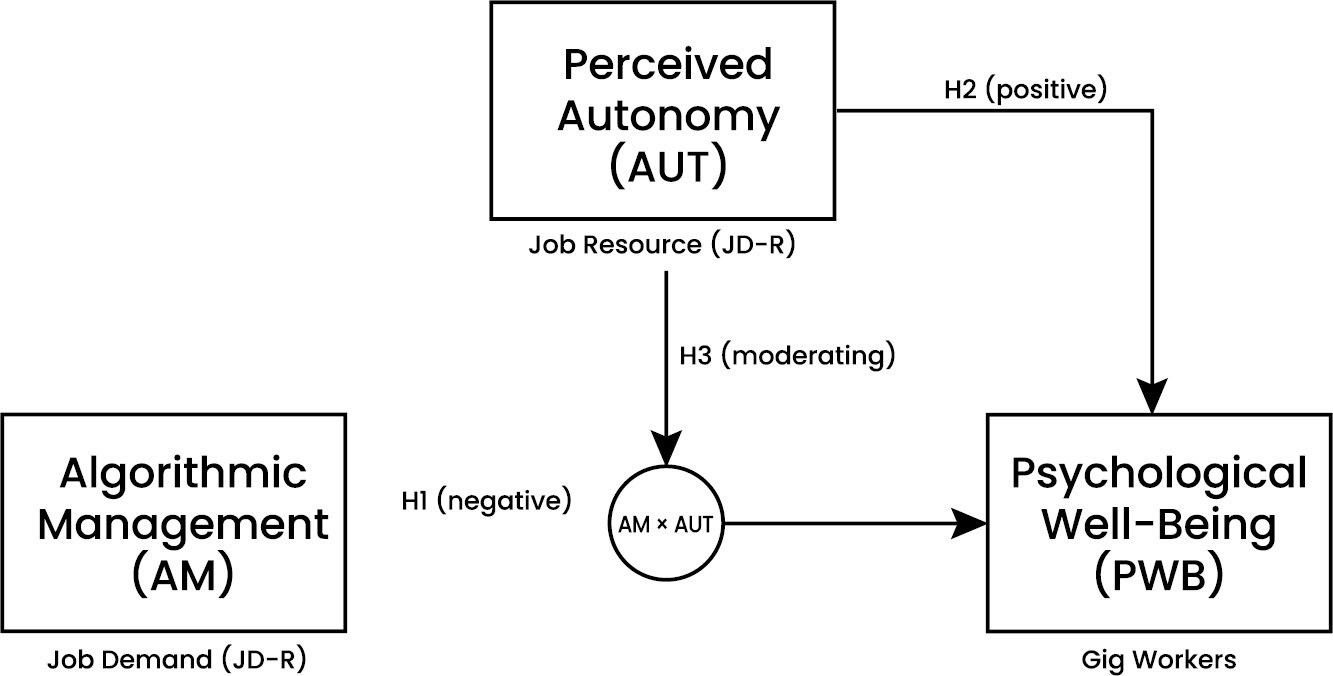
Fig. (1). Conceptual research model showing AM → Psychological well-being with perceived autonomy as a moderator.
3. RESULTS
The demographics of the respondents are presented in Table 1. It is evident that the sample used for the research was predominantly male (62%), which is similar to the general gender trends in the gig economy industry. The largest proportion of participants were aged 25–34 years, implying the young age of the workforce.
Table 1. Demographics of respondents (N = 342).
| Category | Sub-category | Frequency | Percentage (%) |
| Gender | Male | 212 | 62.0 |
| Female | 130 | 38.0 | |
| Age Group | 18-24 | 45 | 13.2 |
| 25-34 | 158 | 46.2 | |
| 35-44 | 96 | 28.1 | |
| 45+ | 43 | 12.5 | |
| Platform Type | Ride-hailing/Delivery | 205 | 59.9 |
| Online Freelancing | 137 | 40.1 |
3.1. Assessment of the Measurement Model
The descriptive statistics and correlation tests are presented in Table 2. The negative association between AM and PWB (r = -0.458) was of moderate magnitude based on Cohen’s (1988) benchmarks. Higher perceived exposure to AM was associated with lower levels of well-being in this sample. The protective value of autonomy is supported by the positive association between perceived autonomy and PWB (r = 0.512). The moderate negative relationship between AM and perceived autonomy (r = -0.341) indicates that a higher perceived exposure to AM is associated with a lower perceived autonomy among workers. It should be noted that this correlation does not imply a causal relationship, as no direct structural path from AM to perceived autonomy was modelled or tested in this study. This correlation pattern is consistent with the theoretical reasoning of the JD-R model in an algorithmic setting. This alignment with JD-R theory is offered as a plausible post hoc interpretation of the observed correlational pattern, not as confirmatory evidence of a causal or directly tested theoretical relationship. Applying the same (Cohen’s, 1988) benchmarks used above, the AM–Autonomy correlation (r = -0.341) is comparable in magnitude to a moderate association and is labelled consistently with the AM–PWB correlation on that basis. The strength of correlation is measured in terms of guidelines for Cohen’s (1988) standards (|r| ≈ 0.10 = weak, 0.30 = moderate, 0.50 = strong); the correlation between AM and PWB (r = -0.458) is accordingly reported as moderate to strong throughout this section, consistent with the terminology used above.
Table 2. Descriptive statistics and correlations.
| Construct | Mean | SD | 1 | 2 | 3 |
| 1. Algorithmic Management | 3.82 | 0.94 | 0.812 | – | – |
| 2. Perceived Autonomy | 2.95 | 1.02 | -0.341 | 0.845 | – |
| 3. Psychological Well-Being | 3.15 | 0.88 | -0.458 | 0.512 | 0.796 |
Table 3 affirms strong discriminant validity for all three constructs, as all the construct pair values are below 0.85.
Table 3. Heterotrait–monotrait ratio (HTMT).
| Construct Pair | HTMT |
| AM – AUT | 0.62 |
| AM – PWB | 0.71 |
| AUT – PWB | 0.68 |
Note: All HTMT values were below the threshold of 0.85, confirming discriminant validity.
Table 4 displays the item purification results for the items decision and reason for retaining or dropping the factor loading.
Table 4. Item purification results (Initial vs Final Retained Indicators).
| Construct | Item Code | Item Statement (Short) | Decision | Reason |
| Algorithmic Management (AM) | AM1 | Platform monitors my work activities in real time | Retained | Loading ≥ 0.70 |
| AM2 | Platform closely tracks my performance while working | Dropped | Loading < 0.70 / redundancy | |
| AM3 | Ratings/scores are generated automatically | Dropped | Loading < 0.70 / cross-loading | |
| AM4 | Automated ratings affect access to future work | Dropped | Loading < 0.70 | |
| AM5 | Tasks assigned mainly by algorithm not human | Retained | Loading ≥ 0.70 | |
| AM6 | I have little influence over task allocation | Dropped | Loading < 0.70 | |
| AM7 | Important work decisions made automatically | Dropped | Loading < 0.70 | |
| AM8 | Platform imposes penalties via automated processes | Dropped | Loading < 0.70 | |
| AM9 | Unclear how platform makes decisions | Dropped | Loading < 0.70 | |
| AM10 | Algorithms strongly control how I perform work | Retained | Loading ≥ 0.70 | |
| Perceived Autonomy (AUT) | AUT1 | Control over when I start/stop working | Retained | Loading ≥ 0.70 |
| AUT2 | Free to decide which tasks/jobs to accept | Dropped | Loading < 0.70 / redundancy | |
| AUT3 | Can decline tasks without feeling forced | Retained | Loading ≥ 0.70 | |
| AUT4 | Can decide pace of completing work | Retained | Loading ≥ 0.70 | |
| AUT5 | Flexibility organizing schedule around needs | Dropped | Loading < 0.70 | |
| AUT6 | Meaningful control over how I carry out work | Dropped | Loading < 0.70 | |
| Psychological Well-Being (PWB) | PWB1 | Feel emotionally well doing platform work | Retained | Loading ≥ 0.70 |
| PWB2 | Work gives me a sense of purpose | Retained | Loading ≥ 0.70 | |
| PWB3 | Feel engaged in platform work | Dropped | Loading < 0.70 | |
| PWB4 | Maintain positive state of mind while working | Dropped | Loading < 0.70 | |
| PWB5 | Often feel stressed because of platform work (R) | Dropped | Loading < 0.70 | |
| PWB6 | Often feel emotionally drained by platform work (R) | Dropped | Loading < 0.70 | |
| PWB7 | Work is worthwhile and meaningful | Dropped | Loading < 0.70 / redundancy | |
| PWB8 | Overall feel psychologically healthy in platform work | Retained | Loading ≥ 0.70 |
Note: (R) indicates reverse-coded items.
Note: Items were removed sequentially based on low outer loadings (<0.70) and cross-loading concerns. Retained items were selected to preserve the conceptual coverage of each construct domain. Prior to purification, all constructs were estimated using the full item sets (10, 6, and 8 items). The initial model showed several indicators with loadings below 0.70 and cross-loading issues. After purification, three indicators per construct were retained, which improved the AVE and CR. While this improved psychometric properties, it may reduce domain coverage, particularly for the multidimensional nature of algorithmic management itself. Specifically, retaining a single indicator for each of the monitoring, evaluation, and task assignment sub-measures of algorithmic management means that facets such as automated penalty enforcement, opacity of decision rules, and rating-based access restrictions are no longer directly represented in the measurement model, even though they were part of the original conceptualisation. As a result, the AM construct operationalised here should be interpreted as capturing perceived exposure to core algorithmic control mechanisms rather than the full theoretical breadth of algorithmic management, and comparisons with studies using broader multi-item batteries should be made with this narrower operationalisation in mind.
The measurement model was evaluated to assess the construct reliability and validity. The results of the measurement model assessment are presented in Table 5.
Table 5. Measurement model assessment: reliability and validity.
| Construct / Item | Loading | Cronbach’s α | CR | AVE |
| Algorithmic Management (AM) | ||||
| AM1 – Real-time task monitoring | 0.82 | 0.841 | 0.873 | 0.659 |
| AM5 – Algorithmic task assignment | 0.79 | |||
| AM10 – Algorithmic control over work performance | 0.84 | |||
| Perceived Autonomy (AUT) | ||||
| AUT1 – Control over schedule | 0.86 | 0.857 | 0.893 | 0.714 |
| AUT3 – Freedom to decline tasks | 0.83 | |||
| AUT4 – Work pace discretion | 0.85 | |||
| Psychological Well-Being (PWB) | ||||
| PWB1 – Emotional well-being | 0.81 | 0.823 | 0.862 | 0.633 |
| PWB2 – Purpose and engagement | 0.85 | |||
| PWB8 – Overall psychological health | 0.78 | |||
Note: CR = Composite Reliability; AVE = Average Variance Extracted). All values exceeded the established thresholds (α > 0.70, CR > 0.70, AVE > 0.50, HTMT < 0.85).
Table 5 displays the results of the reliability and convergent validity tests for the measurement model used in the analysis.
Indicator loading was above the benchmark of 0.708, indicating that the indicators were reliable. Internal consistency reliability was established since Cronbach’s alpha and composite reliability had values of more than 0.70. Convergent and discriminant validities were indicated by AVE values above 0.50 and HTMT values below 0.85.
The SmartPLS path diagram used in this study, shown in Fig. (2), depicts the latent variables, their indicators, and the estimated path coefficients from the PLS algorithm. The negative association between algorithmic management and PWB and the moderating path from the interaction term AM × AUT are visible in the diagram and are consistent with the path coefficients reported in Table 6.
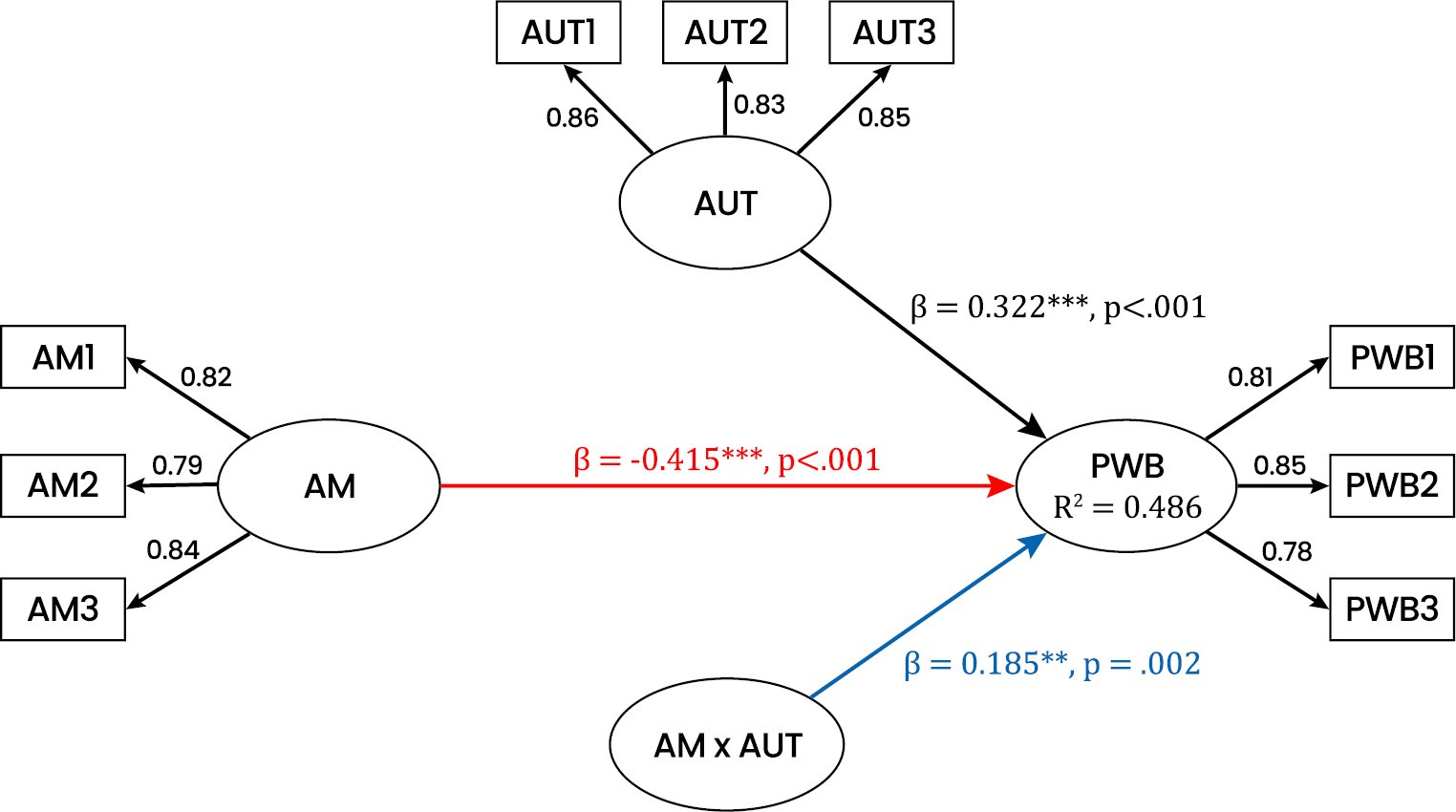
Fig. (2). SmartPLS structural path diagram with path coefficients.
3.2. Structural Model Assessment
After the measurement model was validated, the structural model was evaluated to examine the postulated direct effects. Table 6 presents the path coefficients, t-statistics, and p-values for all the structural paths. In support of H1, algorithmic management had a strong negative association with PWB (β = −0.415, p < 0.001). This result is consistent with the hypothesis that a higher perceived AM is associated with lower PWB among workers. In support of H2, perceived autonomy had a positive direct association with PWB (β = 0.322, p < 0.001), supporting its role as an important job resource in the proposed model.
Table 6. Structural model path coefficients.
| Hypothesis | Path | Beta (β) | T-Statistic | P-Value | Result |
| H1 | AM -> PWB | -0.415 | 6.892 | 0.001 | Supported |
| H2 | AUT -> PWB | 0.322 | 5.431 | 0.001 | Supported |
| H3 | AM*AUT -> PWB | 0.185 | 3.120 | 0.002 | Supported |
Note: AM = Algorithmic Management. AUT = Perceived Autonomy. PWB: Psychological Well-Being. All estimates were based on 5,000 bootstrap resamples.
Fig. (3) presents the bootstrapping results, which visualise the stability of the path coefficients. The narrow confidence intervals around the path estimates confirms the statistical paths. Bias-corrected bootstrapping with 5,000 resamples was used to construct 95% confidence intervals for all structural paths.
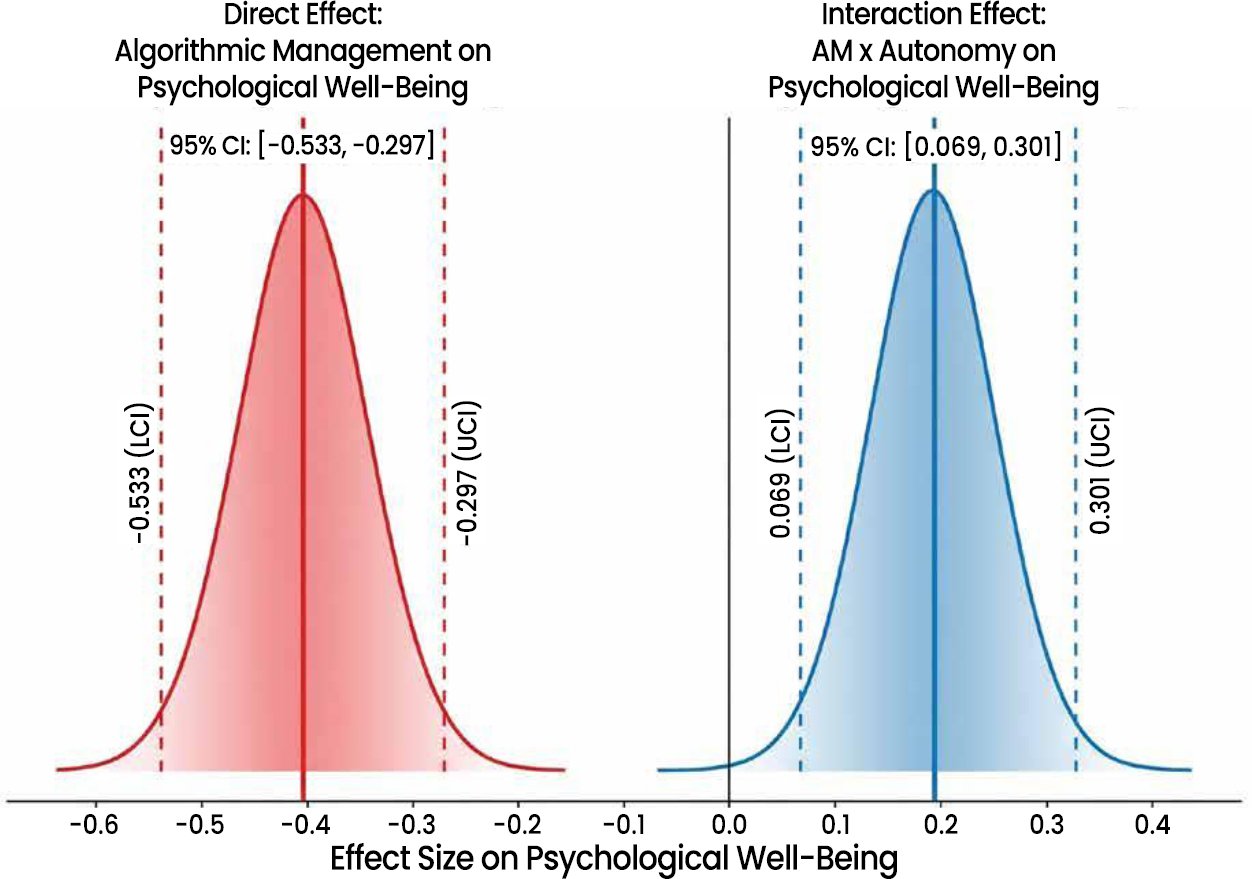
Fig. (3). Bootstrapping confidence interval plot.
3.3. Moderation Analysis
The key purpose of this study was to examine the moderating role of perceived autonomy. The interaction term (AM × AUT) was significant (β = 0.185, t = 3.120, p = 0.002). The positive interaction coefficient indicates that higher perceived autonomy weakens the negative association between AM and PWB. In other words, the adverse influence of AM on people’s well-being is less pronounced for workers who perceive themselves as more autonomous. Perceived autonomy functioned as a moderating factor. The results indicate that the negative association between AM and PWB is weaker among workers who report greater autonomy, since those workers who feel that they still have some freedom in planning their schedule and performing specific tasks are less sensitive to the negative effects of this control. The entire output of the moderation analysis, probing the conditional effects at different levels of the moderator, is presented in Table 7.
Table 7. Moderation analysis: Conditional effects of AM on PWB at levels of perceived autonomy.
| Autonomy Level | Effect (β) | SE | t-value | LLCI (95%) | ULCI (95%) | Significant |
| Low (−1 SD) | −0.612 | 0.071 | 8.62 | −0.752 | −0.472 | Yes (p < 0.001) |
| Mean Level | −0.415 | 0.060 | 6.89 | −0.533 | −0.297 | Yes (p < 0.001) |
| High (+1 SD) | −0.218 | 0.068 | 3.21 | −0.351 | −0.085 | Yes (p = 0.001) |
| Very High (+2 SD) | −0.021 | 0.082 | 0.26 | −0.182 | 0.140 | No (p = 0.797) |
| Interaction (AM × AUT) | 0.185 | 0.059 | 3.12 | 0.069 | 0.301 | Yes (p = 0.002) |
Note: 5,000 bootstrap resampling. LLCI/ULCI = lower and upper 95% confidence interval limits, respectively. SD = Standard Deviation. Conditional effects were calculated using the unstandardised model coefficients and the observed standard deviation of perceived autonomy; therefore, the simple slopes do not equal the arithmetic sum of the standardised coefficients reported in Table 6.
Table 7 provides a strong indication of the buffering moderation process. The conditional effect of AM on well-being was very high at low levels of autonomy (β = −0.612), and at very high levels, the effect became nearly non-significant (β = −0.021). The coefficient of interaction with a bootstrapped confidence interval whose value is greater than zero (0.069, 0.301) indicates the strength of the moderation. At three of the four probed levels, AM remained a statistically significant negative correlate of well-being, indicating that algorithmic management poses a well-being risk unless workers experience near-maximum perceived autonomy. Specifically, the effect is statistically significant at the low, mean, and high autonomy levels, and becomes non-significant only at the very-high (+2 SD) level (β = -0.021, p = 0.797).
The moderating effect is illustrated in Fig. (4). The graph demonstrates the relationship between AM and PWB at low (−1 SD) and high (+1 SD) perceived autonomy levels. The negative slope of the low-autonomy line was steeper, indicating a stronger negative association between AM and PWB at lower levels of perceived autonomy. In contrast, the high-autonomy line was flatter, indicating a weaker negative association. In contrast, buffering is indicated by the flatter line of High Autonomy.
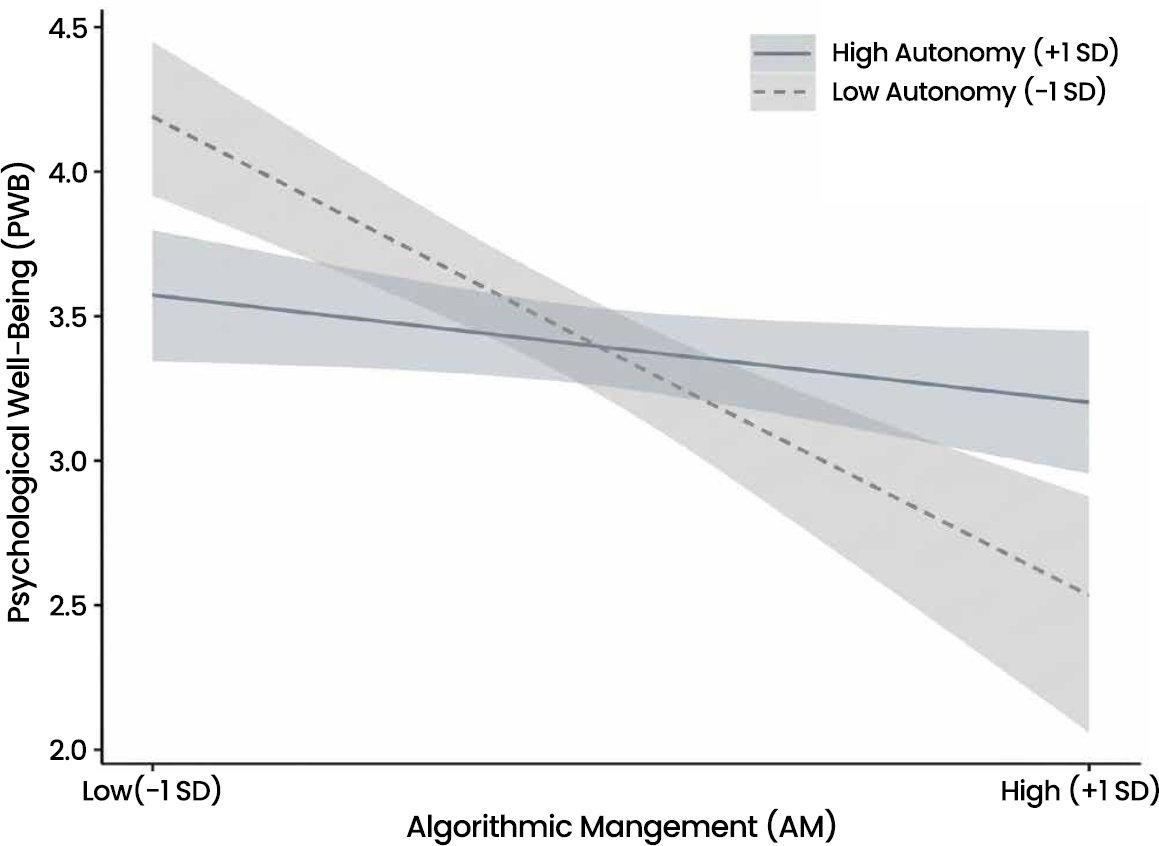
Fig. (4). Moderation slope graph (high/low autonomy lines).
3.4. Explanatory Power and Effect Sizes
The model explains 48.6% of the variance in PWB (R² = 0.486), which represents a moderate level of explanatory power in behavioural research, consistent with the benchmarks provided by (Cohen, 1988) and reported by (Hair et al., 2022) (Fig. 5). Predictive relevance was assessed using the Q² values obtained through the PLSPredict procedure. The Q² value for the PWB construct was 0.382 which was an above zero value, hence predictive relevance was obtained. This Q² value is not explained by the structural model. The substantive contribution of each predictor was measured by calculating the effect size (f²). According to the benchmarks established by (Cohen, 1988) cited in (Hair et al., 2022) algorithmic management has an effect size of f² = 0.19 which is considered a medium effect size and interaction has an effect size of f² = 0.06 which is considered a small effect size. This is similar to the typical effect size found in survey-based research for moderation effects. In terms of substantive effects, the algorithmic management had a larger effect (f² = 0.19) than the interaction (f² = 0.06). The structural relationships were interpreted as reported in the path coefficients given in Table 6.
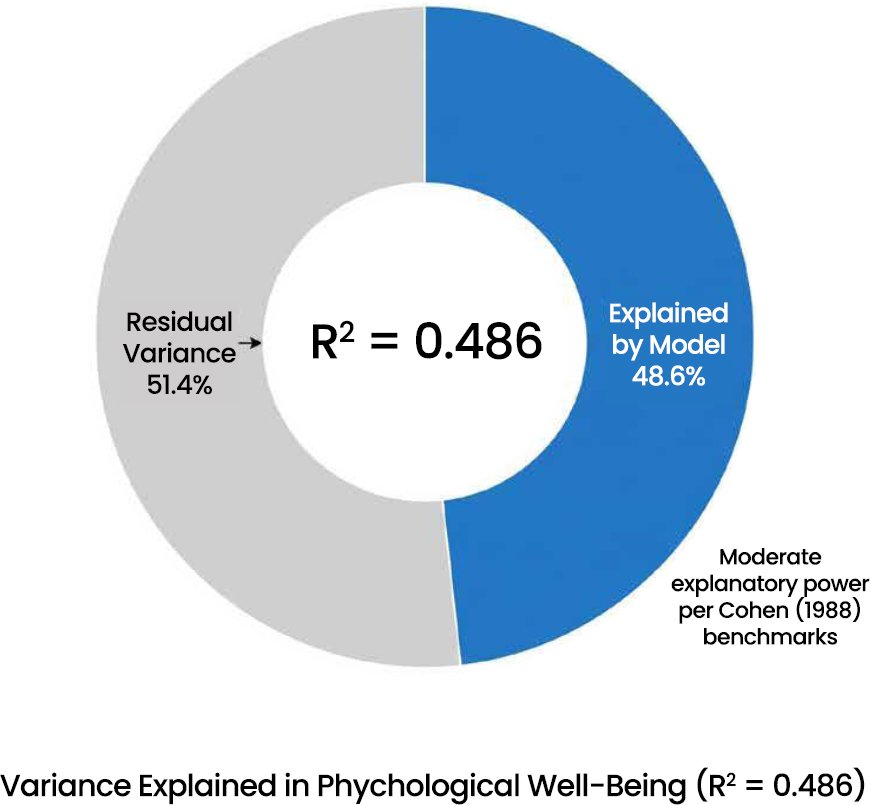
Fig. (5). Variance explained (R²) diagram.
4. DISCUSSION
The results of the present study suggest that the level of the gig workers’ PWB is a negative predictor of algorithmic management; this finding aligns with recent studies (Félix et al., 2023; Zhao & Liu, 2024). The ever-present digital surveillance and artificial decision-making result in a high-pressure setting that resembles a digital panopticon and causes anxiety and emotional burnout. These findings are consistent with the JD-R perspective, in which AM functions as a job characteristic that can generate or intensify hindrance demands through surveillance, evaluation pressure, and limited control over work processes. In contrast to the conventional approach to management, where human empathy could be seen as a buffer to cruel instructions, workers feel commoditised and unheard due to the cold objectivity of algorithms (Benlian et al., 2022). The strength of the observed negative association highlights the importance of recognising and addressing the psychosocial risks associated with platform work design (Curchod et al., 2021).
Some previous studies have highlighted the potentially empowering role of algorithmic feedback and platform-based flexibility; however, the present findings align more strongly with research emphasising the controlling and psychologically stressful nature of algorithmic management (Pilatti et al., 2024). This suggests that the relationship between AM and PWB may vary across different work conditions and platforms. On a theoretical level, the differences between the existing body of literature and the current study can be understood in light of the interaction of the Job Demands-Resources (JD-R) model and Self-Determination Theory (SDT) (Neufeld, 2026). Within the JD-R framework, AM is conceptualised as a job characteristic that can generate hindrance demands and drain psychological resources. Within the framework of self-determination theory, autonomy represents an important psychological need that can support well-being (Neufeld, 2025).
This negative association can be interpreted through the JD-R model because AM can generate hindrance demands, such as unpredictability, opacity, and limited opportunities to challenge platform decisions (Neufeld, 2025). Work is assigned and judged based on algorithms that use criteria that cannot be negotiated or appealed to by workers, causing constant cognitive overload, feelings of powerlessness, and emotional exhaustion (Bucher et al., 2021; Duggan et al., 2023). In contrast to human supervision, algorithmically mediated work processes rely more heavily on automation and data-driven evaluation. These processes can contribute to feelings of limited control and emotional strain (Konjen, 2025), commodifying labour through constant datafication, and have been shown to be associated with higher levels of emotional suffering and loss of sense of purpose.
An important finding was that perceived autonomy weakened the negative association between AM and PWB. In line with Self-Determination Theory (Ryan & Deci, 2019) and recent empirical evidence (Wan et al., 2024a), the findings support the proposition that autonomy can buffer the well-being risks associated with algorithmically mediated work demands. Providing workers with greater control over scheduling and task acceptance may help mitigate the adverse well-being effects of algorithmically mediated work (Liu & Yin, 2024). The significant interaction effect indicates that one may experience the so-called autonomy paradox, and even in a highly controlled system, subjective feelings of liberty can maintain mental health (Noponen et al., 2024). This finding supports H3 and is consistent with the JD-R model’s resource-buffering hypothesis, whereby job resources attenuate the detrimental consequences of job demands on well-being.
These findings can be compared those with of the prior literature to find some critical nuances. Some previous studies have already pointed to the economic precarity of gig work; the present study extends this literature by showing that perceived AM is negatively associated with PWB beyond the broader challenges associated with gig work. The present results provide a more balanced picture than those of studies that focus primarily on the negative aspects of gig work (Caza et al., 2022). Other factors, such as social support and financial resilience, may also be related to worker well-being. Future research should examine these factors alongside AM and perceived autonomy.
Although platform-type differences were not empirically tested in this study, it is plausible that the results would vary somewhat by platform type. Location-based gig work, for instance, may compound physical and time-related demands with the higher surveillance density of GPS-based tracking and the greater difficulty of disconnecting from algorithmic demands when work is embodied in a physical space. Distinguishing between platform types and developing type-specific regulatory and design recommendations represent important directions for future research. These findings have practical implications for platform operators. In a bid to maximise worker retention and health, platforms should redesign algorithms to provide real autonomy as opposed to fabricated flexibility (Wan et al., 2024b). This may include increased visibility in the way jobs are distributed and allowing gig workers to have the right to disconnect without any penalty. From the perspective of policymakers, the results of this study provide the basis for the development of a regulation policy that will not only ensure proper categorisation of workers but will also involve the implementation of algorithmic transparency and human-in-the-loop appeal processes. The results emphasise the necessity of stopping the consideration of platform work in either negative or positive terms and adopting a contingency approach.
The practical implications of these results are significant in several ways. Design features which enable autonomous decision making are not only a worker’s option but can also be a tool that can help the wellbeing of platform operators. Some of the possible approaches include giving workers the ability to opt out of assignments if their algorithms indicate that they will be penalised for doing so, explaining the algorithm in a understandable way, reducing the number of times that workers are prompted to rate their performance by algorithms and adding offline or “do not disturb” periods. In the perspective of HR professionals dealing with a platform-based or hybrid organization, the findings suggest the need to monitor, along with monitoring occupation demand as a proxy for occupational health, the exposure to algorithmic control. Furthermore, HR professionals need to be educated on identifying signs of algorithm-related stress. Regarding policymakers and regulators, minimum standards requirements based on pay or workload may have limited effectiveness as a policy instrument; there should be a degree of worker control over the scheduling and task assignment of workers, and there should be mandatory disclosures of automated performance-rating algorithms. Combined, these recommendations suggest new ways of thinking about the issue of algorithmic management, such that the autonomy of the workers is deliberately maintained without compromising the benefits of the platform to the worker.
LIMITATIONS AND FUTURE DIRECTION
The present study has a number of weaknesses. Firstly, cross-sectional design prevented any causal conclusions from being drawn from the observed associations. These relationships are measured at one moment in time only and longitudinal or experimental designs are required to explore the correlation of algorithmic management with changes in worker well-being over time, as well as the correlation of perceived autonomy with changes in worker well-being over time. A further limitation concerns the reduction in measurement items during purification. Although all original scale items were administered, only three indicators per construct were retained in the final model because of low loadings and cross-loading concerns. While this improved reliability and discriminant validity, it may have reduced construct domain coverage and omitted potentially meaningful aspects of algorithmic management, autonomy, and well-being. Future studies should validate the full original scales in gig work contexts using confirmatory factor analyses and measurement invariance testing. Future studies should seek probability-based or larger stratified samples. It would also be useful to compare the results in various cultural settings and regulatory conditions to learn about the generalisability of the results globally. In addition, and consistent with the Methodology, no formal expert panel or content validity process (e.g. content validity index ratings from subject-matter experts) was undertaken beyond the informal three-step adaptation and small-sample pilot described in Section 2. This is acknowledged as a limitation and a priority for future scale-validation work.
A further limitation concerns the construct validity. Although convergent and discriminant validity were supported at the statistical level (via AVE and HTMT), the reduction of each construct to only three retained indicators raises broader construct validity concerns, particularly for algorithmic management, which was originally conceptualised as a construct spanning monitoring, evaluation, and task-assignment sub-dimensions. Retaining a single indicator per sub-dimension may not fully capture the theoretical breadth of the construct, as originally defined. Future research should assess construct validity more comprehensively using confirmatory factor analysis and, where feasible, formative or higher-order specifications of algorithmic management. The study also recognizes that age, gender, months on platform and average weekly working hours were collected but not used as the variables of the structural model. The associations between the algorithmic management, perceived autonomy, and psychological well-being were assessed without statistical adjustment for these demographic and platform-related factors, and should therefore be interpreted without such statistical adjustments. These variables should be included as co-variates in the structural model in future studies to evaluate the robustness of the observed relationships.
CONCLUSION
The study reveals that algorithmic management is strongly and negatively linked to gig workers’ PWB, while perceived autonomy reduces the negative link between algorithmic management and gig workers’ PWB. This study fits AM into the JD-R model and clarifies how AM can create or exacerbate job demands in the gig economy. The results reveal that a human-centred platform algorithm design can focus more on worker autonomy and PWB while taking the operational aspects into consideration. The reported relationships are correlational in nature, meaning that they show an association but don’t demonstrate a cause-and-effect relationship. To establish whether higher worker autonomy (as ensured by algorithm design) leads to better PWB, experimental or longitudinal designs must be used. Given the continued expansion of the gig economy across the globe, it is important that platform workers’ PWB is a subject of continuous scholarly and policy attention for the sustainability and equity of the gig labour model in the long term.
LIST OF ABBREVIATIONS
| AM | = | Algorithmic Management |
| JD-R | = | Job Demands-Resources |
| PWB | = | Psychological Well-Being |
| SDT | = | Self-Determination Theory |
AUTHOR’S CONTRIBUTION
M.Q. has contributed to the study conceptualization, methodology, data analysis, interpretation of results, and manuscript writing.
ETHICAL APPROVAL & INFORMED CONSENT
The research was conducted in accordance with established ethical principles, ensuring participant confidentiality, anonymity, and data protection. All participants were provided with detailed information about the purpose, procedures, and voluntary nature of the study and gave informed consent prior to their participation. Participants were informed of their right to withdraw at any stage without any consequences.
AVAILABILITY OF DATA AND MATERIALS
The data will be made available on reasonable request by contacting the corresponding author [M.Q.].
FUNDING
None.
CONFLICT OF INTEREST
The author declares that there is no conflict of interest regarding the publication of this article.
ACKNOWLEDGEMENTS
Declared none.
DECLARATION OF AI
During the preparation of this manuscript, the author used ChatGPT for language editing and refinement purposes. Following the use of this tool, the author carefully reviewed and revised the content where necessary and accepts full responsibility for the final published version of the article.
APPENDIX A
Instructions to Participants
You are invited to complete this questionnaire as part of a study: The Effect of Algorithmic Management on Psychological Well-Being of Gig Workers: Moderating Role of Perceived Autonomy. Your participation is voluntary, and your responses will be kept confidential and used only for academic purposes. Please answer the following questions based on your current experience working on a digital labour platform.
Unless otherwise indicated, please respond to each statement using the scale below:
1 = Strongly Disagree
2 = Disagree
3 = Neutral
4 = Agree
5 = Strongly Agree
Section A: Screening Questions
- Are you currently working on a digital labour platform?
☐ Yes ☐ No
- Does the platform use automated systems or algorithms to assign tasks, monitor work, evaluate performance, or make work-related decisions?
☐ Yes ☐ No ☐ Not Sure
Section B: Demographic and Work-Related Information
- Gender
☐ Male
☐ Female
- Age Group
☐ 18–24
☐ 25–34
☐ 35–44
☐ 45 and above
- Platform Type
☐ Ride-hailing
☐ Online freelancing
Measurement Scales
Note on Scale Adaptation and Retained Items
The measurement scales were adapted from validated prior studies. Although the original instruments included 10 items for Algorithmic Management, 6 items for Perceived Autonomy, and 8 items for Psychological Well-Being, only three indicators per construct were retained in the final measurement model after measurement purification. Items with low outer loadings and weaker contextual relevance were removed to ensure reliability and validity. The final retained items used in the PLS-SEM analysis are marked with an asterisk (*).
Section C: Algorithmic Management (AM)
(Adapted from Parent-Rocheleau et al., 2024)
Unless otherwise indicated, please respond to each statement using the scale below:
1 = Strongly Disagree
2 = Disagree
3 = Neutral
4 = Agree
5 = Strongly Agree
Please indicate the extent to which you agree with the following statements about the platform on which you work:
- The platform monitors my work activities in real time. (AM1*).
- The platform closely tracks my performance while I am working.
- My ratings or performance scores are generated automatically by the platform system.
- Automated ratings have an important effect on my access to future work.
- Tasks are assigned to me mainly by the platform’s algorithm rather than by a human manager. (AM5*).
- I have little influence over how the platform allocates tasks to me.
- Important work decisions on the platform are made automatically by the system.
- The platform can impose penalties, warnings, or restrictions through automated processes.
- It is often unclear how the platform makes decisions about my work.
- I feel that algorithms strongly control how I perform my work.(AM10*).
Section D: Perceived Autonomy (AUT)
(Adapted from Zhu et al., 2024)
Unless otherwise indicated, please respond to each statement using the scale below:
1 = Strongly Disagree
2 = Disagree
3 = Neutral
4 = Agree
5 = Strongly Agree
Please indicate the extent to which you agree with the following statements about your freedom and control in platform work:
- I have control over when I start and stop working on the platform. (AUT1*).
- I am free to decide which tasks or jobs I want to accept.
- I can decline tasks without feeling forced to accept them. (AUT3*).
- I can decide the pace at which I complete my work. (AUT4*).
- I have flexibility in organizing my work schedule around my personal needs.
- I feel that I have meaningful control over how I carry out my platform work.
Section E: Psychological Well-Being (PWB)
(Adapted from Zayid et al., 2024)
Unless otherwise indicated, please respond to each statement using the scale below:
1 = Strongly Disagree
2 = Disagree
3 = Neutral
4 = Agree
5 = Strongly Agree
Note: Items reflecting negative affect (e.g., stress and emotional exhaustion) were reverse-coded during analysis so that higher scores indicate higher psychological well-being.
Please indicate the extent to which you agree with the following statements about your psychological well-being in relation to your platform work:
- I generally feel emotionally well when doing platform work. (PWB1*).
- My work gives me a sense of purpose. (PWB2*).
- I feel engaged in the work I do on the platform.
- I can maintain a positive state of mind while working.
- I often feel stressed because of my platform work.
- I often feel emotionally drained by my platform work.
- I feel that my work is worthwhile and meaningful.
- Overall, I feel psychologically healthy in my platform work. (PWB8*).
REFERENCES
Bakker, A. B., & Demerouti, E. (2024). Job demands–resources theory: Frequently asked questions. Journal of Occupational Health Psychology, 29(3), 188–200.
https://psycnet.apa.org/doi/10.1037/ocp0000376
Bakker, A. B., Demerouti, E., Sanz-Vergel, A. I., & Rodríguez-Muñoz, A. (2023). La Teoría de las Demandas y Recursos Laborales: Nuevos Desarrollos en la Última Década. Journal of Work and Organizational Psychology, 39(3), 157–167.
https://doi.org/10.5093/jwop2023a17
Benlian, A., Wiener, M., Cram, W. A., Krasnova, H., Maedche, A., Möhlmann, M., Recker, J., & Remus, U. (2022). Algorithmic management. Business & Information Systems Engineering, 64, 825–839.
https://doi.org/10.1007/s12599-022-00764-w
Bucher, E. L., Schou, P. K., & Waldkirch, M. (2021). Pacifying the algorithm: Anticipatory compliance in the face of algorithmic management in the gig economy. Organization, 28(1), 44–67.
https://doi.org/10.1177/1350508420961531
Caza, B. B., Reid, E. M., Ashford, S. J., & Granger, S. (2022). Working on my own: Measuring the challenges of gig work. Human Relations, 75(11), 2122–2159.
https://doi.org/10.1177/00187267211030098
Crisan, G.-A., Popescu, M. E., Militaru, E., & Cristescu, A. (2023). EU diversity in terms of digitalization on the labor market in the post-COVID-19 context. Economies, 11(12), 293.
https://doi.org/10.3390/economies11120293
Curchod, C., Giamporcaro, S., & Kuk, G. (2021). Consent and dissent among platform-based workers: How symbolism steers Uber drivers’ motivation. Academy of Management Proceedings, 2021(1), 14528.
https://doi.org/10.5465/AMBPP.2021.14528abstract
Cohen, J. (1988). Statistical power analysis for the behavioral sciences (2nd ed.). Lawrence Erlbaum Associates. Available from: https://search.worldcat.org/title/statistical-power-analysis-for-the-behavioral-sciences/oclc/469384708
De Stefano, V., & Aloisi, A. (2019). Fundamental labour rights, platform work and human-rights protection of non-standard workers. In J. R. Bellace & B. ter Haar (Eds.), Labour, business and human rights law (pp. 359–379). Edward Elgar Publishing.
https://doi.org/10.2139/ssrn.3125866
De Stefano, V., Durri, I., Stylogiannis, C., & Wouters, M. (2021). Platform work and the employment relationship. International Labour Organization. Available from: https://www.ilo.org/publications/platform-work-and-employment-relationship
Duggan, J., Carbery, R., McDonnell, A., & Sherman, U. (2023). Algorithmic HRM control in the gig economy: The app-worker perspective. Human Resource Management, 62(6), 883–899.
https://doi.org/10.1002/hrm.22168
Félix, B., Dourado, D., & Nossa, V. (2023). Algorithmic management, preferences for autonomy/security and gig-workers’ wellbeing: A matter of fit? Frontiers in Psychology, 14, 1088183.
https://doi.org/10.3389/fpsyg.2023.1088183
Gandini, A. (2019). Labour process theory and the gig economy. Human Relations, 72(6), 1039–1056.
https://doi.org/10.1177/0018726718790002
Hair, J. F., Hult, G. T. M., Ringle, C. M., & Sarstedt, M. (2022). A primer on partial least squares structural equation modeling (PLS-SEM) (3rd ed.). SAGE. Available from: https://www.sagepub.com/shop/buy-a-book/a-primer-on-partial-least-squares-structural-equation-modeling-pls-sem-4-293282
Konjen, H. (2025). Algorithmic management and the future of human work: Implications for autonomy, collaboration, and innovation [Preprint]. arXiv.
https://doi.org/10.48550/arXiv.2511.14231
Liu, M., Lan, Y., Liu, Z., Liu, M., & Xia, Y. (2024). Navigating the maze: The effects of algorithmic management on employee performance. Humanities and Social Sciences Communications, 11, 965.
https://doi.org/10.1057/s41599-024-03453-z
Liu, R., & Yin, H. (2024). How algorithmic management influences gig workers’ job crafting. Behavioral Sciences, 14(10), 952.
https://doi.org/10.3390/bs14100952
Möhlmann, M., Zalmanson, L., Henfridsson, O., & Gregory, R. W. (2021). Algorithmic management of work on online labor platforms: When matching meets control. MIS Quarterly, 45(4), 1999–2022.
https://doi.org/10.25300/MISQ/2021/15333
Neufeld, A. (2025). Applying SDT and JD-R: A practical guide to systemic wellness reforms in medical education. MedEdPublish, 15(18), 18.
https://doi.org/10.12688/mep.20886.1
Neufeld, A. (2026). Flourishing by design: Applying self-determination theory and the job demands-resources model to systems-level wellness in medical education. MedEdPublish, 15, 18.
https://doi.org/10.12688/mep.20886.3
Noponen, N., Feshchenko, P., Auvinen, T., Luoma-aho, V., & Abrahamsson, P. (2024). Taylorism on steroids or enabling autonomy? A systematic review of algorithmic management. Management Review Quarterly, 74, 1695–1721.
https://doi.org/10.1007/s11301-023-00345-5
Parent-Rocheleau, X., & Parker, S. K. (2022). Algorithms as work designers: How algorithmic management influences the design of jobs. Human Resource Management Review, 32(3), 100838.
https://doi.org/10.1016/j.hrmr.2021.100838
Parent-Rocheleau, X., Parker, S. K., Bujold, A., & Gaudet, M. C. (2024). Creation of the algorithmic management questionnaire: A six-phase scale development process. Human Resource Management, 63(1), 25–44.
https://doi.org/10.1002/hrm.22185
Pilatti, G. R., Pinheiro, F. L., & Montini, A. A. (2024). Systematic literature review on gig economy: Power dynamics, worker autonomy, and the role of social networks. Administrative Sciences, 14(10), 267.
https://doi.org/10.3390/admsci14100267
Ringle, C. M., Sarstedt, M., & Straub, D. W. (2012). Editor’s comments: A critical look at the use of PLS-SEM in “MIS Quarterly.” MIS Quarterly, 36(1), iii–xiv.
https://doi.org/10.2307/41410402
Ryan, R. M., & Deci, E. L. (2019). Brick by brick: The origins, development, and future of self-determination theory. In A. J. Elliot (Ed.), Advances in motivation science (Vol. 6, pp. 111–156). Elsevier.
https://doi.org/10.1016/bs.adms.2019.01.001
Spreitzer, G. M., Cameron, L., & Garrett, L. E. (2017). Alternative work arrangements: Two images of the new world of work. Annual Review of Organizational Psychology and Organizational Behavior, 4, 473–499.
https://doi.org/10.1146/annurev-orgpsych-032516-113332
Veen, A., Barratt, T., & Goods, C. (2020). Platform-capital’s ‘app-etite’ for control: A labour process analysis of food-delivery work in Australia. Work, Employment and Society, 34(3), 388–406.
https://doi.org/10.1177/0950017019836911
Wan, W., Liu, W., & Hu, H. (2024a). The career development of food delivery riders in China: A qualitative investigation. [Preprint]. Research Square.
https://doi.org/10.21203/rs.3.rs-4935308/v1
Wan, Z., Zhang, L., Wang, L., & Zhang, F. (2024b). Navigating autonomy: Unraveling the dual influence of job autonomy on workplace well-being in the gig economy. Frontiers in Psychology, 15, 1369495.
https://doi.org/10.3389/fpsyg.2024.1369495
Wood, A. J., Graham, M., Lehdonvirta, V., & Hjorth, I. (2019). Good gig, bad gig: Autonomy and algorithmic control in the global gig economy. Work, Employment and Society, 33(1), 56–75.
https://doi.org/10.1177/0950017018785616
Zhang, M. M., Cooke, F. L., Ahlstrom, D., & McNeil, N. (2025). The rise of algorithmic management and implications for work and organisations. New Technology, Work and Employment, 40(3), 659–671.
https://doi.org/10.1111/ntwe.12343
Zha, X., Hu, E., Shan, H., Huang, L., & Han, M. (2026). Algorithmic management and gig worker well-being: Unpacking the roles of job autonomy, precarity and union instrumentality. Personnel Review, 1–25.
https://doi.org/10.1108/PR-03-2024-0230
Zhao, S., & Liu, Y. (2024). Job demands-resources on digital gig platforms and counterproductive work behavior. Frontiers in Psychology, 15, 1378247.
https://doi.org/10.3389/fpsyg.2024.1378247
Zayid, H., Alzubi, A., Berberoğlu, A., & Khadem, A. (2024). How do algorithmic management practices affect workforce well-being? A parallel moderated mediation model. Behavioral Sciences, 14(12), 1123.
https://doi.org/10.3390/bs14121123
Zhu, J., Zhang, B., & Wang, H. (2024). The double-edged sword effects of perceived algorithmic control on platform workers’ service performance. Humanities and Social Sciences Communications, 11, 316.
https://doi.org/10.1057/s41599-024-02812-0
Licensed
© 2026 Copyright by the Authors.
Licensed as an open access article using a CC BY 4.0 license.
Article Contents Author Joseph Kofi Mensah1, * , David Kwashie Garr2 , David Mensah Awadzie3 1Department of Business Administration, Accra
Article Contents Author Cao Minh Thanh1, Cao Thai Phuong Thanh1, Cao Minh Thanh2, * 1Faculty of Information Technology, Saigon University,
Article Contents Author Muhammad Qasim1, * 1Jinnah Sindh Medical University, Karachi, Pakistan Article History: Received: 01 June, 2026 Accepted:
Article Contents Author Eva Troja1, * 1Microbiology Laboratory, Profarma Sh.a Pharmaceutical Company, Tirana, Albania Article History: Received: 16 May, 2026
Article Contents Author Felicia Gabriela Beresescu1, * 1George Emil Palade University of Medicine, Pharmacy, Science and Technology, Targu Mures, Romania
Article Contents Authors Saman Ismail1, * Imran Iqbal2 1Faculty of Management Science, Department of Business Administration, Salim Habib University, Karachi,