


















Article Contents
Article ID: CM2601107008
Views: 256Equity and Effectiveness of Remote Patient Blood Pressure Monitoring in Postpartum Care: A Systematic Review
 DOI:
DOI:
 PDF
PDF
⬇ Downloads: 14
1Multi Clinic, Kumasi, Ghana
Received: 16 May, 2026
Accepted: 21 July, 2026
Revised: 11 July, 2026
Published: 04 September, 2026
ABSTRACT:
Introduction: The postpartum period is a clinically vulnerable stage for women with Hypertensive Disorders of Pregnancy (HDP), yet blood pressure surveillance commonly declines after discharge. Postpartum blood pressure monitoring is often not performed as recommended, resulting in an important monitoring gap.
Methodology: In this systematic review, results from 22 studies were synthesized to assess the effectiveness and equity of Remote Blood Pressure Monitoring (RPM) in postpartum care.
Results: The results indicate that effective integration of RPM into care pathways can enhance early blood pressure monitoring, facilitate faster up-triage to initiate treatment and optimize continuity of care. For example, blood pressure was recorded within 10 days postpartum for 94.4% of women with RPM vs 60.3% with standard monitoring, and hypertension-related readmissions were significantly reduced (0.5% vs 3.7%). However, there were variations in effectiveness due to the design of the programmes implemented, enrolment processes, clinical responsiveness and the level of integration within routine services. Findings on equity were more ambivalent, with digital literacy, socioeconomic disadvantage, insurance status, language, and internet access affecting participation and benefit.
Conclusion: RPM in postpartum care is an effective strategy to enhance monitoring and to prevent unnecessary deterioration after childbirth; however, the impact of RPM benefits are more likely to be achieved when RPM structures and digital tools are designed to fill digital and structural inequalities.
Keywords: Postpartum care, hypertension, pregnancy-induced hypertension, telemedicine, remote patient monitoring, health equity, digital determinants of health
1. INTRODUCTION
This is the postpartum period, one that is critical in a mother’s life yet is often neglected. Even post-birth complications are still a risk; however, on-going care is still not provided. The mother is not safe once she has delivered, and, according to the (World Health Organization, 2022), there is a need for more eyes on her. However, with its high morbidity and readmission rates (Moustafa et al., 2024), postpartum hypertension ranks high among morbidity factors. Yet, despite recent efforts to improve postpartum care, access remains scarce and irregular, with gaps between clinically identified postpartum care needs and the postpartum care provided after hospital closures (Yang et al., 2021). This is particularly the case when it comes to discharging from hospital to home, where continuity of care can be severely broken.
Remote Blood Pressure Monitoring (RPM) has been proposed as a practical strategy to improve surveillance and follow-up for postpartum women. It should be noted, however, that RPM cannot be thought of as a single intervention but as a way to implement it within a care delivery system, and it must be integrated, clinically supported and delivered promptly to maximize its chance of success (Higgins et al., 2019).
Monitoring of blood pressure should pay special attention to the postpartum period. Once in-patient observation, BP can either go up or down. When a woman leaves the hospital, her care shifts from hospital to home. Hence, BP is an important clinical parameter which is monitored with time sensitivity. Early changes need to be recognised, and recognising the need to change is key to preventing deterioration. A literature review of postnatal care reveals that it is not provided due to non-responsiveness and a lack of monitoring of situations requiring immediate attention in the first few weeks after giving birth (Saldanha et al., 2023; Yang et al., 2021). This shows that there is a need to make interventions advocating for caring impactful to spark interest in postpartum hypertension.
Since the challenges, blood pressure monitoring has been designed as a digital health care solution outside of the clinical environment, especially during the postpartum period, for integration into health care management. Digital maternal health technologies enable the collection and transmission of physiological data outside the standard-of-care environment and enable continued monitoring (DeNicola et al., 2020). A higher-level application of this postpartum service is to provide women with a blood pressure monitor and send their blood pressure readings home. Recent reviews indicate that this postpartum care pathway is superior to other approaches for measuring and following up on BP (Steele et al., 2023; Lewkowitz & Hauspurg, 2024) discuss that Remote Blood Pressure Monitoring (RPM) in perinatal care is a step towards overcoming one of the major drawbacks of the traditional model of postpartum care monitoring.
However, RPM measurements are not generally applicable. This can have different effects, depending on the type of programmes and whether they are incorporated into the provision of health care. (Mei et al., 2024) pointed out that the implementation features that impact outcomes include the enrolment process, clinical responsiveness, and the review and escalation processes. According to (Corlin et al., 2023), the effectiveness of postpartum RPM is closely intertwined with the organization in which it is situated. (Lewkowitz & Hauspurg, 2024) even state that there is evidence that process outcomes could be improved, but this doesn’t necessarily mean the technology will work everywhere. Questions about the effectiveness of RPM in improving surveillance should be accompanied by questions about who is benefiting from it and the limitations of its practice.
There is added complexity here due to equity issues. eHealth interventions are often called scalable and have the potential to increase access to health care where travel, distance and service delivery are problematic. But digital and English-language literacy, a poor internet connection and a lack of resources to access technology-mediated health services could jeopardize an equitable impact, (Nouri et al., 2020) write. Finally, broadband has been identified as a social determinant of health, as a digitally enabled model of care depends on broadband accessibility (Benda et al., 2020); this is not consistently available across social and physical geographies. This is where Remote Blood Pressure Monitoring (RPM) is helpful: some follow-up challenges are reduced, particularly for postpartum women, while others are added or intensified.
One of the main guns in the struggle of Digital equality. (Yao et al., 2022) show that technology preferences are certainly not the only determinants of uptake and use of digital health technologies; socioeconomic and structural inequalities are also important. (Veinot et al., 2018) finds that DHCIs typically lack Social Determinants of Health (SDOH), opportunities and outcomes. They have recently been referred to as the ‘digital determinants of health’ (Chidambaram et al., 2024), as they are trying to leverage their learning of how aggregate factors of connectivity, access to a device, digital skills, and platform design can improve access to and benefits from digital health care. These findings apply to the postpartum period, since the effectiveness of RPM is associated with key social and material factors, physical healing, maternal caregiving and psychosocial stressors.
Little is known about RPM of postpartum blood pressure; the literature on the subject is limited. Previous reviews have focused on the outcomes of clinical interventions (e.g., blood pressure monitoring), participation rates in clinical follow-up, and the feasibility of programs (Steele et al., 2023; Lewkowitz & Hauspurg, 2024). Few systematic reviews address both the effectiveness and equity aspects of using Remote Blood Pressure Monitoring (RPM) in the postpartum period, and reinterpreting effectiveness evidence through equity principles is uncommon. Conversely, research in the field of equity has mainly focused on the overall notions of telehealth, systems-level interventions, and digital exclusion (Nouri et al., 2020). As noted in (Yao et al., 2022), no thorough discussion of the social context of technology use was found in studies on digital health; therefore, this constitutes a partial or limited evaluation of the impact on digital health. The effect of Remote Blood Pressure Monitoring (RPM) has yet to be determined in various population groups and is likely to be highest for the least restricted groups of women. (Welch et al., 2022) note that the group-level average is the typical level for studies on interventions published at this level of detail, and that they do not account for differences across socially stratified groups. (McCann et al., 2023) point out that the field of equity-based evidence synthesis is just beginning to emerge. However, even the collection and reporting of equity-related variables are inconsistent in health studies, as reported by (Karran et al., 2023). This vacuum, especially when it comes to postnatal care, is key because disparities can be made worse or lost through the use of digital interventions where they have existed, or created where they have not. This review is important because it explores how BP can be remotely monitored as a clinical action to increase surveillance, correct continuity of care and assess the effects of these actions on enhancing the equity.
The structure for this review is based on the intervention framework and uses the PICO framework to review the available evidence. Women with HBP who were at high risk for Hypertensive complications were discharged and followed at home. In addition to the possibility of taking a Blood Pressure (HBP) reading in a remote location, RPM also requires transmitting information from that location to health care providers, for example, via a digital tool or embedded systems. The comparator is any other postpartum care that is less frequent and/or less comprehensive in terms of RPM. The outcomes of interest include: Clinical effectiveness, Healthcare utilization, Patient engagement, Equity-based differences in access, participation and benefit.
The review uses the PROGRESS-Plus framework as a guide to systematically and theoretically discuss equity. Race, gender, socioeconomic status or social capital inequalities need to be examined through the ProGress Plus lens to understand better place-of-residence inequalities associated with health opportunities and outcomes. These factors, such as race, socioeconomic status, digital access, and other determinants, were included as potential variables that could affect the effectiveness of RPM and patient engagement, influencing the likelihood of participating in RPM and the clinical outcomes observed. This framework was used to evaluate equity-related outcomes and examine potential differences in the effectiveness of RPM between postpartum groups.
The key research question for this review is “Does RPM use lead to better outcomes and/or patient satisfaction and/or trends in health care utilization in patients with clinically relevant postpartum blood pressure monitoring than standard postpartum care?
A goal of this systematic review was to understand the evidence on effectiveness and equity of RPM in the context of childbirth, during the transition of care. Implications for enhanced postpartum monitoring and service continuity when using RPM; the effect on health services and patient engagement; and patient-reported benefit and subgroup differences were considered. Only RPM and telehealth directly related to postpartum blood pressure monitoring were considered for postpartum care. The review informed interpretation of how digital maternal health interventions can enable effective and equitable postpartum care, as well as barriers and facilitators to implementing DHI interventions.
2. METHODOLOGY
2.1. Research Design
This study employed a Systematic Literature Review (SLR) methodology to assess the effectiveness and equity of Remote Blood Pressure Monitoring (RPM) for people during postpartum care transitions. The evidence base was clinically important and included a diversity of methodological studies including randomized controlled studies, cohort studies, feasibility and implementation studies, qualitative studies, and economic studies (Fig. 1). With this heterogeneity, a systematic method was required to determine, evaluate and assemble the evidence in a transparent and reproducible fashion. The review was conducted in accordance with PRISMA (2020), and studies were identified, screened, assessed for eligibility, and included in the study.
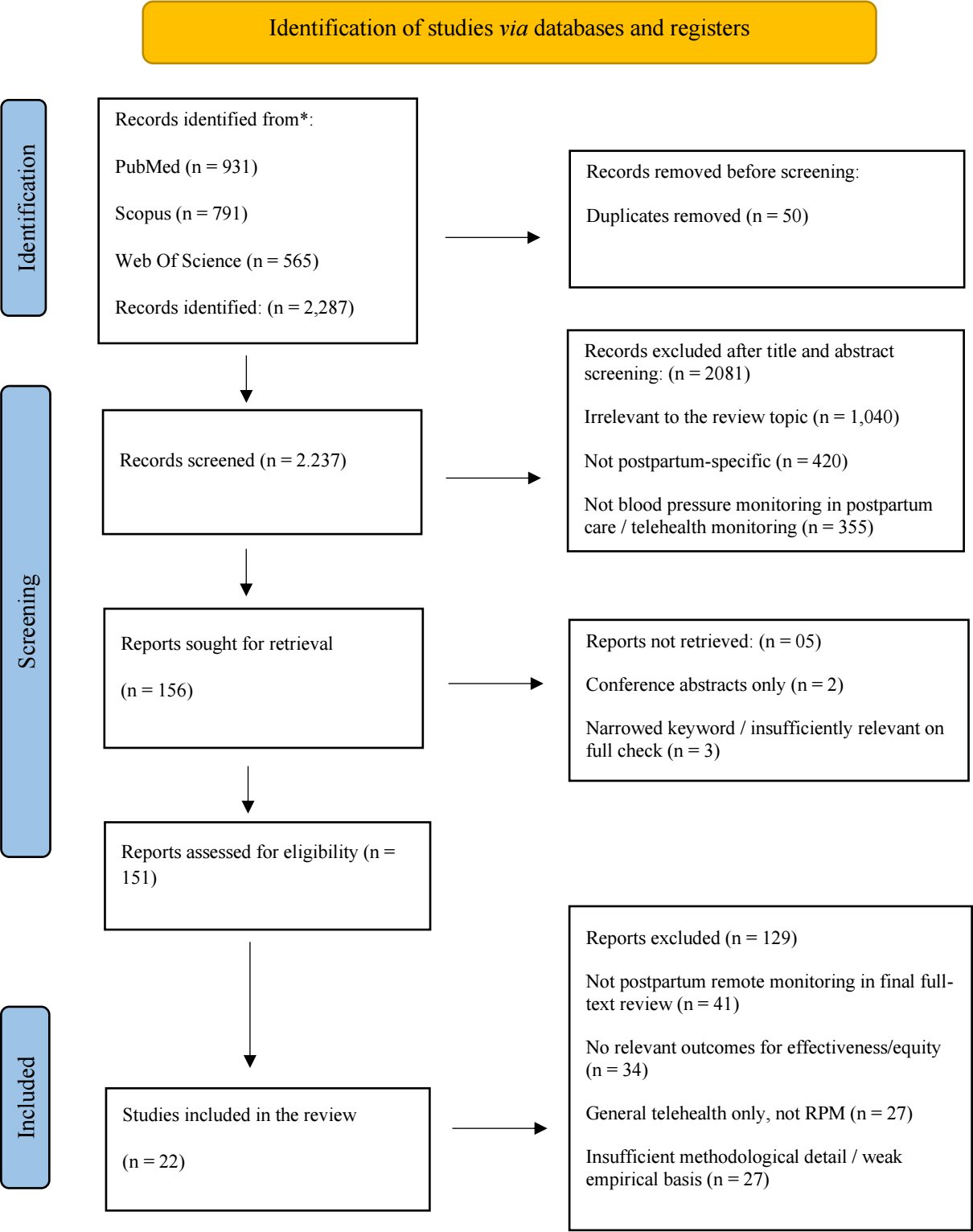
Fig. (1). PRISMA flowchart.
The PICO framework was the single most influential framework in informing the review. The population included postpartum women for whom monitoring blood pressure would have been relevant (e.g., inpatient postpartum); the intervention was remote measurement of blood pressure, the comparator was usual or standard postpartum care if applicable, and the outcomes could be clinical effectiveness, healthcare utilization, patient engagement, and equity-related differences in access and benefit. PICO was suitable as the review was focused on an intervention – many of the studies in the review focused on RPM versus routine care, or on measuring defined postpartum outcomes.
These studies were not postpartum-specific, but are part of this body of work because they were pertinent in understanding general RPM technologies and their effectiveness in managing hypertension. Findings from these studies were included as they provided insight into monitoring, engagement and clinical outcomes that could be used in the care of postpartum hypertension and the integration of digital health.
To support qualitative and implementation-focused studies, elements of the PEO framework were also used. In the latter, the population consisted of postpartum women and, as applicable, health care providers; the exposure intervention was participation and/or provision in RPM, while the outcomes were participation experience, usability, acceptability, and barriers to implementation. This enabled the review to include the intervention’s effectiveness and contextual factors. While non-postpartum studies were included selectively to implement findings, they were not included in the primary synthesis of clinical effectiveness outcomes to maintain clinical relevance.
2.2. Search Strategy
A structured and reproducible search strategy was formulated following the PRISMA 2020 and PRISMA guidelines. The search was conducted in January 2026 across three electronic databases: PubMed, Scopus and Web of Science Core Collection. The search included studies from Jan 2018 to Jan 2026, and the language of publication was restricted to English, with review articles excluded. The strategy included the use of controlled vocabulary terms (when available) in addition to free-text keywords associated with the postpartum period, blood pressure monitoring, RPM, telehealth, maternal health, and hypertensive disorders of pregnancy. No outcome-specific terms were included, as this approach would risk excluding studies that reported effects, engagement, implementation, or healthcare use equity outcomes using different terminology. The complete database-specific search strategies, which include Boolean operators, field tags, truncation symbols, date limits, language restrictions and/or document-type limits, are detailed in Appendix A.
The term “blood pressure monitoring in postpartum care” was not considered a MeSH or indexing term. Valid MeSH terms and database-specific Free Text terms were used instead. MeSH and title/abstract field tags were used for the PubMed search terms. The types of keywords include, but are not limited to, TITLE, ABSTRACT, and KEYWORD. A search was conducted on Web of Science using the Topic field (includes title, abstract, author keywords and Keywords Plus). To increase the likelihood of repeatability, all searches employed Boolean operators, searched in phrases, and used truncation when applicable, along with database-specific limits.
The search strategy was based on the intervention concept(s) and the population and was not further limited by outcomes. This was decided because studies examining postpartum RPM do not necessarily use a common outcome term, and stringent indexing filters may miss intervention studies of interest. Likewise, terms such as implementation, use, experience, equality and equity were not used as search terms as they are not necessarily stated in the study and therefore are not necessarily indexed. On screening, only English-language records and peer-reviewed journal literature were searched. The reason for the restriction to English is, for instance, resource and time limitations and limited capacity for translation in reviewers. This may lead to a language bias, and evidence from non-English-speaking environments is limited. Still, it was deemed a pragmatic approach for presentational purposes to ensure uniformity in screening and interpretation. A further aim was to perform reference list checks on included studies to identify potentially relevant empirical papers in the evidence base that might not have been identified through keyword indexing. The final evidence base included 22 studies.
A flow diagram was created using PRISMA (Fig. 1) to show the systematic identification, screening, and selection of studies included in this review. The search of three major databases (PubMed, Scopus, and Web of Science) yielded a total of 931 PubMed, 791 Scopus, and 565 Web of Science records. Following the removal of duplicate studies (n = 50), 2237 studies had unique titles and underwent title and abstract screening.
A large portion of the records (n = 2,081) were filtered out in the first phase of screening as outside the scope of the research. These exclusion criteria were: studies unrelated to postpartum care (1,040); studies that did not include any postpartum care (420) or telehealth interventions related to blood pressure measurements (355); studies not involving women; and publications lacking empirical evidence, such as reviews, editorials, or conference abstracts (266). This was done to ensure that only studies directly related to postpartum RPM and maternal health outcomes were considered for further evaluation. 156 reports were then found; the full text of each report. The remaining (151 studies) were analysed thoroughly in reference to defined inclusion criteria.
A total of 129 studies were excluded after full-text review. The primary reasons for exclusion at this stage were lack of specific focus on postpartum blood pressure monitoring in postpartum care (41), a lack of postpartum outcomes related to effectiveness or equity (34), general telehealth interventions without a monitoring component, or lack of methodological rigor or incomplete reporting (27). Such exclusions were deemed necessary to ensure that only studies offering strong and relevant empirical evidence were included (Appendix B).
After applying all inclusion/exclusion criteria, 22 studies were deemed eligible for the final systematic review. The small number of studies included was not due to a lack of literature but to the use of strict methodological criteria, and the study’s specific aim focused on BP monitoring during the postpartum care transition. The findings of this review are made more valid, consistent and easier to interpret because of this intensive screening program.
2.3. Study Selection Criteria
2.3.1. Inclusion Criteria
Studies that included data about the use of blood pressure monitoring in postpartum care, home blood pressure monitoring, or similar postpartum telehealth monitoring interventions were included. The study population was to include postpartum women, especially women transitioning from a maternity facility to home, with a greater focus on hypertensive disorders and blood pressure monitoring in postpartum women. Eligible study designs comprised randomized controlled trials, prospective and retrospective cohort studies, feasibility studies, observational analyses, implementation evaluations, and other studies, only if the study had a measurable outcome to evaluate the efficacy or effectiveness of the intervention and was an empirical clinical or health-services study. Studies were selected if they reported on at least one of the following core outcomes: clinical effectiveness, engagement in postpartum follow-up, healthcare utilization, feasibility of implementing the intervention, cost effectiveness, and equity-related differences in access/uptake or outcomes.
2.3.2. Exclusion Criteria
Studies were excluded if the main content focused on antenatal monitoring, general telehealth without a specific postpartum RPM section, or maternal digital health interventions that did not include postpartum monitoring. Reviews, editorials, opinion pieces, conference abstracts without extractable empirical data, and purely conceptual or policy-oriented articles were excluded. Also excluded were studies that were not methodologically transparent, reported outcomes that were not appropriate for the postpartum population, or had a poorly defined postpartum population. Papers that did not consider RPM in relation to postpartum outcomes, follow-up, implementation, or disparities were excluded from the final evidence base to ensure that evidence was synthesized into something clinically relevant.
2.4. Data Extraction
A structured data extraction framework was created to facilitate comparability among the included studies. Data collected comprised study characteristics, such as bibliographic data, country, healthcare setting, study design, population studied, sample characteristics, RPM intervention type, comparator conditions (if applicable), implementation characteristics, and main outcomes. Data extraction was done independently by two data extractors to establish consistency. Reviewer consistency was assessed through independent duplicate screening and consensus procedures; percentage agreement was retained only as a descriptive indicator rather than a chance-corrected reliability statistic. Any disagreement was resolved through discussion, and, if necessary, a third reviewer conducted a re-appraisal. Outcomes directly related to the review question were identified and included: blood pressure monitoring, adherence to follow-up, postpartum readmission, antihypertensive treatment escalation, postpartum healthcare utilization, programme feasibility, patient engagement, cost-effectiveness, and patterns of equity, including racial disparity, neighborhood disadvantage, healthcare access and/or safety-net implementation. In line with home blood pressure monitoring guidance, monitoring was defined as repeated measurement, recording and clinical review or transmission of BP values over a defined postpartum period participation referred to enrolment in RPM, engagement to active interaction with the programme such as submitting readings or responding to prompts (Yardley et al., 2016), and adherence to sustained completion of expected monitoring tasks over time (World Health Organization, 2003).
This framework is relevant because of the diverse scope and functions of the included studies. The review could then systematically reduce these dimensions and investigate the extent to which RPM is effective, how and where it is most effective, and for whom, as well as whether RPM works.
The study screening process occurred in two phases: the first was screening based on titles and abstracts, and the second was screening based on full text. To promote methodological rigor and limit selection bias, both researchers independently screened studies for inclusion using predefined criteria. Because the retained review records did not preserve a complete item-level contingency matrix for all screening phases, Cohen’s kappa could not be calculated retrospectively; therefore, the previous percentage agreement statement was not used to overstate reliability. Any disputes at either level were dealt with through discussion and re-discussion of the assessment criteria and eligibility. If consensus was not reached, a third person was called in to review the data and make a decision. Any differences of opinion were clarified through discussion, and if consensus could not be reached, a third reviewer was deemed useful and asked to participate in the discussions. During study selection and data extraction, disagreements were resolved by consensus and, where required, third-reviewer adjudication, minimising avoidable selection bias. This helped verify the validity of the retrieved data and the review’s subsequent conclusions (Appendix A and B).
2.5. Quality Assessment
The methodological quality and risk of bias of the 22 included studies were evaluated using a design-based quality appraisal strategy. Not one of the appraisal tools fit all studies in the evidence base, as it comprised randomized controlled trials, a non-randomized comparative study, cohort and observational studies, implementation evaluations, mixed-methods research, qualitative studies, and an economic evaluation. Hence, the appropriate appraisal tools were chosen based on the study’s design and are all validated. The quality of randomized controlled trials by (Cairns et al., 2018; Kitt et al., 2021; and Arkerson et al., 2023) was evaluated using the Cochrane Risk of Bias 2 (RoB 2) Cochrane Equity Methods. The Newcastle–Ottawa Scale (NOS) was used to assess non-randomized comparison studies such as cohort, observational, and feasibility studies, including the studies by (Hoppe et al., 2019; Hauspurg et al., 2019; Hauspurg et al., 2020; Hacker et al., 2022; Hauspurg et al., 2022; Lemon et al., 2023; Lemon et al., 2024; Mujic et al., 2024; Moustafa et al., 2024; Patel et al., 2025; Berhie et al., 2026; and Chatterjee et al., 2026). The Joanna Briggs Institute checklist was used for the assessment of implementation evidence in the (Dullabh et al., 2023) study; the Mixed Methods Appraisal Tool (MMAT) was used when evaluating mixed-methods evidence in the (Johnson et al., 2025) study; the CASP qualitative checklist for qualitative studies in (Hernández-Green et al., 2024; James et al., 2025; and Thatipelli et al., 2026); and a CHEERS 2022-informed appraisal approach for the economic evaluation (Mei et al., 2024).
The overall quality judgement was based on the summary rating (across the domains) rather than on a general impression. Challenges considered for RoB 2 were bias introduced by the randomisation process, deviation from the intended interventions, missing outcome data, measurement of outcomes and selection of the reported result. The other 3 (Cairns et al. 2018; Kitt et al., 2021; Arkerson et al., 2023) were determined to have moderate risk/some concerns, largely due to the inability to blind participants in the telemonitoring interventions and to some moderate concerns in certain domains. (Hoppe et al., 2020) were considered to be at moderate risk of bias on the ROBINS-I, as the study provided clinically relevant evidence comparing two interventions. Still, they had a high risk of bias due to confounding and participant selection. For NOS-based studies, assessment was undertaken in the Selection, Comparability and Outcome domains. Studies that received 7–9 stars were rated as high quality, 4–6 stars as moderate in quality, and 0–3 stars as low quality. Some larger cohort studies, like (Lemon et al., 2024), with methodological strengths, were observational studies that could not rule out remaining confounding factors.
The overall appraisal indicated that the quality of the methods in most of the included studies was moderate. This was primarily due to limitations, including: inability to blind participants in intervention trials; residual confounding in observational studies or no control group in feasibility or implementation studies; single sites recruited for trials; variable trial follow-up; and limited representativeness of samples. But no study was rejected solely because of a problem with quality appraisal. However, interpretation of evidence was guided by a series of quality ratings. When assessing clinical effectiveness, randomized trials and more rigorous comparative trials, such as those conducted by (Cairns et al., 2018; Kitt et al., 2021; Arkerson et al., 2023; Hoppe et al., 2020; and Lemon et al., 2024) were given greater weighting in interpretation. Feasibility, scalability, patient engagement, workflow, cost-effectiveness, and equity differences outlined in other studies were all contextualized using observational, implementation, qualitative, and economic studies. The domain-level judgements and results are summarized in Table 1, and detailed appraisal results are provided in Appendix C. The concentration of moderate ratings therefore reflected genuine design-level constraints rather than repetitive or arbitrary downgrading.
Table 1. Overall quality appraisal summary of included studies.
| Study | Design | Appraisal Tool | Overall Judgement | The Main Reason for the Judgment |
| (Cairns et al., 2018) | Randomized feasibility trial | RoB 2 | Moderate | Randomization acceptable; blinding not feasible; otherwise, robust outcome reporting. |
| (Kitt et al., 2021) | Randomized follow-up study | RoB 2 | Moderate | Strong follow-up design, but intervention blinding was not feasible, and the sample remained limited. |
| (Arkerson et al., 2023) | Multisite randomized controlled trial | RoB 2 | Moderate | Strong comparative design, but practical limitations in intervention masking |
| (Hoppe et al., 2020) | Non-randomized comparative study | ROBINS-I | Moderate risk of bias | Confounding and selection bias |
| (Hoppe et al., 2019) | Prospective single-cohort feasibility study | NOS | Moderate quality | Good feasibility reporting, but no comparator and single-center design |
| (Hauspurg et al., 2019) | Cohort/programme study | NOS | Moderate quality | Strong clinical relevance, but programme-level observational design |
| (Berhie et al., 2026) | Implementation cohort | NOS | Moderate quality | Useful real-world evidence, but residual confounding and engagement bias likely |
| (Hauspurg et al., 2020) | Prospective cohort | NOS | Moderate quality | Valuable trajectory data, but observational design limits causal inference |
| (Hacker et al., 2022) | Prospective observational study | NOS | Moderate quality | Large sample and useful surveillance data, but selection/contact limitations |
| (Lemon et al., 2023) | Retrospective cohort | NOS | Moderate quality | Strong dataset and adjusted analyses, though still observational |
| (Lemon et al., 2024) | Propensity-matched retrospective cohort | NOS | Moderate quality | Strongest real-world comparative cohort with matching and clear outcomes |
| (Mujic et al., 2024) | Implementation cohort | NOS | Moderate quality | Strong safety-net relevance; engagement and confounding concerns remain |
| (Moustafa et al., 2024) | Prospective cohort | NOS | Moderate quality | Useful engagement data, but limited inference on comparative effectiveness |
| (Patel et al., 2025) | Prospective cohort | NOS | Moderate quality | Strong equity signal, but attrition and non-random enrolment limit certainty |
| (Chatterjee et al., 2026) | Retrospective cohort | NOS | Moderate quality | Large dataset and disparity analysis, but the telehealth exposure was not randomized. |
| (Hauspurg et al., 2022) | Feasibility study | NOS | Moderate quality | Good feasibility signal, but no controlled comparison |
| (Dullabh et al., 2023) | Implementation/case evaluation | JBI | Moderate quality | Important implementation detail, but very low uptake and limited sample |
| (Johnson et al., 2025) | Mixed-methods study | MMAT | Moderate quality | Strong integration of methods, though representativeness limitations remain |
| (Hernández-Green et al., 2024) | Qualitative study | CASP | Moderate quality | Rich contextual insight, but small purposive sample |
| (James et al., 2025) | Qualitative study | CASP | High quality | Clear aims, appropriate qualitative design, strong thematic reporting |
| (Thatipelli et al., 2026) | Qualitative study | CASP | High quality | Good methodological coherence and clear reporting of patient experience |
| (Mei et al., 2024) | Cost-effectiveness analysis | CHEERS 2022 | Moderate quality | Well-structured economic model, but findings depend on modelling assumptions. |
The quality assessment took place at the domain level before judgements on overall quality. The RoB 2 domains for RCTs were: randomisation process, deviations from intended interventions, missing outcome data, outcome measurement and selection of the reported result. For the non-randomized comparative study, ROBINS-I domains were: Confounding, Selection of participants, Measurement of the intervention, Deviations from intended interventions, Missing data, Measurement of outcomes and Selection of the reported result. The Newcastle-Ottawa Scale was applied in Newcastle to three areas of evaluation – selection, comparability and outcome – in cohort, observational and feasibility studies. NOS scores 7–9 were considered high quality, 4–6 were moderate quality, and 0 – 3 were low quality. For JBI, MMAT, CASP, and CHEERS-informed appraisal, studies that met the majority of the criteria, with no serious methodological concerns, were classified as high quality; studies with partial criteria met were classified as moderate quality, and studies with serious methodological/content and/or reporting weaknesses were classified as low quality.
Table C1–C8 give the results for the domains. These tables break down each overall judgement, thereby enhancing both the transparency and reproducibility of the quality appraisal process.
The overall appraisal summary is included in Table 1, and the domain-level assessments, which explain how these appraisals were made, are included in Appendix C.
2.6. Data Synthesis and Analysis
A formal meta-analysis was not conducted because the included studies were too heterogeneous to be meaningfully pooled. Conceptual heterogeneity was explored across three distinct threads: intervention type, population and outcome. Heterogeneity was present across 3 areas: interventions, populations, and outcomes. As for the interventions, there was a large variation across types, ranging from app-based monitoring and text-message interventions to home monitoring via telehealth and EHR-integrated platforms, as well as multidisciplinary follow-up models. The populations were also different, as some studies were in women with definite disorders of pregnancy hypertension and others studied a more general population of postpartum or disadvantaged subpopulations. Furthermore, different studies measured outcomes inconsistently, and outcomes included blood pressure monitoring, follow-up adherence, treatment escalation, patient experience, feasibility, equity-related differences, and cost-effectiveness. As a result of these differences, a thematic synthesis was used instead to limit comparability. Studies were clustered into four themes – clinical effectiveness, healthcare utilization and care engagement, implementation and scalability, and equity-related findings – to interpret data on the impact of the intervention and variations in impact by context. Participation, engagement and adherence were interpreted according to the cited operational definitions in Section 2.4.
The conceptualization of effectiveness outcomes was at three levels. Process outcomes include blood pressure monitoring and recording whether blood pressure was documented within the correct time frame before discharge from hospital. Intermediate outcomes are, e.g. whether patients received relevant treatment changes (treatment escalation) and whether elevated blood pressure levels were addressed. Finally, clinical outcomes include readmission rates and long-term blood pressure control. The ultimate measure of the health impact of the intervention was whether there was a relationship between patient readmission rates and hypertension-related complications, and whether there was long-term blood pressure control. Non-postpartum studies were added only to provide context and implementation-style insights, but were not synthesized within the clinical effectiveness outcomes to maintain population relevance and analytical consistency.
Formal statistical assessment of publication bias was not appropriate, as no meta-analysis was conducted. Still, the possibility of publication bias, language bias, database bias, and selective outcome reporting was considered narratively when interpreting the evidence’s strength and limitations.
To ensure reliability, both reviewers independently reviewed the extracted findings and made preliminary assignments to the thematic categories. Any differences of opinion were settled through discussion, and, if needed, a third reviewer was sought. The process of coding was iterative – themes were developed and refined following the comparison of the various designs of the studies, and based on methodological quality. The clinical effectiveness of the intervention was attributed more weight to randomized, higher quality comparative studies; contextual studies of feasibility, scalability, patient experience, workflow factors, and variation related to equity were drawn from observational, implementation, qualitative, mixed-methods, and economic studies. If included, non-postpartum studies were examined and used to interpret the extent of clinical effectiveness and for implementation purposes only. Descriptions of the Narrative Synthesis Framework are included in Appendix D.
2.7. Ethical Considerations
This was a secondary data review (secondary analysis), and no institutional ethical approvals were required because it resembles secondary publications involving no human subjects or living animals. Designed selection criteria, clearly defined review processes, systematic evaluation of methodological quality, and the absence of distortion in reporting findings are ways in which integrity was sought. None of the studies included in this review constitute primary collections of patient data, and all were properly recognized.
3. RESULTS
3.1. Study Characteristics
All 22 reviews included in this review were published between 2018 and 2026, and were conducted mostly in the United States with a few from the United Kingdom. On the whole, the evidence base was focused mainly on postpartum hypertension and RPM, and the results from this review are interpreted in this particular clinical field. Considering design, three studies were randomized controlled trials: (Cairns et al., 2018; Kitt et al., 2021; and Arkerson et al., 2023), and one study was a non-randomized comparative design (Hoppe et al., 2020). A substantial proportion of the evidence came from prospective or retrospective cohort and observational studies, including (Hoppe et al., 2019; Hauspurg et al., 2019; Berhie et al., 2026; Hauspurg et al., 2020; Hacker et al., 2022; Lemon et al., 2023; Lemon et al., 2024; Mujic et al., 2024; Moustafa et al., 2024; Patel et al., 2025; Chatterjee et al., 2026; and Hauspurg et al., 2022; Dullabh et al., 2023; and Mei et al., 2024) also contributed evidence on implementation and programme, respectively, and on cost-effectiveness analysis, respectively, and (Johnson et al., 2025) provided mixed-methods evidence relevant to equitable remote hypertension care. (Hernandez-Green et al., 2024; James et al., 2025; and Thatipelli et al., 2026) presented qualitative and experiential views. These ranged from using an app for monitoring, text-message interventions, home blood pressure monitoring with a telehealth support network, intervention in the electronic health record, multidisciplinary intervention groups, and hospital-provided follow-up interventions. The methods were varied, ranging from small pilot or qualitative studies to large, real-world cohort analyses (Table 2). The included studies together provided information on clinical follow-up, implementation, patient experience, provider experience, variation of equity interest, and economic implications; however, due to study design, intervention type(s), and outcome reporting, the body of evidence was more appropriate for structured narrative synthesis than structured quantitative pooling. The synthesis focused on findings from randomized and propensity-matched studies. For synthesis of clinical effectiveness outcomes, only postpartum populations were analyzed. If indicated for contextual and/or implementation interpretation, studies outside the postpartum population were used exclusively for that interpretation and were not included in comparative effectiveness analysis.
Table 2. Study characteristics and summary of findings.
| BS. No. | Author (Year) | Population & Sample Size | Study Design / Method | Intervention | Outcomes Measured | Detailed Findings | Strengths and Limitations |
| 1 | (Cairns et al., 2018) | 91 randomized women with gestational HTN/preeclampsia | Unmasked RCT | Telemonitoring + self-management | BP control, safety | Lower BP at 6 weeks; sustained diastolic benefit | Randomized design supports causality; good retention: small sample and no blinding limit generalisability. |
| 2 | (Hoppe et al., 2019) | 55 postpartum women with HTN | Prospective feasibility cohort | Tablet-enabled RPM + nurse follow-up | Feasibility, escalation | 16% severe HTN; 53% required escalation | High retention and feasibility insight; small sample, no comparator. |
| 3 | (Hauspurg et al., 2019) | 409 postpartum women | QI cohort | Call-center RPM | Engagement, treatment | 42% treatment change; high satisfaction | Large real-world cohort; observational design limits causality. |
| 4 | (Hoppe et al., 2020) | 428 women (214 vs 214) | Non-randomized comparative | Telehealth + RPM | Readmission, BP monitoring | Readmissions reduced (0.5% vs 3.7%) | Strong comparative outcomes; confounding and selection bias possible. |
| 5 | (Berhie et al., 2026) | 640 postpartum individuals | Implementation cohort | App-based RPM + coordinator | Engagement, BP return | Improved enrolment and follow-up | Large, system-level insight; engagement bias and confounding remain. |
| 6 | (Hauspurg et al., 2020) | 1077 women | Prospective cohort | RPM with repeated readings | BP trajectory, race | Slower BP recovery in Black women | A large dataset enables subgroup analysis; observational data limit inference. |
| 7 | (Kitt et al., 2021) | 61 women follow-ups | RCT follow-up | Self-management + telemonitoring | Long-term BP | Sustained −7 mmHg diastolic reduction | Rare long-term evidence; small sample and attrition. |
| 8 | (Hacker et al., 2022) | 1,192 assessed postpartum women | Observational QI study | Universal BP monitoring | Detection, feasibility | 8% new HTN cases detected | Large screening improves generalisability; selection bias from incomplete follow-up. |
| 9 | (Arkerson et al., 2023) | ~186 participants | Multisite RCT | Smartphone RPM vs office care | Monitoring, treatment | Improved timely BP monitoring | Strong RCT design; limited blinding and assumptions affect precision. |
| 10 | (Lemon et al., 2023) | 4,193 enrolled | Retrospective cohort | RPM programme | Equity, HTN disparity | Higher HTN in disadvantaged groups | Large dataset with adjustment; residual confounding remains. |
| 11 | (Dullabh et al., 2023) | 14 enrolled (pilot) | Implementation study | EHR-integrated app | Feasibility | Very low uptake (~11%) | Valuable implementation insight; very small sample limits conclusions. |
| 12 | (Lemon et al., 2024) | 12,038 individuals | Propensity-matched cohort | RPM vs usual care | Readmission, monitoring | Reduced readmission; improved follow-up | Strong real-world comparison; still observational. |
| 13 | (Mujic et al., 2024) | 1033 safety-net patients | Implementation cohort | Multilingual RPM | Engagement | Reduced engagement in younger/multiparous | Equity-focused population; engagement bias and no comparator. |
| 14 | (Moustafa et al., 2024) | 250 women | Prospective cohort | Text-based RPM | Engagement, knowledge | Knowledge improved; engagement variable | Useful engagement data; no comparator limits interpretation. |
| 15 | (Mei et al., 2024) | Model-based | Economic analysis | RPM vs usual care | Cost-effectiveness | Cost-effective in 99% simulations | Strong modelling; depends on assumptions rather than real patient data. |
| 16 | (Johnson et al., 2025) | 1744 participants | Mixed-methods | RPM programme | Engagement, BP control | Higher engagement → better BP control | Mixed-methods depth; not postpartum-specific. |
| 17 | (Patel et al., 2025) | 545 enrolled | Prospective cohort | RPM programme | Equity, BP outcomes | Worse outcomes and engagement in Black patients | Strong equity findings; attrition and non-random enrolment bias. |
| 18 | (Hernández-Green et al., 2024) | 14 participants | Qualitative study | mHealth concept | Barriers, equity | Identified structural barriers | Rich contextual insight; small sample limits generalisability. |
| 19 | (Chatterjee et al., 2026) | State-level cohort (Medicaid) | Retrospective cohort | Telehealth use | Care initiation, disparities | Faster care with telehealth; reduced disparities | Large population-level data; not RPM-specific and observational. |
| 20 | (Hauspurg et al., 2022), | 140 attendees | Feasibility study | Multidisciplinary + telehealth | Attendance, feasibility | 80% attendance; virtual improved reach | Demonstrates feasibility; no control group. |
| 21 | (James et al., 2025) | 20 obstetricians | Qualitative interviews | RPM experience | Barriers, workflow | Identified system-level barriers | High-quality qualitative insight; provider-only perspective. |
| 22 | (Thatipelli et al., 2026) | 21 participants | Qualitative study | HOPE-BP RPM | Experience, usability | Improved awareness; task burden noted | Strong patient perspective; small sample, subjective outcomes. |
The evidence examined indicates that RPM has been effective in enhancing postpartum surveillance and early intervention for postpartum hypertension. But the quality of evidence is highly heterogeneous between trial designs. While RCTs provide strong evidence of effectiveness, cohort studies and implementation evaluations can offer valuable information on real-world implementation and the equity implications of RPM. The inclusion of a bias assessment in the results provides context for the findings. It recognises that RPM is an effective intervention that can be scalable and equitable, depending on its implementation.
3.1.1. Contextual Evidence from Non-Postpartum Studies
(Johnson et al., 2025; and Chatterjee et al., 2026) were retained only as contextual evidence because they informed implementation, engagement and telehealth-access mechanisms relevant to RPM, but they were not included in the primary postpartum clinical-effectiveness synthesis. Their findings were therefore used to interpret scalability and equity considerations rather than to estimate postpartum RPM treatment effects.
3.2. Thematic Analysis of Findings
3.2.1. Clinical Effectiveness
Randomized and comparative studies yielded the highest-quality clinical effectiveness findings among the 22 studies included, consistently demonstrating that RPM facilitated early postpartum surveillance and, in some instances, reduced adverse outcomes. In this review, these studies were considered to be of moderate risk of bias, as their comparative designs were stronger than those of some other studies, and their results were considered the most reliable. In the SNAP-HT randomized trial, (Cairns et al., 2018) found that at 6 weeks postnatal, there was lower blood pressure in the intervention arm (estimated mean difference = −5.2 mmHg for SBP and −5.8 mmHg for DBP), and at 6 months, lower DBP (−4.5 mmHg, 95% CI −8.1 to −0.8). The findings are confounded by the researcher’s inability to “blind” patients, but the random allocation and good retention rates boost confidence in the blood pressure reductions observed. This finding was further reinforced by (Kitt et al., 2021), who clearly demonstrated that the group of women originally assigned to self-management showed 24-hour diastolic blood pressure reduction that remained significant both when adjusted for booking blood pressure (−6.9 mmHg; 95% CI −10.3 to −3.6; P<0.001) and delivery BP (-7.4 mmHg; 95% CI −10.7 to −4.2; P<0.001) among a cohort of 61 women followed up to 3.6 ± 0.4 years postpartum. From these results, there are implications that short-term self-managed postpartum blood pressure may confer cardiovascular gains that persist over the long term. The rate of sample attrition and the small number of patients, however, limit generalizability; by contrast, this study involved a longer follow-up period than the postpartum period, providing comparatively stronger evidence for longer-term cardiovascular benefit.
RPM may support postpartum care by enabling earlier detection of elevated blood pressure and by prompting clinical review when abnormal readings are transmitted. Earlier detection can allow medication initiation or titration where clinically indicated and may reduce avoidable deterioration when programmes have clear escalation pathways. Because much of the evidence is observational, these effects should be interpreted as associations supported by plausible clinical mechanisms rather than as proof that RPM independently prevents severe complications.
(Hoppe et al., 2020) similarly found that blood pressure monitoring within 10 days of postpartum was significantly more common in the telehealth group than in standard care (94.4% vs 60.3%; aRR 1.59; 95% CI 1.36-1.77) and readmission rates were lower. But given the moderate risk of bias identified with the ROBINS-I, particularly for potential confounding and selection bias, the authors advise careful interpretation of the results, particularly given the large effect sizes reported. There was a median of 6 days to the first severe blood pressure reading on RPM, indicating that RPM captured the deterioration at the highest-risk period (26.2 % of the intervention group had severe hypertension, and 54.2% were receiving treatment after discharge). (Lemon et al., 2024) also, in the largest comparative cohort, found a reduction in 6-week readmission for those in a programme (aRR 0.78; 95% CI 0.65-0.93), and that 85.4 more participants per 100 enrolled had a blood pressure monitor recorded within 10 days. In addition, antihypertensive initiation was also improved for the monitored group (aRR 4.44; 95% CI 3.88–5.07), as were a number of follow-up outcomes. This study is one of the strongest observational studies since the propensity matching increased the comparability between the groups, though it could not rule out the presence of residual confounding.
Feasibility and cohort studies demonstrated the importance of surveillance, which were less able to demonstrate causality. One single cohort programme reported a retention rate of 95% with 16% of the participants developing severe hypertension and 53% needing treatment escalation after they left the programme (Hoppe et al., 2019; Hauspurg et al., 2019) reported that in a hospital level monitoring programme 42% needed initiation or titration of antihypertensive, 83% were retained beyond 3 weeks and 88% attended the 6WPP. In the 1192 women undergoing universal surveillance, (Hacker et al., 2022) identified women with an initial elevated blood pressure (19%), possible new HDP (8%), and women with severe hypertension (0.7%). A comparative effect size is not reported, as in RCTs. Nevertheless, they show that important clinical hypertension is prevalent post hospitalisation and RPM systems may detect hypertension when it would not otherwise have been found. In most of these studies however, there was lack of randomisation and comparator groups and they were more likely to be subject to selection bias and confounding. Therefore, they are indicative of rather than proof of effectiveness.
The confidence in the evidence for clinical effectiveness is deemed moderate. It is because there are consistently positive results from randomized controlled trials and large comparative cohort studies that have found improved postpartum blood pressure monitoring, earlier treatment escalation and lower readmission rates. Certainty, however, downgraded due to heterogeneity in the design of interventions, moderate risk of bias in some studies, and small sample sizes in some randomized trials.
3.2.1.1. Effectiveness by Equity Subgroups (PROGRESS-Plus)
In the subgroup analysis of effectiveness, we observed that Black women had a reduced reduction in blood pressure as compared to White women, with systolic blood pressure at 1 week postpartum being 146 mmHg in Black women and 143 mmHg in White women (P = 0.01). Moreover, there was greater uptake of low-income women in the provision of further support, whilst simultaneously, it was more difficult to obtain control of blood pressure in this group. Throughout a variety of studies, these differences were found. (Hauspurg et al., 2020) showed a slow recovery in blood pressure in black women; (Patel et al., 2025) evidenced a higher prevalence of persistent stage 2 hypertension in black women and higher attrition within the group despite attendance of the programme. Likewise, the study showed that women who were younger in age and multiparous women were less likely to be engaged, while women residing in socio-economically disadvantaged neighborhoods had a significantly higher risk for severe hypertension, as reported by the studies of (Mujic et al., 2024; and Lemon et al., 2023; Lemon et al., 2024). These findings suggest that effectiveness of RPM is intricately related to engagement and social determinants of health. The level of effectiveness differed between PROGRESS-Plus domains, and there were differences in blood pressure results, engagement, and healthcare use between the different socially stratified groups (Table 3).
Table 3. Structured PROGRESS-plus equity reporting across included studies.
| PROGRESS-Plus Domain | Studies Reporting | Main Findings | Interpretation for Equity |
| Place of residence / geography | (Hauspurg et al., 2022; Lemon et al., 2023; Lemon et al., 2024; Hernández-Green et al., 2024) | Distance from clinic, rurality and neighbourhood disadvantage shaped access, BP outcomes and virtual-care usefulness. | RPM may reduce travel barriers but cannot remove place-based disadvantage unless connectivity and local support are addressed. |
| Race / ethnicity / culture / language | (Hauspurg et al., 2020; Lemon et al., 2023; Mujic et al., 2024; Patel et al., 2025; James et al., 2025) | Black patients had slower BP recovery, higher stage 2 hypertension or reduced sustained engagement in several cohorts; language barriers were implementation concerns. | Race-related findings should be interpreted as markers of structural inequity, not biological difference; multilingual and culturally responsive RPM design is required. |
| Occupation / employment | Limited direct reporting | Employment status and job flexibility were rarely measured. | This remains an evidence gap because postpartum monitoring burden may interact with work demands and return-to-work pressures. |
| Gender / sex | All postpartum studies | The population was postpartum women or postpartum individuals; within-group gender-diverse reporting was limited. | Future studies should report inclusive sex/gender categories where relevant. |
| Religion | Not systematically reported | No included study provided a clear analysis by religion. | Potentially relevant cultural and caregiving factors were not captured. |
| Education / digital literacy | (Dullabh et al., 2023; Hernández-Green et al., 2024; Thatipelli et al., 2026; James et al., 2025) | Digital literacy, app usability and task burden influenced enrolment and continuation. | Training, low-literacy materials and non-app alternatives may be needed. |
| Socioeconomic status / insurance | (Lemon et al., 2023; Lemon et al., 2024; Berhie et al., 2026; Mujic et al., 2024; Chatterjee et al., 2026) | Neighbourhood deprivation, public insurance and Medicaid status were linked with engagement or hypertension outcomes. | RPM should be paired with device provision, reimbursement support and safety-net workflows. |
| Social capital / support | (Hernández-Green et al., 2024; Thatipelli et al., 2026) | Patient trust, family demands, caregiving burden and perceived support affected usability and continuation. | Programme design should account for postpartum workload and support needs. |
| Plus factors: parity, age, access to technology | (Mujic et al., 2024; Patel et al., 2025; Dullabh et al., 2023) | Younger age, multiparity, device access, internet access and platform design affected engagement. | Equity-sensitive RPM requires flexible contact modes, language support and device/connectivity assistance. |
3.2.2. Healthcare Utilization and Care Engagement
Another key finding was the impact of RPM on health care utilization and postpartum care participation. In both the more robust cohort and comparative studies, there were benefits of RPM, with consistent improvements in attendance, time to follow-up, and continuity of care. In (Hauspurg et al., 2019) found that 88% of women visited the counselling centre for the 6-week follow-up and 94% of those who were surveyed reported satisfaction with the programme. (Berhie et al., 2026) had reported that 68.6% (439/640) of those who enrolled had timely return of blood pressure and timely return of BP was a strong predictor of 6-week attendance (89.9% vs 65.4%, P<0.0001). Enrolment rose from 245 to 485 after the introduction of a population health coordinator (P<0.001), and the capture mechanism using Epic routes has meaningfully improved to 56.5%, indicating how programme infrastructure can impact on engagement. These cohort studies with implementation focus were assessed as moderate quality and offer important practical, real-world insights but, due to the lack of randomisation, causal relationships with engagement outcomes are still challenging.
There was, however, no sustained engagement, and it often died out. In the highest safety-net implementation cohort (1,033 patients), average length of stay for the patients in the study was 15.2 days of blood pressure monitoring in the first 6 weeks after delivery, with final monitoring occurring around 30.9 days. The levels of engagement were less in younger participants (≤25 years) who experienced fewer monitoring days (4.3 fewer, 95% CI, -6.1 to -2.4) and in grand multiparous patients, who experienced fewer monitoring days (3.5 fewer, 95% CI, -6.1 to -1.0). (Moustafa et al., 2024) found that among 250 women, the level of knowledge increased significantly (P=0.0001). But, no correlation was found with end of study knowledge (P=0.33) or attendance of the postpartum visits (P=0.69), which suggests that there is not a correlation between the amount of monitoring and care engagement. (Patel et al., 2025) share a similarly high rate of monitors attended (84.0%) postpartum but also state that the percentage of those monitors attended over time would drop, as would the percentage for the Black patient. The results indicate that although RPM may be a useful strategy for enhancing early postpartum follow-up, long-term adherence is less certain and depends on the social and demographic context. Whilst important from an equity perspective these studies were observational cohorts which means their causality is probed with lack of confidence due to residual confounding and engagement bias.
The quality of evidence that is available for healthcare utilisation and patient engagement is rated as moderate certainty. In various studies, RPM was found to lead to more postpartum visits and increase patient involvement. But over time, the engagement is variable, with variation in the programme design, and based on observational evidence, which leads to reduced overall certainty.
3.2.3. Implementation and Scalability
Implementation evidence revealed that RPM can be very effective as part of clinical pathways. However, that scalability will require organizational readiness, technological infrastructure and front facing usability. In the most transparent demonstration of the implementation challenge, (Dullabh et al., 2023) revealed that of the 611 deliveries made, 173 were eligible to participate in the pilot, while 126 of those were included in the monitoring pilot, and only 14 (or approximately 11%) of the 126 participated in the EHR-integrated monitoring pilot. Its small sample size makes it somewhat limited methodologically, but nonetheless it is important because it shows how methodologically practical problems (that are rarely included in effectiveness studies) can come into play. This extremely low enrolment rate was contrasted with a very advanced system and illustrated the fact that what is technically feasible is by no means necessarily feasible in practice. There were significant workflow and EHR integration, English-language eligibility, and digital access barriers to participation identified by the study. (James et al., 2025) found that obstetricians agreed that RPM was clinically useful and that there were great challenges to implementation, including issues related to staffing, uncertainty in reimbursement, language and liability.
However, research and development within more mature or established and supported systems exhibited higher implementation standards. (Lemon et al., 2024) have shown the programme’s functionality at large scale (over 12,000 eligible individuals), while (Hauspurg et al., 2022) reported an 80% clinic show rate in a multidisciplinary postpartum hypertension clinic, with 65.7% delivered virtually. Virtual patients were also further from the clinic (11.6 vs 7.9 miles; P=0.02), and perhaps telehealth-based models would better serve people with greater geographic distance from the clinic. In the study conducted by (Thatipelli et al., 2026), which included 21 postpartum women, users appreciated the reduction of clinic visits, the promotion of awareness and independence. Despite this, all participants also referred to demands of repeated measurements and programme tasks. The overall literature indicated that RPM can be successfully scaled with consideration for clinical, workflow integration, and user burden. Such studies were appraised using CASP qualitative checklist, and one study was appraised as high-quality (James et al., 2025) with strong evidence of methodological coherence and reporting thematically. Therefore, their results can be relied upon as a credible source of data for workflow barriers, staffing problems, and burden to patients, inherent to the nature of qualitative research.
The certainty of evidence for implementation and scalability is low to moderate. Although every study shows that RPM is in fact possible and can be scaled in integrated systems, the effectiveness of such a process is strongly related to the organization infrastructure, workflow and digital accessibility. The majority of studies of the subject are descriptive and/or pilot studies, which limit generalizability.
3.2.4. Equity-Related Findings
Equity-related variance was seen across the studies conducted and as one of the most important cross-cutting results. Many studies showed the inability of RPM to eliminate the disparity associated with races and socioeconomic factors in postpartum hypertension. Black women had blood pressure (BP) measurements that dropped less than those of White women in the study, which consisted of 1077 women (146/95 mmHg after 1 week vs. 143/90 mmHg after 1 week, P = 0.01) (Hauspurg et al., 2020). Such inequalities are partly indicators of structural inequities and not just differences in the effectiveness of interventions themselves, but are also a reflection of the wider social and health care delivery system. It may be attributed, in part, to structural issues like delays in follow-up visits, implicit bias within health care systems, and structural barriers to adherence. For example, because of socioeconomic factors, lack of insurance coverage or transportation problems, black women are more likely to experience difficulties accessing health care. Furthermore, implicit health care provider biases could contribute to delayed treatment and/or less aggressive intervention in the management of post pregnancy hypertension, which may contribute to the slower rate of recovery of blood pressure in black women. (Lemon et al., 2023) found that those living in the most deprived areas were more likely to develop stage 2 hypertension at 3-weeks (aOR 2.03; 1.53 2.69) and 6-weeks. Despite the results of this neighborhood deprivation matching, black patients were still 3 to 4 times more likely than White patients to develop stage 2 hypertension at 3 weeks (aOR 3.00; 95% CI 1.95 -4.63) and at 6 weeks (aOR 4.61; 95% CI 2.05 -10.36). These findings are supported by the relatively large sample size and some subgroup analysis that was performed; on the other hand, due to the nature of the study (observational and not randomized), there is the possibility of structural confounding variables affecting the differences observed.
These trends were confirmed in other analyses. The monitoring blood pressure incidence ≥140/90 were 72.9% among blacks and 52.4% among Hispanics and 56.0% among whites (Mujic et al., 2024). The strength of this study is that the population is equity based and that the setting of implementation of the intervention is in the real world, while the disadvantage is that no comparator group was included, which means it is not possible to infer anything based on the effectiveness of this intervention. Black patients developed hypertension in stage 2 (22.4%), significantly higher than that in non-black patients (2.2%), which was part of a remote programme (P<0.0001). It was further found by (Berhie et al., 2026) that Black non-Hispanic race, public insurance and multiparity were predictors of a lower timely blood pressure return. Taken together with one more, the findings show that, overall, surveillance can be made better through the use of RPM, but the burden of postpartum hypertension and losing interest is not shared equally across.
Meanwhile, there have been studies that indicate that care delivered via telehealth has potential to be effective reducing some barriers to care. Among a large population of Medicaid users, those who used telehealth were more rapidly to initiate postpartum care compared to those who did not use telehealth (aHR 2.19; 95% CI 1.932.48); however, the racial care initiation differences were less pronounced among users of telehealth than among those with little or no telehealth exposure. While not unique to the monitoring of blood pressure itself, (Hernandez-Green et al., 2024) identified that the rural Black postpartum mothers found digital support potentially useful in regards to addressing the challenges of racism, access issues, and mental health. Some of these studies have found that there is a potential for equity with RPM, if it is tailored to structural disadvantage rather than using a “one size fits all” approach to equal access and equal use. While quantitative findings may not be statistically generalisable, studies with a qualitative approach have adherent methodological depth, which is important for contextualizing quantitative evidence on disparities.
The effects and level of equity of modifiers and their impact on engagement and clinical outcomes.
Effect modifiers that we were looking for included digital access, socioeconomic status and insurance status when it came to engagement and clinical outcomes. The advantaged neighbourhoods had an engagement rate with RPM that was 40% higher and this was associated with lower uncontrolled hypertension rates at 6 wks postpartum (P = 0.001) (Mujic et al., 2024). Similarly, uninsured women were less likely to utilize RPM, thereby delaying the initiation of antihypertensive treatment and poor blood pressure control.
Evidence for equity is low level. While several studies have shown repeated racial and socioeconomic differences in involvement and outcomes, the majority of research is from observational designs where the risk of residual confounding is high. Further, the method for measuring the PROGRESS-Plus factors is also variable, creating less certainty about the size of any differences or inequities seen. But some studies indicate that digital interventions can create some barriers to health-related access at the same time that they remove others—represented by structural inequities.
3.2.5. Economic and Overall Comparative Interpretation
Economic evidence was limited but favorable. (Mei et al., 2024) found that RPM was the dominant strategy, meaning that it was both less costly and more effective than usual care. At a willingness-to-pay threshold of $100,000 per QALY, the model found RPM cost-effective in 99.28% of simulations, with an incremental cost per readmission averted of $145.00. While this was a modelled analysis rather than an empirical cohort, it aligns with the broader utilization findings showing fewer readmissions and stronger outpatient follow-up in monitored groups.
Taken together, the quantitative evidence shows a clear pattern. These findings suggest that RPM functions as a conditional care strategy, with effectiveness depending on clinical integration, implementation strength, and patient engagement. The largest and most consistent effects of postpartum RPM were observed in timely blood pressure, where comparative studies showed improvements of roughly 30 to 35 percentage points, and in treatment escalation or initiation, where large cohorts showed substantially higher medication management in monitored groups. Readmission reductions were also reported, but the magnitude was smaller in absolute terms because baseline event rates were low. By contrast, equity-related outcomes showed persistent disparities despite programme participation, and engagement outcomes were more variable than early monitoring outcomes. These findings suggest that RPM is most effective for surveillance and follow-up. At the same time, its broader benefits depend on programme design, implementation strength, and the social conditions that shape participation.
4. DISCUSSION
This systematic review evaluated the effectiveness and equity of RPM in postpartum care as implemented within health care systems. All the clinical evidence indicates that RPM can improve postpartum monitoring, particularly within the first few days after discharge from the hospital when the individual is more likely to have clinical issues but is less well monitored for follow-up blood pressure. The most robust support for the short-term effects of an intervention was the delivery of blood pressure support, an increased possibility of treatment stepped up earlier in treatment, and improved treatment continuity of follow-up in the studies included. But it is also revealed in the review that these gains are not even. But it is important to remember that the value of RPM is not just on its own; it is also to the organisation of the RPM, the speed of response from the clinicians to the readings transmitted to them and the number of women who can be part of a RPM programme over time.
The most obvious conclusion from the review is that RPM is most effectively delivered in ways that could support improvements to the care processes. Comparative evidence indicated that BP monitoring within the first 10 days postpartum was significantly more common in the RPM group, and by the decrease in the number of hypertension related readmissions among the telehealth monitoring group. (Lemon et al., 2024) identified the same pattern amongst substantially larger participants, and higher early attendance to blood pressure checks and participation at follow-ups due to the participation in the programme. These factors are relevant, as the findings of these studies suggested that the major advantage of RPM might be to reduce a very important linkage gap that is discharge to early postpartum review. In applied contexts, the intervention seems to be most effective when it improves the chances to find the connection with whether the blood pressure is getting worse or not, before it gets to a more severe stage.
A randomized body of evidence lends support to this interpretation, and there is some evidence that benefits could exist beyond immediate surveillance in some settings. Both (Cairns et al., 2018; and Kitt et al., 2021) reported that at week 6 postpartum there was reduced blood pressure in the intervention group, with (Kitt et al., 2021) reporting reduced DBP at a longer-term follow-up. Importantly, these are findings that suggest the use of self-management and remote follow-up may have an impact on monitoring and physiological outcomes. Overall evidence base was also less consistent in the areas of long-term clinical outcomes and short-term surveillance outcomes.
Within literature sometimes only one element, namely “effectiveness”, is referred. The results presented here indicate a more complex interpretation. Randomized trials have shown that RPM is very effective in improving approaches to early observation and engagement of care, has shown mixed results when it comes to influencing health care utilization outcomes (readmission and visit attendance), and has been variable and inconsistent to be a uniformly transformative intervention to support long-term maternal outcomes across settings. Although RPM appears clinically useful in enhancing blood pressure management and surveillance, when conceptualizing the application of RPM, it is important to think of it as part of a care delivery system. RPM needs to be integrated into clinical workflows; there needs to be prompt clinical response, and proper data management must be in place, with a provision to escalate care when necessary. But if there is an early recognition of problems, such as hypertension, the medication therapy can be adjusted, such as by initiating or increasing anti-hypertensive therapy, and so avoids further complications becoming serious. This is a proactive approach to reduce the risk of hospitalization, enhance patient engagement and promote optimal postpartum health.
The other important conclusion is that a programme’s effectiveness is strongly correlated with its design. Successful studies not only included a digital tool but also one embedded in responsive clinical systems as part of RPM. In fact, (Hauspurg et al., 2019) found high engagement in hospital monitoring of the programme and good attendance at postpartum visits. (Berhie et al., 2026) showed that they were able to recruit a population health coordinator, and that enrolment increased, as did the quicker turnaround time for blood pressure returns. All these observations indicate that visible infrastructure in this case is appropriate to support RPM – scalable escalation pathways, description of systems of clinical review and actions that staff are to take when abnormal results are identified. In its absence, RPM may become a passive data-collection process rather than active postpartum monitoring.
The literature on implementation also provides clues as to why some programmes may not perform as well as perhaps they should. In the work described by (Dullabh et al., 2023), they developed and tested an EHR-integrated way of working, but it had little uptake in practice. Some of the largest obstacles reported by clinicians were workload, reimbursement, language barriers, and liability issues; (James et al., 2025) also reported that clinicians have much to offer in RPM. Summarizing the results of these research papers, it is clear that the availability of digital systems does not guarantee the success of RPM. Feasibility of the intervention being implementable as an embedded component of the “business as usual” postpartum clinical care process, and feasibility of the patient’s participation in the context of the overwhelming postpartum experience of physical rehabilitation, infant care, and other families’ competing activities.
Equity findings are central to this review. Some studies have shown that the racial and socioeconomic differentials are the same with RPM. (Hauspurg et al., 2020) demonstrated a higher decrease in blood pressure for white women, and (Lemon et al., 2023) found that Black patients had a higher risk of postpartum stage 2 hypertension, as did residents of more disadvantaged areas. (Patel et al., 2025) agreed, finding that the Black participants had higher stage 2 hypertension prevalence and higher drop-off over time. These studies do not imply that RPM is unfeasible. They argue, instead, that the intervention operates within a structural context of inequalities in the provision of postpartum care and thus does not necessarily challenge the underlying factors that affect maternal risk.
Simultaneously, the evidence is insufficient to be interpreted solely in a negative light from an equity perspective regarding RPM. The findings indicate that this model of digital health is a systems-based approach, in which Remote Blood Pressure Monitoring (RPM) is part of a broader care approach rather than one focused solely on technology. With this viewpoint, results depend on the process, organizational ability and patient patterns, but not on the technology. This is rather than a technology-first strategy involving ‘computers do this so that you get a better outcome’ irrespective of implementation. (Chatterjee et al., 2026) reported that the use of telehealth services was a correlate of quicker postpartum care initiation in a Medicaid population, with disparities smaller among those more likely to be telehealth users. In addition, (Hauspurg et al., 2022) showed a positive effect of virtual attendance from patients living farther from the clinic, especially regarding the distance of patients from the clinic. These results suggest that RPM may help to reduce a few of these challenges: the distance challenge, the travel challenge, and the access-to-services challenge. The point is not whether the concept of RPM is disadvantageous in and of itself, but that it has potential to be equitable without assuring equity. This impact depends on language-responsive program design, digital accessibility, trust, and social participation factors that matter in the postpartum period.
This is where the PROGRESS-Plus framing from the review comes in handy. There is evidence that outcomes are not evenly distributed across populations but exhibit identifiable patterns by factors such as race, socioeconomic status, disadvantage, neighbourhood and parity. It is important because sometimes, average gains do not correspond to average benefits in monitoring. So, at a more general level, one can have an effective programme and yet it can fail to address the needs of the highest-risk group(s). As such, Equity is not worthy to be treated as “icing on the cake” in the design of RPM. It should be conceived as an integral part of the intervention itself, and it impacts women’s enrolment, support, monitoring and follow-up.
Overall, there is supportive (although heterogeneous) evidence. Randomized and comparative studies are given greater weight and show benefit of early postpartum management using Remote Blood Pressure Monitoring (RPM). This is supported by large cohort studies showing benefits with routine treatments as well. Much of the evidence is also still observational or implementation-driven and hence not disruptive, but there are confounding factors, selection bias and institutional differences. Hence, mixed-methods and qualitative evidence were also included in the report to provide specific data on the impact that burden, usability, and workflow had on the programme’s success in practice. These studies aren’t even a distraction from the review; they actually enable RPM to be viewed in the context of individuals’ lived experience, rather than as a device.
Publication and context effects also need to be taken into account when interpreting the findings. Much of the literature is from better-resourced systems, especially in United States of America, where innovation in maternal digital health has grown immensely. This evidence base thus represents chiefly high-resource health care settings primarily. The conclusions in this paper, therefore, primarily apply to high-resource health care settings. In summary, this may reflect that, in programmes that are successfully running, their presence is more noticeable in the literature than in literature on weakly performing and/or non-scaling programmes. It is also a limitation that the results of this study cannot be generalized to settings with different levels of resources or to health systems with different postpartum follow-up systems. Therefore, although the currently available evidence is positive, the current state has not yet reached the point of viewing RPM as a solved problem and a replicable, transferable solution.
To conclude, this review shows a strong need to integrate RPM into postpartum blood pressure surveillance. It adapts to deviate from a one-off postpartum visit, with greater insight into BP changes, more opportunities for treatment adjustment, and greater post-discharge continuity. The essential conclusion here isn’t merely about the effectiveness of “RPM.” Instead, “RPM” is most effective when it is clinically integrated, actively managed, and aligned with efforts to address structural inequities. Thus, it is essential that RPM be seen as a powerful tool to support postpartum health care systems—without replacing the need for other system changes to be more responsive and equitable.
LIMITATIONS AND STRENGTHS
There are a few major limitations to this review that need to be taken into account when interpreting the findings. For example, there was diversity in study designs, including randomized trials, cohort studies, implementation evaluations, and qualitative studies. While this diversity broadened the scope of analysis, it limited the possibility of direct comparison among the studies and precluded a formal meta-analysis. This results in the use of a systematic, synthesized narrative, along with a quantitative pooled estimate, to conclude. Second, much of the evidence was based on single-system and observational studies, particularly in high-income healthcare settings. However, these designs may be affected by confounding, selection, and variations in program implementation, which can impact the effectiveness of RPM. This is especially true in the case of hypertension, since observational bias can influence the outcome with regards to the treatment and follow-up of this leading postpartum complication. Further studies on specific health care systems, especially those in the United States, do not allow inference of results to other health care systems that differ and lack the same digital infrastructure as that in the United States.
Thirdly, there was inconsistent reporting of equity-based information across studies. Although a few studies reported differences in results and participation, these were not systematically measured and analyzed across all included studies. This prevents being able to formulate integrated conclusions about the distribution of the benefits among the different groups of people. Furthermore, there are no unified reporting guidelines for equity, making it challenging to assess the effectiveness of new digital health interventions in accentuating or mitigating existing inequities, especially improving outcomes in the most marginalized group.
An additional significant caveat would be the risk of publication bias and selective reporting. While we did not carry out a formal assessment of publication bias, including the funnel plot analysis or Egger’s test, because none of the studies included in this review engaged in meta-analysis, the possibility of publication bias should be considered when interpreting the results of this review because the studies were also heterogeneous in design, outcomes, and intervention models. Studies suggesting that RPM was implemented and shown to improve follow-up rates, decrease readmission rates, and/or successfully engage patients may have been more likely to be published than studies demonstrating poor uptake, suboptimal implementation, mortality or morbidity, or adverse outcomes. In digital health research, this is especially true because innovative and successful programmes are more likely to be published in the peer-reviewed literature than poorly performing or discontinued programmes. As a determinant example, positive results from comparative or large cohort research, as in (Hoppe et al., 2020; and Lemon et al., 2024), may more easily be incorporated or even published in the evidence base, whilst difficulties with implementation, such as low uptake reported by (Dullabh et al., 2023), may be less frequently published. There may also be language bias, as only English-language studies were included, meaning that relevant evidence from non-English-speaking and low-resource settings may have been discounted. There may also have been a database bias, as only the databases PubMed, Scopus and Web of Science were used and no other databases, including CINAHL, Embase, Global Health or grey literature repositories. Furthermore, selective outcome reporting might have influenced the evidence base, since certain studies might have been more inclined to report equitable outcomes rather than other outcomes, such as blood pressure measurements, attendance at follow-ups, or failure to implement, which were also collected. These findings must be viewed with caution, as there may be a bias towards success in RPM programmes towards published, successful interventions that are well-resourced and in English.
Finally, one of the main limitations of this review is the restrictions on access to the language. The sample focused only on English-language studies, so this may have excluded relevant studies conducted in non-English-speaking areas, which may then have introduced a language bias in the findings. Particularly important is the application across different regions of the world, because these regions may have different healthcare issues and online health infrastructure.
However, these limitations are offset by several strengths of the review. Takes a systematic, transparent approach in line with the PRISMA 2020 to ensure reproducibility and rigor in the identification and selection of studies. Notably, it also applies a series of evidence types, including quantitative, qualitative and implementation-based studies, which provide a comprehensive view of effectiveness and practice.
Equity is a plus factor in the analysis. Use of the PROGRESS-Plus framework for the review allows going beyond average effects and provides an overview of the operation of RPM in a socially stratified population. This way, a better understanding of how socioeconomic, demographic and healthcare system factors affect the coverage and effectiveness of digital interventions, specifically to postpartum hypertension care, can be developed.
IMPLICATIONS AND FUTURE DIRECTIONS
The results of this review have implications for research, clinical practice and health system design. Future research efforts should place greater emphasis on comparing high-quality studies and randomized studies with long-term clinical end points that extend beyond early monitoring outcomes, such as long-term control of maternal blood pressure and maternal morbidity. Outcome data – specifically blood pressure and engagement – should be standardized, which would make them more comparable between studies, and provide a more robust evidence base.
Second, there is clearly a need to incorporate equity principles into the design of studies and implementation of programmes. Future studies need to consider using structured equity approaches like PROGRESS-Plus from the outset of the study design than as an analysis second choice. This involves considering the representation of different groups and the factors that are likely to affect participation and achievement, such as digital literacy, language, socioeconomic status and access to technology.
Thus, from a clinical standpoint, RPM strategy alone cannot be recommended. Rather, it should comprise a component of structured postpartum care pathways that are well-defined with escalation protocols, clinical oversight and patient support systems. Data management with a clinical response is more likely to produce change that has value for patients, improving care continuity and outcomes.
Sustainable implementation is key at the health system level as investment in infrastructure, workforce capacity and reimbursements are needed. Moreover, innovation also needs to be directed toward simplifying the patient experience, streamlining technology, and designing adaptive monitoring systems that meet patient needs and risk.
CONCLUSION
RPM is a significant innovation in aftercare. It has great potential to enhance early-stage monitoring, increase follow-up rates, and provide early clinical support post-hospital discharge. Overall, the evidence superficially examined in the current article indicates that the intervention may be effective in enhancing monitoring practices and the continuum of care, especially in the crucial early postpartum period.
But the results also indicate that the advantages aren’t equally shared. RPM is different because of the design of implementation, patient engagement and system integration, but outcomes are inequitably distributed across population groups. Unless well-designed and delivered, RPM can sometimes exacerbate inequalities and is not necessarily an effective way to address the structural barriers to attendance at care.
High-level overarching recommendation: RPM must be used as a structured component of postpartum care strategies and pathways, not as a stand-alone digital tool. Implementation involves formalized clinical escalation plans, timely review of transmitted readings, making it an intrinsic part of the health care process, and responding quickly to abnormal readings. It would feel good to see policy initiatives driving investment in digital infrastructure, supporting reimbursement processes for RPM services, and ensuring adequate staffing and system capacity to effectively manage patient data. Furthermore, equity should be integrated into programme design with specific factors and actions for women facing digital, socioeconomic and geographical obstacles to limit and eventually eradicate potential inequities in postpartum care outcomes.
LIST OF ABBREVIATIONS
BP | = | Blood Pressure |
HDP | = | Hypertensive Disorders of Pregnancy |
MMAT | = | Mixed Methods Appraisal Tool |
NOS | = | Newcastle–Ottawa Scale |
RoB 2 | = | Risk of Bias 2 |
RPM | = | Remote Blood Pressure Monitoring |
SDOH | = | Social Determinants of Health |
SLR | = | Systematic Literature Review |
AUTHOR’S CONTRIBUTION
G.O. contributed to the conception and design of the study, model implementation, experimental evaluation, data analysis and interpretation, visualization, methodological development, manuscript preparation, and critical revision of the final manuscript.
ETHICAL APPROVAL & INFORMED CONSENT
Ethical approval and informed consent were not required for this systematic literature review because the study involved no direct recruitment or interaction with human participants and did not involve the collection of primary or identifiable individual-level data. The review was based exclusively on evidence and data reported in previously published studies.
REPORTING GUIDELINES
PRISMA guidelines have been followed in this study.
AVAILABILITY OF DATA AND MATERIALS
All data used in this systematic review are derived from publicly available published studies.
FUNDING
None.
CONFLICT OF INTEREST
The author declares that there is no conflict of interest regarding the publication of this article.
ACKNOWLEDGEMENTS
Declared none.
DECLARATION OF AI
During manuscript preparation, ChatGPT was used solely for language refinement and clarity. All AI-assisted revisions were reviewed and approved by the authors, who retain full responsibility for the manuscript’s accuracy, originality, integrity, and final content.
APPENDICES
Appendix A: Search outcomes results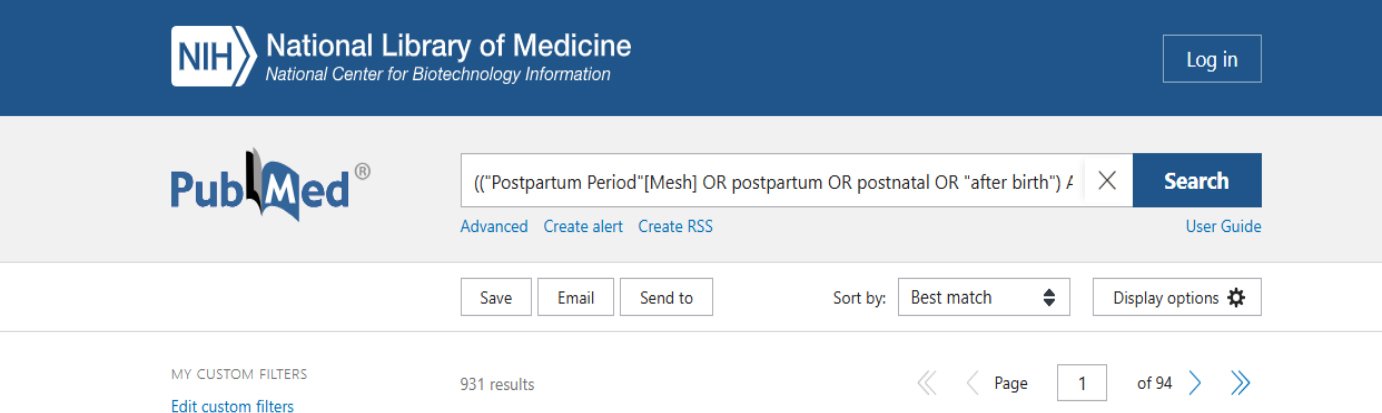
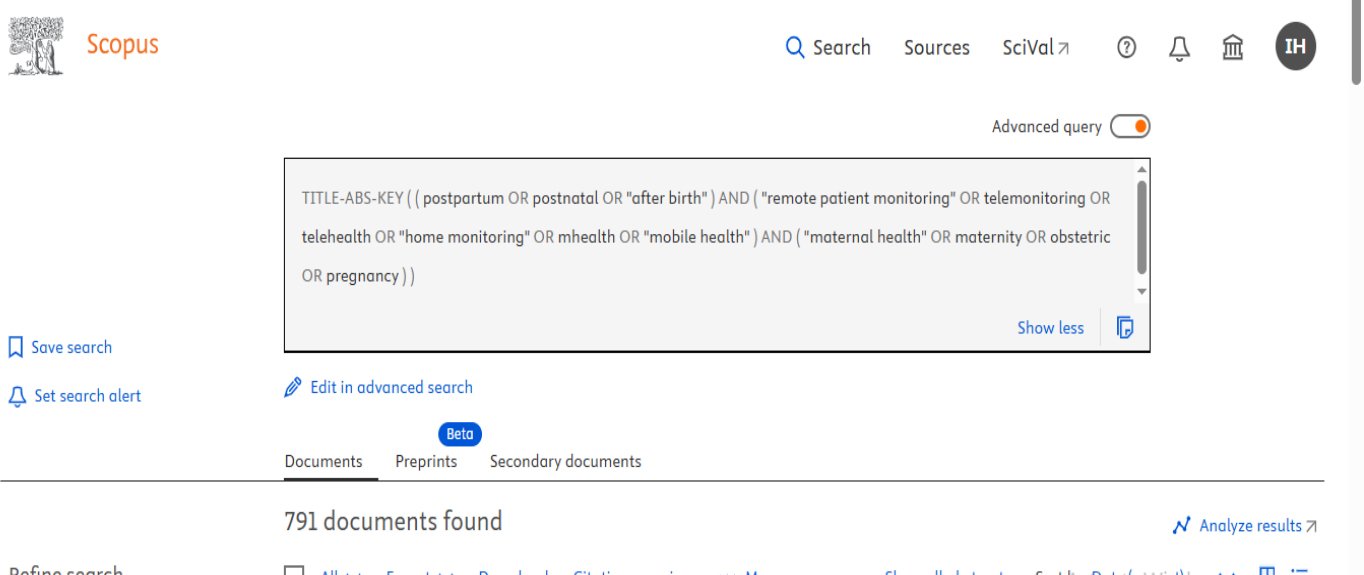
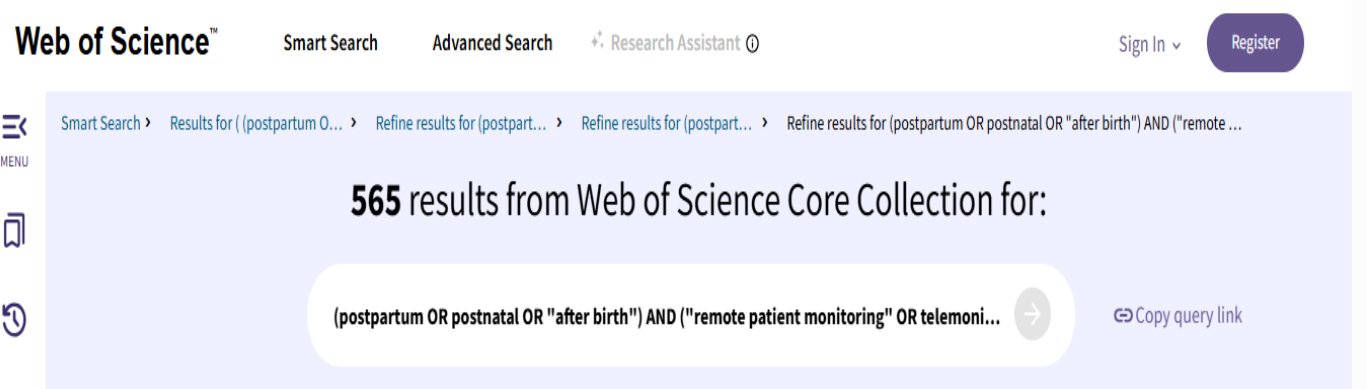
Complete Database-Specific Search Strategies
| Database | Exact Final Search Syntax | Limits Applied | Records Identified |
| PubMed | ((“Postpartum Period”[Mesh] OR postpartum[tiab] OR postnatal[tiab] OR puerperium[tiab] OR “after birth”[tiab]) AND (“Blood Pressure Monitoring, Ambulatory”[Mesh] OR “blood pressure monitoring”[tiab] OR “blood pressure measurement”[tiab] OR “blood pressure measurements”[tiab] OR “home blood pressure monitoring”[tiab] OR “remote blood pressure monitoring”[tiab] OR “BP monitoring”[tiab] OR “BP measurement”[tiab]) AND (“Telemedicine”[Mesh] OR “Remote Consultation”[Mesh] OR telemonitoring[tiab] OR telehealth[tiab] OR telemedicine[tiab] OR “remote monitoring”[tiab] OR “home monitoring”[tiab] OR mHealth[tiab] OR “mobile health”[tiab] OR app[tiab] OR smartphone[tiab]) AND (“Maternal Health”[Mesh] OR maternal[tiab] OR maternity[tiab] OR obstetric*[tiab] OR pregnancy[tiab] OR “Hypertension, Pregnancy-Induced”[Mesh] OR “Pre-Eclampsia”[Mesh] OR “hypertensive disorders of pregnancy”[tiab] OR “postpartum hypertension”[tiab] OR preeclampsia[tiab] OR “pre-eclampsia”[tiab] OR “gestational hypertension”[tiab])) AND (“2018/01/01″[Date – Publication] : “2026/01/31″[Date – Publication]) AND english[Language] | Publication date: January 2018–January 2026; Language: English | 931 |
| Scopus | TITLE-ABS-KEY((postpartum OR postnatal OR puerperium OR “after birth”) AND (“blood pressure monitoring” OR “blood pressure measurement” OR “blood pressure measurements” OR “home blood pressure monitoring” OR “remote blood pressure monitoring” OR “BP monitoring” OR “BP measurement”) AND (telemonitor* OR telehealth OR telemedicine OR “remote monitoring” OR “home monitoring” OR mhealth OR “mobile health” OR app OR smartphone) AND (maternal OR maternity OR obstetric* OR pregnancy OR “hypertensive disorders of pregnancy” OR “postpartum hypertension” OR preeclampsia OR “pre-eclampsia” OR “gestational hypertension”)) AND PUBYEAR > 2017 AND PUBYEAR < 2027 AND (LIMIT-TO(LANGUAGE, “English”)) AND (LIMIT-TO(DOCTYPE, “ar”)) | Publication years: 2018–2026; Language: English; Document type: Article | 791 |
| Web of Science Core Collection | TS=((postpartum OR postnatal OR puerperium OR “after birth”) AND (“blood pressure monitoring” OR “blood pressure measurement” OR “blood pressure measurements” OR “home blood pressure monitoring” OR “remote blood pressure monitoring” OR “BP monitoring” OR “BP measurement”) AND (telemonitor* OR telehealth OR telemedicine OR “remote monitoring” OR “home monitoring” OR mHealth OR “mobile health” OR app OR smartphone) AND (maternal OR maternity OR obstetric* OR pregnancy OR “hypertensive disorders of pregnancy” OR “postpartum hypertension” OR preeclampsia OR “pre-eclampsia” OR “gestational hypertension”)) | Timespan: 2018–2026; Language: English; Document type: Article; Index: Web of Science Core Collection | 565 |
Appendix B: PRISMA screening summary
| Step | Database 1: PubMed | Database 2: Scopus | Database 3: Web of Science | Justification and Description |
| Total Records Identified | 931 | 791 | 565 | This represents the total number of records identified in each of the three databases during the initial search. |
| Duplicates Removed | 29 | 10 | 11 | Duplicates across the three databases were removed to ensure unique studies were considered for further screening. |
| Records Screened | 902 | 781 | 554 | After removing duplicates, the total number of unique records that were screened for relevance in the review process was. |
| Full-Text Articles Assessed | 50 | 43 | 63 | These are the full-text articles assessed for eligibility after the title and abstract screening phase. |
| Studies Included in Review | 9 | 7 | 6 | After assessing full-text eligibility and applying inclusion/exclusion criteria, 22 studies were included in the review. |
Appendix C: Quality Appraisal Framework.
Table C1. Appraisal tools applied to the study design.
| Study Design | Appraisal Tool Used |
| Randomized controlled trials | Cochrane Risk of Bias 2 (RoB 2) |
| Non-randomized comparative study | ROBINS-I |
| Cohort / observational / feasibility studies | Newcastle–Ottawa Scale (NOS) |
| Implementation evaluation | Joanna Briggs Institute (JBI) analytical cross-sectional / quasi-experimental style checklist, adapted to programme evaluation context |
| Mixed-methods study | Mixed Methods Appraisal Tool (MMAT, 2018) |
| Qualitative studies | CASP Qualitative Checklist |
| Economic evaluation | CHEERS 2022-informed reporting appraisal |
Table C2. RoB 2 appraisal of randomized controlled trials.
| RoB 2 domain | (Cairns et al., 2018) | (Kitt et al., 2021) | (Arkerson et al., 2023) |
| Bias arising from the randomisation process | Low risk | Low risk | Low risk |
| Bias due to deviations from intended interventions | moderate | Moderate | Moderate |
| Bias due to missing outcome data | Moderate | Low risk | Low risk |
| Bias in the measurement of the outcome | Low risk | Low risk | Moderate |
| Bias in the selection of the reported result | Moderate | Moderate | Moderate |
| Overall RoB 2 judgement | Moderate | Moderate | Moderate |
Table C3. ROBINS-I appraisal of the non-randomized comparative study.
| ROBINS-I domain | (Hoppe et al., 2020) |
| Bias due to confounding | Moderate |
| Bias in the selection of participants | Moderate |
| Bias in the classification of interventions | Low |
| Bias due to deviations from intended interventions | Low |
| Bias due to missing data | Low |
| Bias in the measurement of outcomes | Low |
| Bias in the selection of the reported result | Low |
| Overall ROBINS-I judgement | Moderate risk of bias |
Table C4. Newcastle–Ottawa scale appraisal of cohort and observational studies.
| Study | Selection (Max 4) | Comparability (Max 2) | Outcome (Max 3) | Total / 9 | Overall Interpretation |
| (Hoppe et al., 2019) | 3 | 0 | 2 | 5 | Moderate |
| (Hauspurg et al., 2019) | 3 | 1 | 2 | 6 | Moderate |
| (Berhie et al., 2026) | 3 | 1 | 2 | 6 | Moderate |
| (Hauspurg et al., 2020) | 3 | 1 | 2 | 6 | Moderate |
| (Hacker et al., 2022) | 3 | 1 | 2 | 6 | Moderate |
| (Lemon et al., 2023) | 4 | 1 | 2 | 7 | Moderate |
| (Lemon et al., 2024) | 4 | 2 | 3 | 9 | Moderate |
| (Mujic et al., 2024) | 3 | 1 | 2 | 6 | Moderate |
| (Moustafa et al., 2024) | 3 | 1 | 2 | 6 | Moderate |
| (Patel et al., 2025) | 3 | 1 | 2 | 6 | Moderate |
| (Chatterjee et al., 2026) | 4 | 1 | 2 | 7 | Moderate |
| (Hauspurg et al., 2022), | 3 | 0 | 2 | 5 | Moderate |
Table C5. JBI appraisal of implementation evaluation.
| JBI Criterion | (Dullabh et al., 2023) |
| Inclusion criteria clearly defined | Yes |
| Study subjects and setting are described in detail | Yes |
| Exposure/intervention measured validly and reliably | Yes |
| Standard criteria used for the measurement of outcomes | Yes |
| Confounding factors identified | Partly |
| Strategies to deal with confounding stated | Partly |
| Outcomes measured validly and reliably | Yes |
| Appropriate statistical analysis used | Partly |
| Overall JBI judgement | Moderate quality |
Table C6. MMAT appraisal of mixed-methods study.
| MMAT criterion | (Johnson et al., 2025) |
| Research questions are clearly stated | Yes |
| Collected data addresses the research questions | Yes |
| Quantitative component appropriately designed | Yes |
| Qualitative component appropriately designed | Yes |
| Integration of qualitative and quantitative components | Yes |
| Interpretation adequately derived from integration | Yes |
| Divergences/inconsistencies addressed | Partly |
| Adherence to the quality criteria of each tradition | Partly |
| Overall MMAT judgement | Moderate |
Table C7. CASP appraisal of qualitative studies.
| CASP Domain | (Hernández-Green et al., 2024) | (James et al., 2025) | (Thatipelli et al., 2026) |
| Clear statement of aims | Yes | Yes | Yes |
| Qualitative methodology appropriate | Yes | Yes | Yes |
| Research design appropriate | Yes | Yes | Yes |
| Recruitment strategy appropriate | Partly | partially | Yes |
| Data collection appropriate | Yes | Yes | Yes |
| Researcher–participant relationship considered | Partly | Yes | Partly |
| Ethical issues considered | Yes | Yes | Yes |
| Data analysis rigorous | Yes | partially | Yes |
| Findings clearly stated | Yes | Yes | Yes |
| Value of the research | Yes | Yes | Yes |
| Overall CASP judgement | Moderate | Moderate | Moderate |
Table C8. CHEERS 2022-informed appraisal of economic evaluation.
| CHEERS Domain | (Mei et al., 2024) |
| Title/abstract identifies economic evaluation | Yes |
| Background and study question are clearly stated | Yes |
| Target population and setting described | Yes |
| Comparators clearly described | Yes |
| Perspective stated | Partly |
| Time horizon stated | Yes |
| Choice of outcomes justified | Yes |
| Measurement/valuation of resources and costs reported | Yes |
| Model assumptions transparent | Partly |
| Characterisation of uncertainty performed | Yes |
| Discussion of limitations provided | Yes |
| Overall CHEERS-informed judgement | Moderate |
Appendix D: Narrative Synthesis Framework.
| Stage of Synthesis | Procedure Followed | Purpose |
| Stage 1: Evidence mapping | Extracted data were organized by study design, population, intervention, comparator, outcomes, implementation features, equity variables, and quality appraisal. | To create a structured overview of the evidence base before synthesis. |
| Stage 2: Deductive coding | Initial coding categories were informed by the review question, PICO/PEO framework, PROGRESS-Plus framework, and predefined outcome domains. | To ensure that synthesis remained aligned with the review objectives. |
| Stage 3: Inductive coding | Repeated findings across studies were identified, including early BP detection, treatment escalation, engagement decline, workflow integration, digital access, language barriers, and subgroup differences. | To capture patterns that emerged from the included studies. |
| Stage 4: Theme development | Codes were grouped into four final themes: clinical effectiveness; healthcare utilization and care engagement; implementation and scalability; and equity-related findings. | To organize the narrative synthesis clearly and systematically. |
| Stage 5: Reviewer checking | Two reviewers independently reviewed extracted findings and preliminary thematic allocation. Disagreements were resolved through discussion or third-reviewer input. | To improve reliability and reduce single-reviewer interpretation bias. |
| Stage 6: Quality-informed interpretation | Stronger comparative and randomized studies were weighted more heavily for effectiveness; qualitative, implementation, mixed-methods, and economic studies informed context and equity interpretation. | To ensure that conclusions reflected both findings and methodological strength. |
REFERENCES
Arkerson, B. J., Finneran, M. M., Harris, S. R., Schnorr, J., McElwee, E. R., Demosthenes, L., & Sawyer, R. (2023). Remote monitoring compared with in-office surveillance of blood pressure in patients with pregnancy-related hypertension. Obstetrics & Gynecology, 142(4), 855–861.
https://doi.org/10.1097/AOG.0000000000005327
Benda, N. C., Veinot, T. C., Sieck, C. J., & Ancker, J. S. (2020). Broadband internet access is a social determinant of health! American Journal of Public Health, 110(8), 1123–1125.
https://doi.org/10.2105/AJPH.2020.305784
Berhie, S., Harper, E., Anwer, T., Gupta, S., Cantonwine, D., Suliman, S., Celi, A. C., Diouf, K., Seely, E. W., & Wilkins-Haug, L. (2026). HomeSafe: Postpartum hypertensive care enabled by electronic health record digital blood pressure capture and population health management. American Journal of Perinatology.
https://doi.org/10.1055/a-2807-4609
Cairns, A. E., Tucker, K. L., Leeson, P., et al. (2018). Self-management of postnatal poshypertension: The SNAP-HT trial. Hypertension, 72(2), 425–432.
https://doi.org/10.1161/HYPERTENSIONAHA.118.10911
Chatterjee, A., Zhao, X., Liu, J., Campbell, B. A., Yu, J., Boghossian, N. S., Cai, B., Li, X., & Hung, P. (2026). Telehealth uptake and rural-urban and racial/ethnic disparities in postpartum care access among Medicaid beneficiaries in South Carolina, 2018–2022. Medical Care, 64(5), 298-309.
https://doi.org/10.1097/MLR.0000000000002298
Chidambaram, S., Jain, B., Jain, U., Mwavu, R., Baru, R., Thomas, B., Greaves, F., Jayakumar, S., Jain, P., Rojo, M., Battaglino, M. R., Meara, J. G., Sounderajah, V., Celi, L. A., & Darzi, A. (2024). An introduction to digital determinants of health. PLOS Digital Health, 3(1), e0000346.
https://doi.org/10.1371/journal.pdig.0000346
Cochrane Equity Methods Group. (n.d.). PROGRESS-Plus. Cochrane. Available From: https://methods.cochrane.org/equity/projects/evidence-equity/progress-plus
Corlin, T., Raghuraman, N., Rampersad, R. M., & Sabol, B. A. (2023). Postpartum remote home blood pressure monitoring: The new frontier. AJOG Global Reports, 3(3), 100251.
https://doi.org/10.1016/j.xagr.2023.100251
DeNicola, N., Grossman, D., Marko, K., Sonalkar, S., Butler Tobah, Y. S., Ganju, N., Witkop, C. T., Henderson, J. T., Butler, J. L., & Lowery, C. (2020). Telehealth interventions to improve obstetric and gynecologic health outcomes: A systematic review. Obstetrics & Gynecology, 135(2), 371–382.
https://doi.org/10.1097/AOG.0000000000003646
Dullabh, H., Heaney-Huls, K. K., Chiao, A. B., Callaham, M. G., Desai, P., Gauthreaux, N. A., Kashyap, N., Lobach, D. F., & Aziz Boxwala, A. (2023). Implementation and evaluation of an electronic health record-integrated app for postpartum monitoring of hypertensive disorders of pregnancy using patient-contributed data collection. JAMIA Open, 6(4).
https://doi.org/10.1093/jamiaopen/ooad098
Hacker, F. M., Jeyabalan, A., Quinn, B., & Hauspurg, A. (2022). Implementation of a universal postpartum blood pressure monitoring program: Feasibility and outcomes. American Journal of Obstetrics & Gynecology MFM, 4(3), 100613.
https://doi.org/10.1016/j.ajogmf.2022.100613
Hauspurg, A., Lemon, L. S., Quinn, B. A., Binstock, A., Larkin, J., Beigi, R. H., Watson, A. R., & Simhan, H. N. (2019). A postpartum remote hypertension monitoring protocol implemented at the hospital level. Obstetrics & Gynecology, 134(4), 685–691.
https://doi.org/10.1097/AOG.0000000000003479
Hauspurg, A., Lemon, L., Cabrera, C., Javaid, A., Binstock, A., Quinn, B., Larkin, J., Watson, A. R., Beigi, R. H., & Simhan, H. (2020). Racial differences in postpartum blood pressure trajectories among women after a hypertensive disorder of pregnancy. JAMA Network Open, 3(12), e2030815.
https://doi.org/10.1001/jamanetworkopen.2020.30815
Hauspurg, A., Jaramillo Restrepo, V., Bidani, S., Jeyabalan, A., & Countouris, M. (2022). Feasibility of utilising telehealth in a multidisciplinary postpartum hypertension clinic. American Journal of Obstetrics & Gynecology, 266, s677-s678.
https://doi.org/10.1016/j.ajog.2021.11.1117
Hernandez-Green, N., Davis, M. V., Oluyemi, F., Hernandez-Spalding, K., Lewis, K., Beshara, M. S., Francis, S., Baker, L. J., Byrd, S., Parker, A., & Chandler, R. (2024). Using mHealth to reduce disparities in Black maternal health: Perspectives from Black rural postpartum mothers. Women’s Health, 20.
https://doi.org/10.1177/17455057241239769
Higgins, J. P. T., & Thomas, J., Chandler, J., Cumpston, M., Li, T., Page, M. J., Welch, V. A. (Eds.). (2019). Cochrane handbook for systematic reviews of interventions (2nd ed.). Wiley.
https://doi.org/10.1002/9781119536604
Hoppe, K. K., Thomas, N., Zernick, M., Zella, J. B., Havighurst, T., Kim, K., Williams, M., Niu, B., Lohr, A., & Johnson, H. M. (2020). Telehealth with remote blood pressure monitoring compared with standard care for postpartum hypertension. American Journal of Obstetrics & Gynecology, 223(4), P585-588.
https://doi.org/10.1016/j.ajog.2020.05.027
Hoppe, K. K., Williams, M., Thomas, N., Zella, J. B., Drewry, A., Havighurst, T., Kim, K., & Johnson, H. M. (2019). Telehealth with remote blood pressure monitoring for postpartum hypertension: A prospective single-cohort feasibility study. Pregnancy Hypertension, 15, 171–176.
https://doi.org/10.1016/j.preghy.2018.12.007
James, K. F., Waymouth, M., Alvarado, G., Mehrotra, A., & Uscher-Pines, L. (2025). Obstetricians’ experiences with remote monitoring programs for hypertensive disorders. AJOG Global Reports, 5(3), 100513.
https://doi.org/10.1016/j.xagr.2025.100513
Johnson, A. E., Pearlman, K., Sood, R., Dawdani, A., Aranda-Hernadez, A., Al Kola, M. A., Saffari, S. E., Bearat, A., Tabit, C. E., Vinci, L. M., Polonsky, T. S., & Shah, S. D. (2025). Implementing equitable hypertension care using a remote patient monitoring program: A mixed methods study. JACC: Advances, 4(11), 102249.
https://doi.org/10.1016/j.jacadv.2025.102249
Karran, E. L., Cashin, A. G., Barker, T., Boyd, M. A., Chiarotto, A., Dewidar, O., Mohabir, V., Petkovic, J., Sharma, S., Tejani, S., Tugwell, P., & Moseley, G.L. (2023). Using PROGRESS-Plus to identify current approaches to the collection and reporting of equity-relevant data: A scoping review. Journal of Clinical Epidemiology, 163, 70–78.
https://doi.org/10.1016/j.jclinepi.2023.09.017
Kitt, J. A., Fox, R. L., Cairns, A. E., Mollison, J., Burchert, H. H., Kenworthy, Y., McCourt, A., Suriano, K., Lewandowski, A. J., Mackillop, L., Tucker, K. L., McManus, R. J., & Leeson, P. (2021). Short-term postpartum blood pressure self-management and long-term blood pressure control: A randomized controlled trial. Hypertension, 78(2), 469–479.
https://doi.org/10.1161/HYPERTENSIONAHA.120.17101
Lemon, L. S., Hauspurg, A., Garrard, W., Quinn, B., & Simhan, H. N. (2023). Neighborhood disadvantage and the racial disparity in postpartum hypertension. American Journal of Obstetrics & Gynecology MFM, 5(1), 100773.
https://doi.org/10.1016/j.ajogmf.2022.100773
Lemon, L. S., Quinn, B., Binstock, A., Larkin, J. C., Simhan, H. N., & Hauspurg, A. (2024). Clinical outcomes associated with a remote postpartum hypertension monitoring program. Obstetrics & Gynecology, 144(3), 377–385
https://doi.org/10.1097/AOG.0000000000005665
Lewkowitz, A. K., & Hauspurg, A. (2024). Perinatal remote blood pressure monitoring. Obstetrics & Gynecology, 144(3), 339–345.
https://doi.org/10.1097/AOG.0000000000005690
McCann, L., Johnson, L., & Ford, J. (2023). Equity-focused evidence synthesis: A need to optimise our approach. Public Health in Practice, 6, 100430. https://doi.org/10.1016/j.puhip.2023.100430
Mei, J. Y., Hauspurg, A., Corry-Saavedra, K., Nguyen, T. A., Murphy, A., & Miller, E. S. (2024). Remote blood pressure management for postpartum hypertension: A cost-effectiveness analysis. American Journal of Obstetrics & Gynecology MFM, 6(9), 101442.
https://doi.org/10.1016/j.ajogmf.2024.101442
Mujic, E., Parker, S. E., Nelson, K. P., O’Brien, M., Chestnut, I. A., Abrams, J., & Yarrington, C. D. (2024). Implementation of a cell-enabled remote blood pressure monitoring program during the postpartum period at a safety-net hospital. Journal of the American Heart Association, 13(13).
https://doi.org/10.1161/JAHA.123.034031
Moustafa, A. S. Z., Wondwosen, Y., Perry, A., Solis, L., Belk, S., Morris, R., Spencer, S.-K., Rana, S., & Wallace, K. (2024). Report from a text-based blood pressure monitoring prospective cohort trial among postpartum women with hypertensive disorders of pregnancy. BMC Pregnancy and Childbirth, 24(1).
https://doi.org/10.1186/s12884-024-06511-1
Nouri, S., Khoong, E. C., Lyles, C. R., & Karliner, L. (2020). Addressing equity in telemedicine for chronic disease management during the COVID-19 pandemic. NEJM Catalyst Innovations in Care Delivery.
https://catalyst.nejm.org/doi/full/10.1056/CAT.20.0123
Patel, E., Bisson, C., Suresh, S., Mueller, A., Duncan, C., Sajid Shahul, Lengyel, E., & Rana, S. (2025). Systematic treatment and management of postpartum hypertension using remote patient monitoring. Pregnancy Hypertension, 39, 101180.
https://doi.org/10.1016/j.preghy.2024.101180
Saldanha, I. J., Adam, G. P., Kanaan, G., Zahradnik, M. L., Steele, D. W., Danilack, V. A., Peahl, A. F., Chen, K. K., Stuebe, A. M., & Baulk, E. M. (2023). Postpartum care up to 1 year after pregnancy: A systematic review and meta-analysis (Comparative Effectiveness Review No. 261). Agency for Healthcare Research and Quality.
https://doi.org/10.23970/AHRQEPCCER261
Steele, D. W., Adam, G. P., Saldanha, I. J., Kanaan, G., Zahradnik, M. L., Danilack-Fekete, V. A., Stuebe, A. M., Peahl, A. F., Chen, K. K., & Balk, E. M. (2023). Postpartum home blood pressure monitoring: A systematic review. Obstetrics & Gynecology, 142(2), 285–295. https://doi.org/10.1097/AOG.0000000000005270
Thatipelli, S., Pestka, D. L., Honeyfield, K., Hansen, S., Rizvi, R., Melton, G. B., & Sabol, B. A. (2026). A qualitative study exploring postpartum patients’ experiences with remote blood pressure monitoring. Pregnancy, 2(3), e70281.
https://doi.org/10.1002/pmf2.70281
Veinot, T. C., Mitchell, H., & Ancker, J. S. (2018). Good intentions are not enough: How informatics interventions can worsen inequality. Journal of the American Medical Informatics Association, 25(8), 1080–1088.
https://doi.org/10.1093/jamia/ocy052
Welch, V., Dewidar, O., Ghogomu, E. T., Abdisalam, S., Al Ameer, A., Barbeau, V. I., Brand, K., Kebedom, K., Benkhalti, M., Kristjansson, E., Madani, M. T., Antequera Martín, A. M., Mathew, C. M., McGowan, J., McLeod, W., Park, H. A., Petkovic, J., Riddle, A., Tugwell, P., Petticrew, M., Trawin, J., & Wells, G. A. (2022). How effects on health equity are assessed in systematic reviews of interventions. Cochrane Database of Systematic Reviews, 1, MR000028.
https://doi.org/10.1002/14651858.MR000028.pub3
World Health Organization. (2003). Adherence to long-term therapies: Evidence for action. Available From: https://apps.who.int/iris/handle/10665/42682 (Accessed on: 7 July 2026)
World Health Organization. (2022). WHO recommendations for maternal and newborn care to support a positive postnatal experience. Available From: https://www.who.int/publications/i/item/9789240045989 (Accessed on: 7 July 2026)
Yardley, L., Spring, B. J., Riper, H., Morrison, L. G., Crane, D. H., Curtis, K., Merchant, G. C., Naughton, F., & Blandford, A. (2016). Understanding and promoting effective engagement with digital behavior change interventions. American Journal of Preventive Medicine, 51(5), 833–842.
https://doi.org/10.1016/j.amepre.2016.06.015
Yang, M., Yue, W., Han, X., Hu, C., Sun, X., & Luo, J. (2021). Postpartum care indications and methodological quality: A systematic review of guidelines. Journal of Public Health, 30(9), 2261–2275.
https://doi.org/10.1007/s10389-021-01629-4
Yao, R., Zhang, W., Evans, R., Cao, G., Rui, T., & Shen, L. (2022). Inequities in health care services caused by the adoption of digital health technologies: Scoping review. Journal of Medical Internet Research, 24(3), e34144.
https://doi.org/10.2196/34144
Licensed
© 2026 Copyright by the Authors.
Licensed as an open access article using a CC BY 4.0 license.
Article Contents Author Ajay Mahesh Gaur1, * 1University of Colorado Denver, Denver, USA Article History: Received: 30 July, 2026 Revised:
Article Contents Author Jiyad Shaikh1, * 1NED University of Engineering and Technology, Karachi, Pakistan Article History: Received: 23 July, 2026
Article Contents Author Saad Ahmad Khan1, * Imran Iqbal2 1Department of Marketing and Supply Chain Management, Iqra University, Karachi, Pakistan
Article Contents Author Raza Hussain Khoso1, * 1Department of Management, Emaan Institute of Management and Sciences (EIMS), Karachi,
Article Contents Author Rashid Ali Baloch1, * 1Indus University, Karachi, Pakistan Article History: Received: 25 August, 2026 Revised: 07 October,
Article Contents Author Muhammad Jawwad1, * 1NED University of Engineering and Technology, Karachi, Pakistan Article History: Received: 01 September, 2026