


















Article Contents
Article ID: CM2601117004
Views: 20Demographics and Current Population Trends of the Kashmir Markhor (Capra falconeri cashmiriensis) in Chitral Gol National Park, Khyber Pakhtunkhwa
 PDF
PDF
⬇ Downloads: 3
1Department of Zoology, Govt. College Gulabad Dir (L), KPK, Pakistan
2Department of Zoology, Diwan Diyaram Jethmal (D.J) Sindh Government Science College, Karachi, Pakistan
Received: 16 July, 2026
Accepted: 05 September, 2026
Revised: 04 August, 2026
Published: 25 September, 2026
Abstract:
Introduction: The Kashmir Markhor (Capra falconeri cashmiriensis) is an endangered mountain ungulate native to the Hindu Kush and western Himalayan region and a species of the high-altitude ecosystems of northern Pakistan. The current study is conducted to investigate the population dynamics and demographic profile of the Kashmir Markhor (Capra falconeri cashmiriensis) in Chitral Gol National Park (CGNP) and its adjoining buffer zones.
Methods: The following field survey was conducted during the rutting season of December 2024, with primary data collected through direct observations using binoculars. Moreover, questionnaire-based interviews were also conducted with wildlife rangers, local hunters and community members, students, wildlife watchers and shepherds.
Results: The current study recorded 2,451 Kashmir Markhors of which 636 were females, 461 were yearlings, 849 were fawns, and 505 were trophy-sized males. The findings of the current study were also compared with data reported from previous studies.
Conclusion: Comparative analysis from other researchers indicated a slight increase in the population of Kashmir Markhor in CGNP, indicating the effectiveness of the ongoing conservation efforts.
Keywords: Kashmiri Markhor, Chitral Gol National Park, population status, conservation, Capra falconeri cashmiriensis, rutting season.
1. INTRODUCTION
Caprinae represents evolutionary lineages within the Bovidae family and comprise of approximately 35 species distributed throughout Asia. Markhor (Capra falconeri) is a distinguished and large wild caprid endemic to the rugged alpine and woodlands of the Karakoram, and Western Himalayan region. A total of seven species and 12 subspecies of Caprinae have been recorded in Pakistan (Roberts, 1977; Hess et al., 1997). C. falconeri is categorized into several subspecies based on geographic distribution, horn morphology and horn metrics. These lineages are broadly divided into two structural morphotypes (Schaller & Khan, 1975; Ahmad et al., 2022). The first category comprises straight-horned markhors with upright, screw-like horns, including the Kabul markhor (Capra falconeri megaceros) and the Suleiman markhor (Capra falconeri jerdonii). The second type is the flare-horned markhor, which possesses diverging spiraled horns. The Kashmir markhor or Pir Panjal markhor (Capra falconeri cashmiriensis) and the Astor markhor (Capra falconeri falconeri) are included in this group. Flare-horned markhors are larger than straight-horned markhors both in body size and horn length (Ali, 2008; Schaller & Khan, 1975).
Adults typically exhibit shoulder height ranging from 65 to 115 centimeters and a body mass spanning 40 to 110 kilograms; the species is globally recognized for its imposing stature. The species displays prominent sexual dimorphism, with females being significantly smaller than males in both overall body size and horn development (Schaller, 1977; Roberts, 1997; Shackleton, 1997; Grubb, 2005; Groves & Grubb, 2011). Female markhor have a small chin tuft whereas males have a black beard and the chest of male markhor have a shaggy mane of long hair (Shackleton, 1997; Wikipedia Contributors, 2026). The forepart of the neck is covered with white and grey hair, while the hind limbs have longer hair around their elbows. During winters, the coat becomes longer although under-wool development is limited.
During summer season, they naturally shed their wool and long hair by rubbing their body against rocks and trees. This seasonal shedding reduces hair length and density of the coat, leaving the hair shorter and trimmed (Ultimate Ungulate, 2023; Animalia Bio, 2024). In healthy young males, the coat becomes dark or almost black during autumn. The body of the male markhor begins to shrink and their horns lengthen at the age of nine, which increases their vulnerability to predators, hunters and other natural threats such as avalanches floods, and rolling stones (Schaller & Khan, 1975; Haider et al., 2021; Facts and Details, 2025) (Figs. 1 and 2).
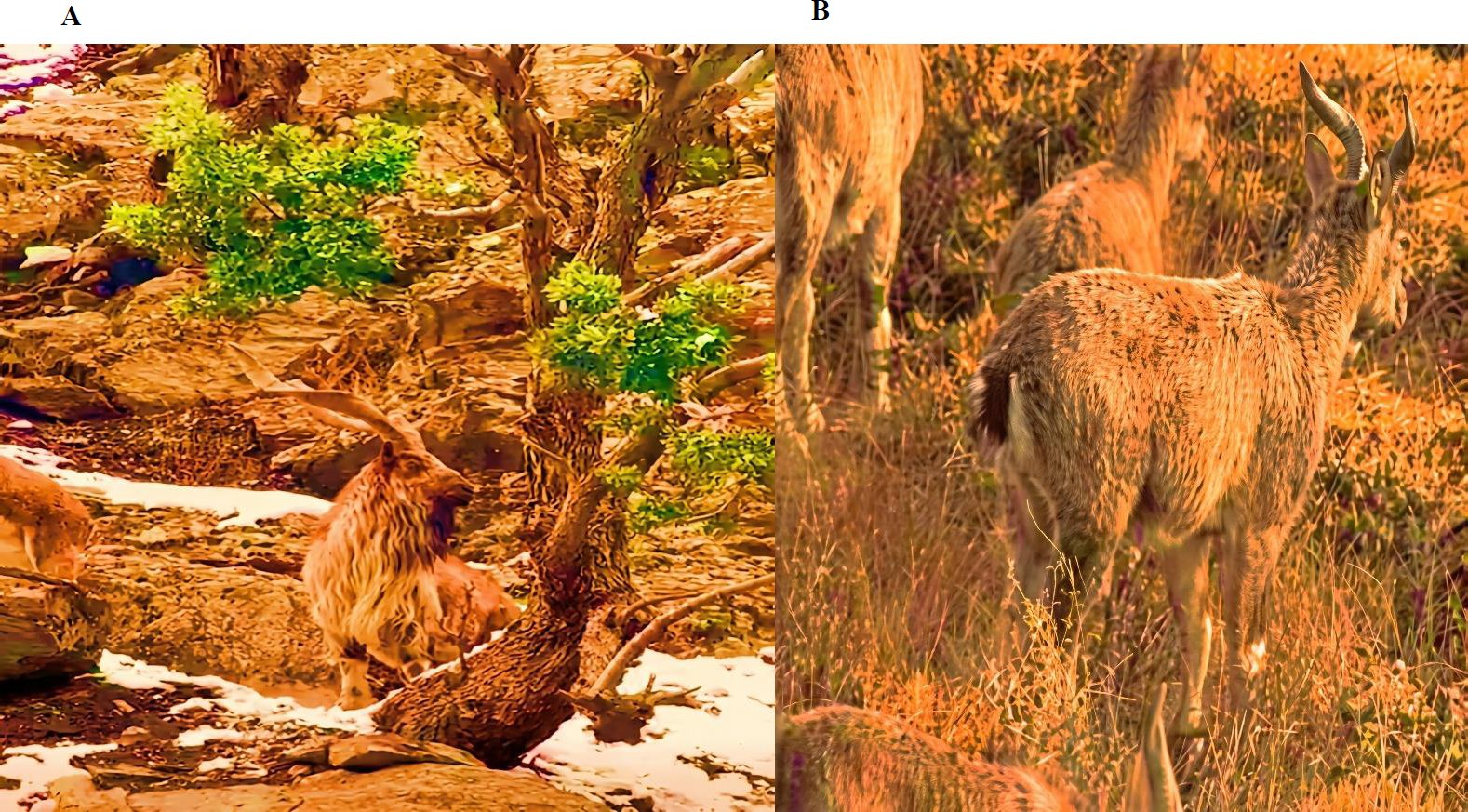
Fig. (1). (A) Male Markhor (B) Female Markhor.
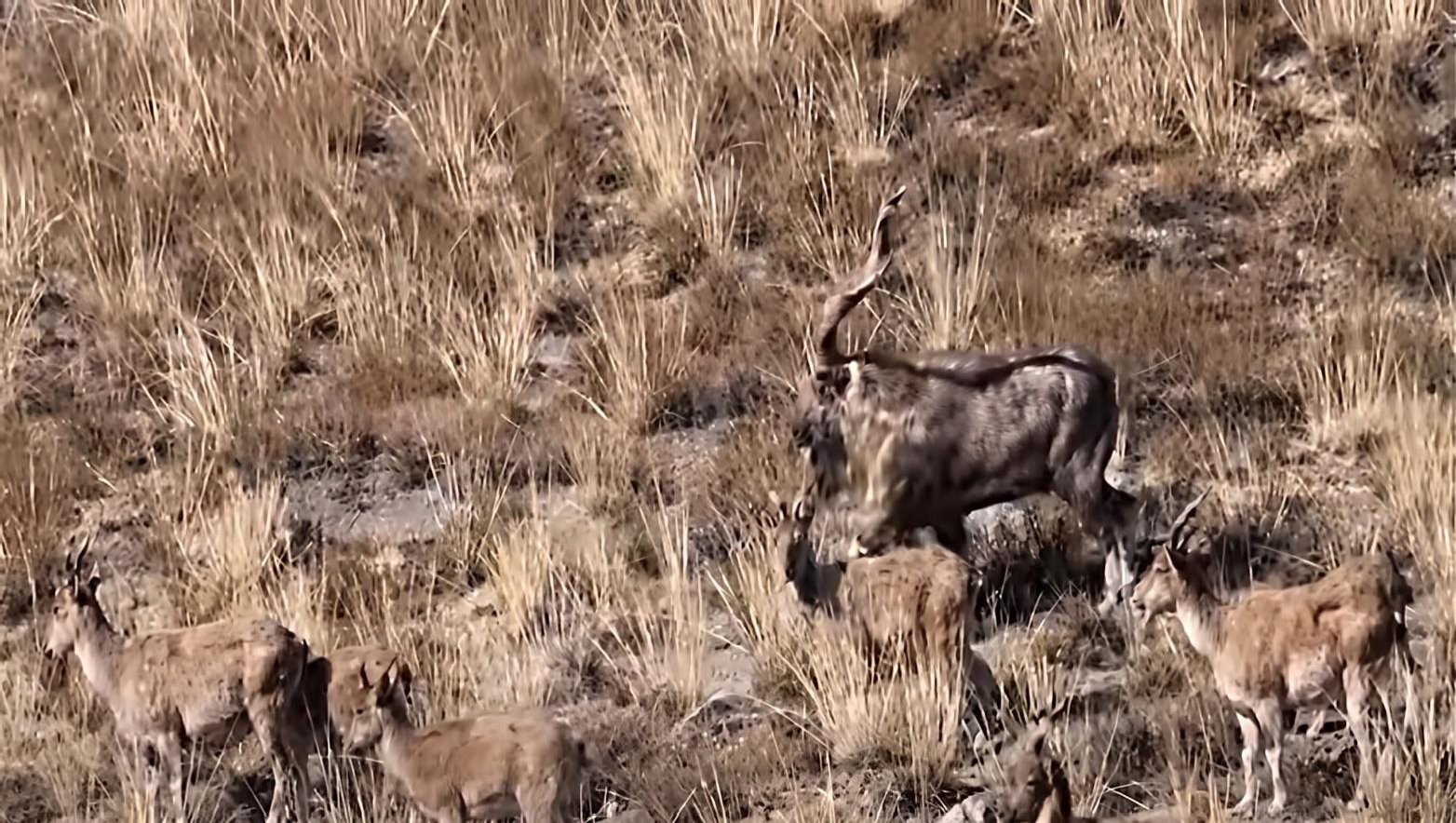
Fig. (2). A herd of Kashmir markhor with a full-size male, some females and yearling.
The Kashmiri markhor (Capra falconeri cashmiriensis) is diurnal and becomes active in the early morning and late afternoon during summers. They are herbivores that graze on grass during spring and summer seasons while they browse leaves, twigs, shrubs and seeds during autumn and winters. They seek shade and rest under trees or rocks chewing the cud for the whole day. They descend again in search of food and water after sunset. In the late evening, they select precipitous areas for refuge at night to protect themselves from predators while they feed actively throughout the day spending most of their time in feeding with intervals of short resting and sun-basking (Roberts, 1977; Schaller, 1977; Khan et al., 2018). During rut season and moonlight, the herds have been observed feeding during nighttime also. Markhor stand on their hind legs to reach the leaves and seeds of evergreen oak leaves. Young males take advantage in groove while older males take part in rutting late and big fight occurs between males to occupy maximum females. During such fights, some males lose their horn even their lives from falling from rocks with the stronger male occupying the large groups. In case of danger one animal in the group make special sound like “tiff” to alert whole group. Markhors are gregarious, during most of the year, females, kids and yearlings form herds of 10 to 30 individuals, though they may congregate into larger aggregations depending on food availability and seasonal migration. Adult males are largely solitary or live in separate, small bachelor herds high up in the rugged terrain during the spring and summer. During the rutting season in December, males descend to lower altitudes to join the female herds. This is when the largest visible herd sizes are recorded across the vantage points (Schaller, 1977; Hess et al., 1997: Ahmad et al., 2022).
Caprines including Markhor (Capra falconeri), Himalayan ibex (Capra sibirica) and urial (Ovis vignei) face endangerment due to severe anthropogenic pressures and represent a critical conservation concern in the region. These anthropogenic threats include habitat fragmentation, illegal hunting and resource competition with domestic livestock. Some long-term conservation frameworks are essential for these important species to maintain stability in mountainous ecosystem (Khan et al., 2016; Ahmed and Nabi, 2022; Safi et al., 2024).
Localized populations show positive trajectories and are classified as Near Threatened (NT) on the IUCN Red List since 2015. Chitral Gol National Park (CGNP) hosts the largest population of the Astor (C. f. falconeri) and Kashmir (C. f. cashmiriensis) markhor as per the ecological survey data in 2023. The park’s population is currently estimated to have a 20% demographic increase attributed to community-managed conservation and strict anti-poaching enforcement efforts (Safi et al., 2024; Khan et al., 2024).
The current survey was conducted in the core area of CGNP and its associated buffer zones. The park covers approximately 7750 hectares and is located north-west of Chitral City, extending towards the western and eastern areas through buffer zones that contain biologically rich habitats of Hindu Kush Mountains. To ensure representative coverage of the park’s core zone, five distinct elevated viewpoints were established for monitoring: Malosh Loho, Marin Dear, Sha Dehar, Bamgot, and Daleem Dehar (Din & Nawaz, 2010) (Fig. 3).
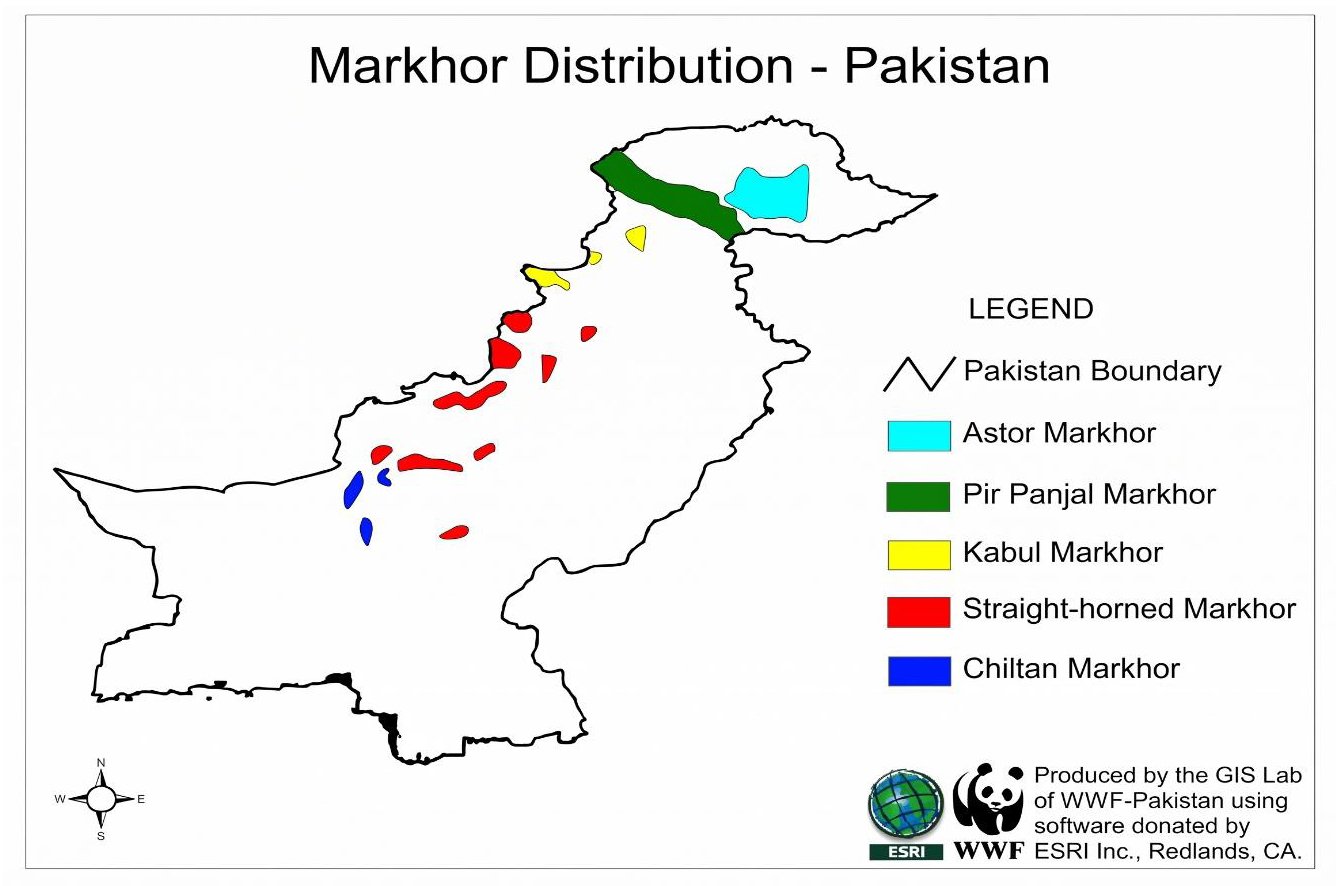
Fig. (3). Markhor distribution in Pakistan (Safi et al., 2024).
In 1997, the Markhor trophy-hunting program was initiated by the Provincial Government of Khyber Pakhtunkhwa (KPK) with the special permission of CITES (CITES, 2026). The program aimed to strengthen local networks in the protection of markhor and other significant creature species. 80% of the permit fee was allocated to Village Conservation Funds (VCF). The involvement of local communities subsequently contributed to markhor conservation and protection of other local wild fauna (Yasmeen et al., 2022).
Five subspecies of markhor have been recognized based on horn configuration, with four subspecies reported in Pakistan and include Astor Markhor (C. f. falconeri), Kabul Markhor (C. f. megaceros), Kashmir Markhor or Pir Panjal Markhor (C. f. cashmiriensis) and Sulaiman Markhor (C. f. jerdoni). The fifth species is Bukharan Markhor (C. f. heptneri) (Roberts, 1997; Grubb, 2005; Michel and Michel, 2015). These are four subspecies from Pakistan, and the fifth specie is Bukharan Markhor (Capra f heptneri). These subspecies are broadly classified into two categories: straight and flare-horned markhors (Ahmad et al., 2022; Schaller & Khan, 1975).
The objective of the current study is to evaluate population trends, demographic distributions, annual population growth, threats and potential conservation measures for the flare-horned markhor in CGNP. A five-day population assessment was conducted during the rutting season in December 2024. This time period was selected to coincide with the rutting season, when social groups are most readily visible, and to document patterns of seasonal activity and predation within the national park.
2. MATERIALS AND METHODS
2.1. Study Area
Chitral Gol National Park (CGNP) was established in 1984, situated in the Hindu Kush Mountain range. Geographically, the park is located at approximately 35° 51′ to 35° 57′ N latitude and 71° 43′ to 71° 47′ E longitude, with elevations ranging between 1,500 and 4,950 m above sea level in Chitral District of KPK, Pakistan (Arshad et al., 2012; Din & Nawaz, 2010; Safi et al., 2024). The core area of the park is located northwest of Chitral City surrounded by buffer zones. They encompass the rich biological habitats of Hindu Kush Mountains, including the Ayun Gol region and areas associated with the Kalash community. The core area covers approximately 7,750 ha while the buffer zones cover 34,599 ha extending across the eastern and western peripheries (Safi et al., 2024).
The region receives an average annual precipitation of approximately 462 mm, occurring predominantly during winter and spring. Precipitation during winters occurs as snowfall and this region remains largely unaffected by monsoon weather patterns. The national park provides a high-altitude habitat for several other species, including the snow leopard (Panthera uncia), chukar partridge (Alectoris chukar) and deodar cedar (Cedrus deodara) (Niaz, 2017; Safi et al., 2024) (Fig. 4).
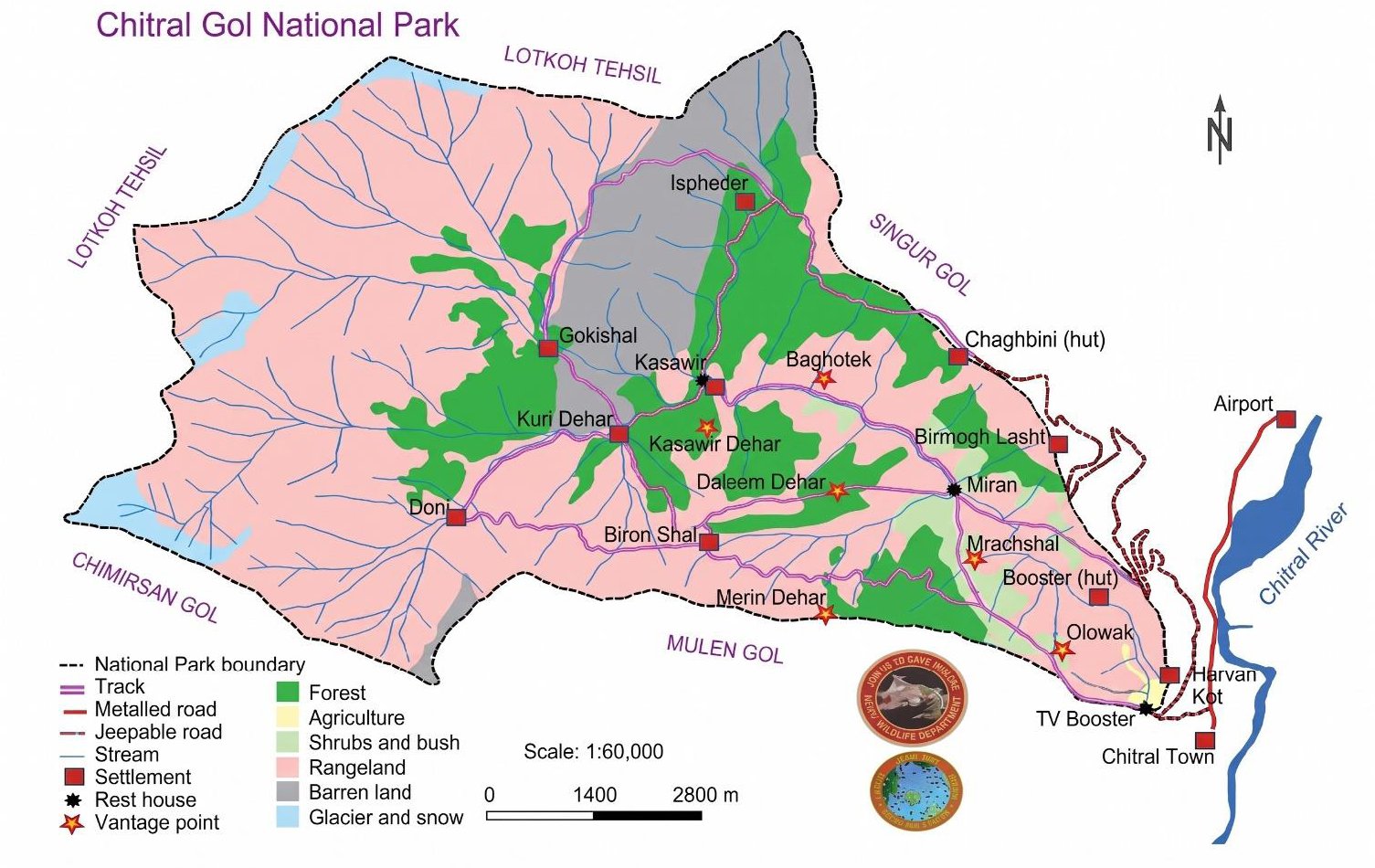
Fig. (4). Map of Chitral Gol National Park in Chitral, KP, Pakistan (Courtesy by: Ali., 2008).
2.2. Field Sampling and Observation Techniques
A multi-method observation framework was implemented to minimize counting bias and maximize detection probabilities across varying terrains. We used different techniques for this survey like Fixed-point census; Long-range searching, using high-magnification binoculars (Olympus 8-16×40, DPS I) and spotting Telescopes (Nikon 15–45×) and Riparian monitoring technique, focused on water bodies to observe markhors during watering intervals. (Arshad et al., 2012; Din & Nawaz, 2010; Khan & Bhagwat, 2010).
To capture peak activity, we conducted observations at various vantage points during early morning (around 7:00 AM) and late afternoon (around 4:00 PM). The local field watchers also assisted us in the identification of the age of the markhor.
3. RESULTS
Data was collected from CGNP and three of its associated buffer zones (Rumbur, Shoghor, and Muleen), utilizing a total of 25 viewpoints. A total of 2,451 Kashmir markhor individuals were counted during the study. 2,113 in the Core Zone, 231 in the Shoghor Wildlife Range, 58 in Rumbur, and 49 individuals in the Muleen buffer zone (Tables 1 and 2, Fig. 5).
Table 1. Population distribution and demographic composition of markhor in CGNP.
| Management Zone / Area | Lambs (½ Year) | Yearlings (1½ Year) | Females | Males (Class I to IV) | Total Count | % of Total Population |
| Chitral Gol National Park | 420 | 278 | 550 | 865 | 2,113 | 86.21% |
| Shoghor Wildlife Range | 53 | 56 | 60 | 62 | 231 | 9.42% |
| Rumbur Buffer Zone | 12 | 13 | 17 | 16 | 58 | 2.37% |
| Muleen Buffer Zone | 7 | 10 | 9 | 23 | 49 | 2.00% |
| Grand Total | 492 | 357 | 636 | 966 | 2,451 | 100.00% |
| Demographic Percentage | 20.07% | 14.57% | 25.95% | 39.41% | – | – |
Table 2. Demographic profile summary of the age and sex classes across all regions.
| Demographic Category | Headcount | Percentage of Total (%) |
| Females | 636 | 25.95% |
| Lambs (½ year) | 492 | 20.07% |
| Yearlings (1½ year) | 357 | 14.57% |
| Male C-I | 227 | 9.26% |
| Male C-II | 234 | 9.55% |
| Male C-III | 276 | 11.26% |
| Male C-IV | 229 | 9.34% |
| Grand Total | 2,451 | 100.00% |
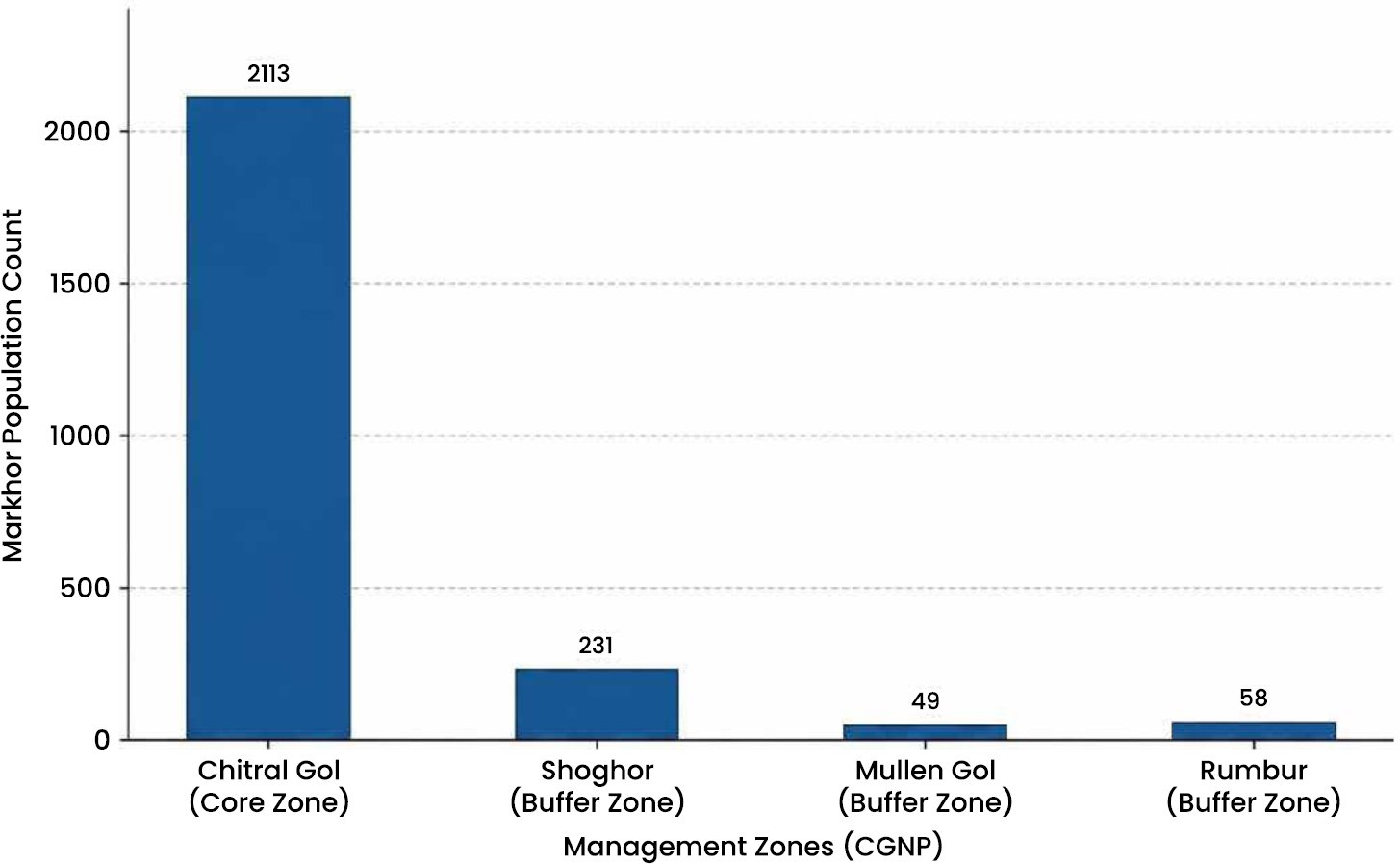
Fig. (5). Kashmir Markhor population in core zone (CGNP), Shoghor, Mullen, and Rumbur.
3.1. Core Zone of CGNP
The core zone of the park comprises the vegetation types including conifers, shrubs, sub-alpine and alpine areas and is subdivided into 14 viewpoints. The dominant demographic sector was observed within the adult female group, displaying the highest abundance with 550 individuals. This was followed by the second-largest cohort consisting of lambs (0.5 years old) with 420 individuals and indicates healthy reproductive rates and a strong population baseline. Stable maturity is indicated by the adult male classes (Class I to Class IV), with an average balanced distribution of 216 individuals per class. These adult horned male in Class III (3.5–4.5 years old) exhibited the highest peak with 243 individuals (Tables 1 and 3, Figs. 5–9).
Table 3. Demographic status in different vantage points of the Core Zone of CGNP.
| S. No. | Vantage Point / Area | Lambs (½ yr) | Yearling | Females | C-I | C-II | C-III | C-IV | Total |
| 1. | Chaghbini Hut | 12 | 4 | 19 | 1 | 0 | 5 | 6 | 47 |
| 2. | Daleem Dehar | 37 | 27 | 40 | 17 | 19 | 29 | 28 | 197 |
| 3. | Sha Dhar | 90 | 72 | 81 | 43 | 42 | 34 | 43 | 405 |
| 4. | Mearin Dehar | 48 | 28 | 61 | 20 | 22 | 40 | 16 | 235 |
| 5. | Ishpedar | 19 | 10 | 26 | 15 | 10 | 9 | 8 | 97 |
| 6. | Chitral Gol Park Kroideri | 21 | 17 | 35 | 7 | 9 | 13 | 11 | 113 |
| 7. | Doktonotek | 28 | 15 | 33 | 16 | 9 | 7 | 8 | 116 |
| 8. | Olowak | 30 | 20 | 39 | 14 | 15 | 27 | 21 | 166 |
| 9. | Narkoko Bokt | 15 | 5 | 11 | 5 | 4 | 7 | 5 | 52 |
| 10. | Lohaot Bangot | 37 | 27 | 56 | 22 | 26 | 21 | 18 | 207 |
| 11. | Tongogh opakhtori | 31 | 11 | 41 | 1 | 8 | 3 | 8 | 103 |
| 12. | Baghotek | 17 | 11 | 27 | 18 | 14 | 15 | 8 | 110 |
| 13. | Benjsha | 5 | 3 | 14 | 4 | 7 | 6 | 4 | 43 |
| 14. | Malosh | 30 | 28 | 67 | 25 | 21 | 27 | 24 | 222 |
| – | Total | 420 | 278 | 550 | 208 | 206 | 243 | 208 | 2113 |
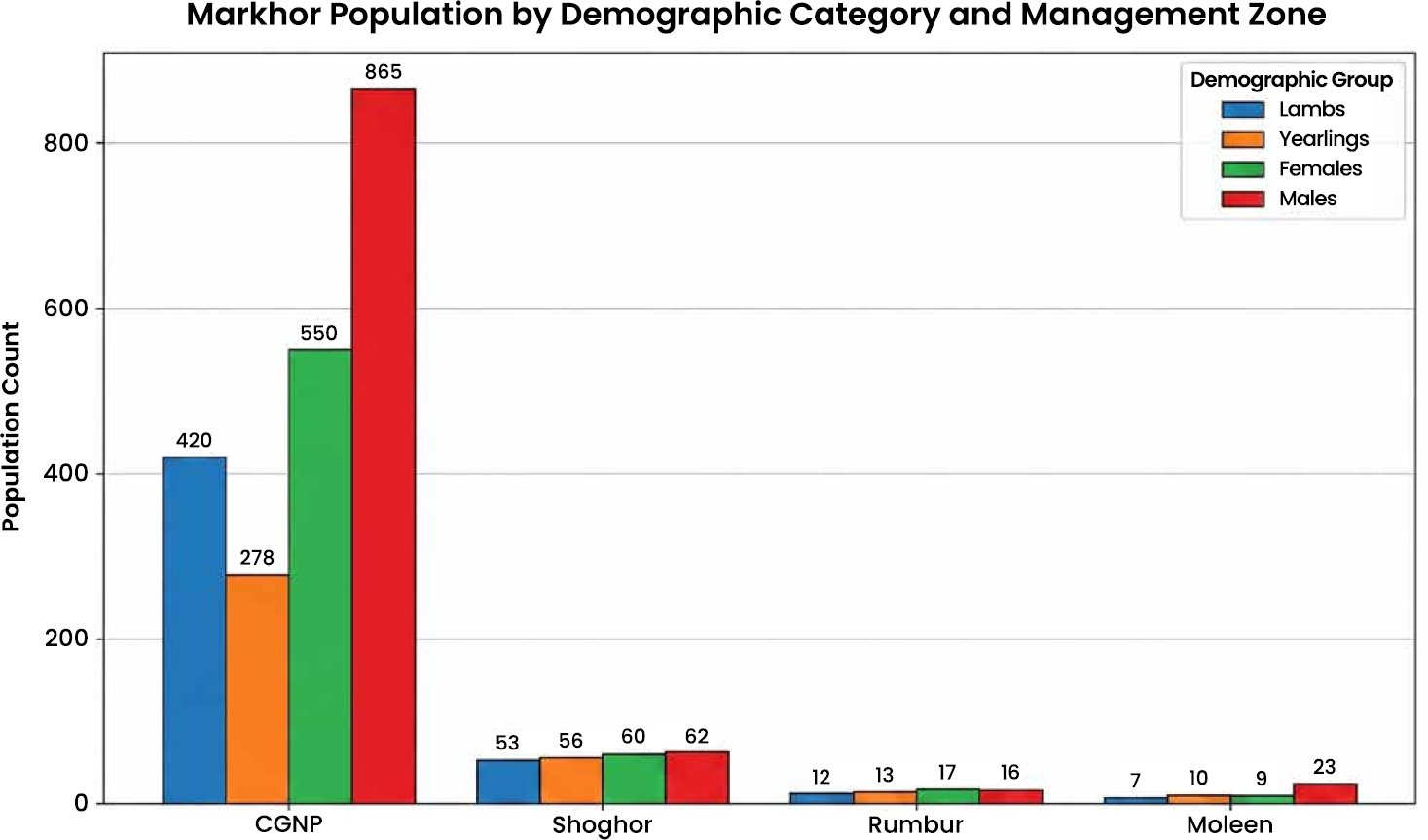
Fig. (6). Population distribution and demographic composition of the Markhors in CGNP and its associated buffer zones.
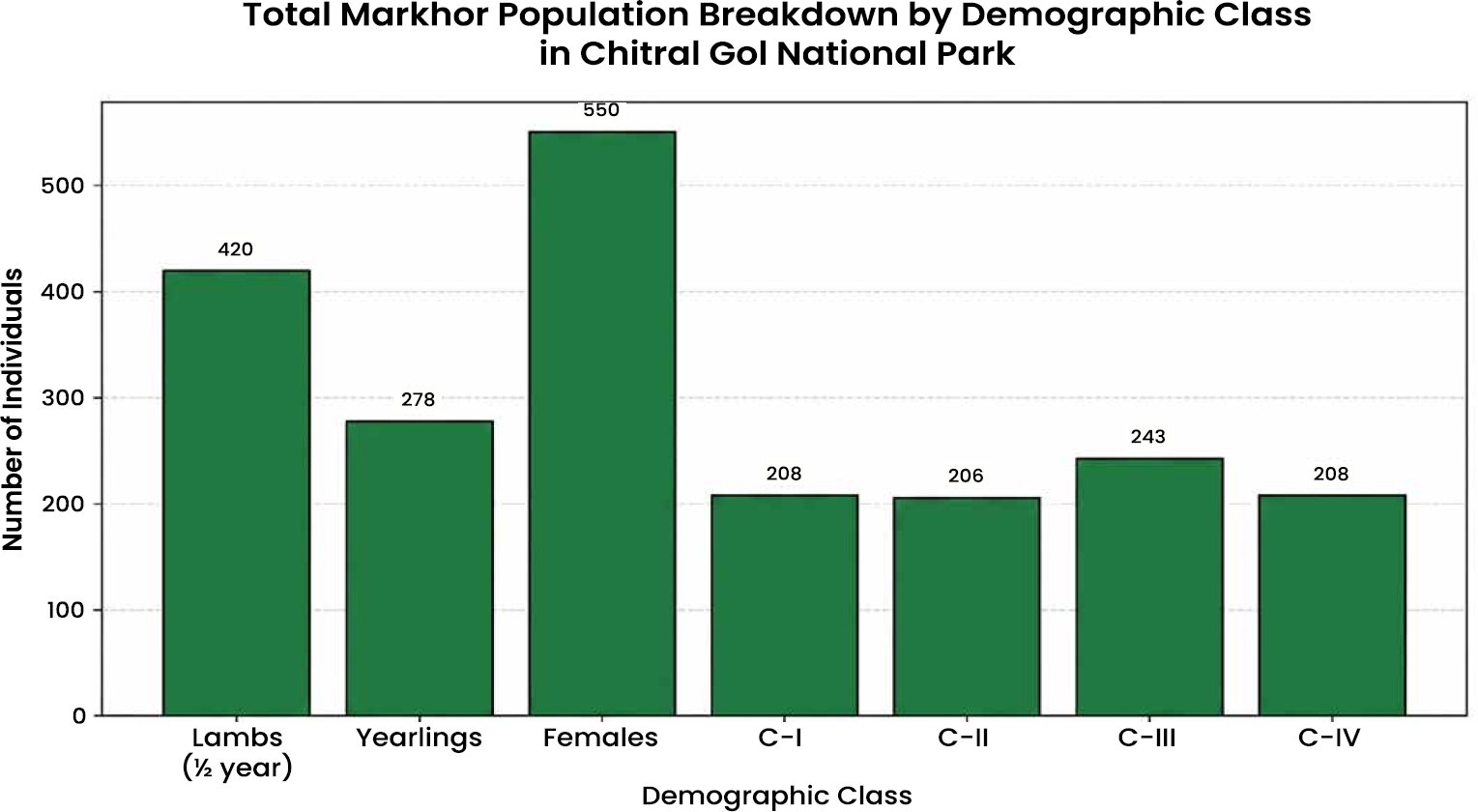
Fig. (7). Demographic status in the Core zone of CGNP.
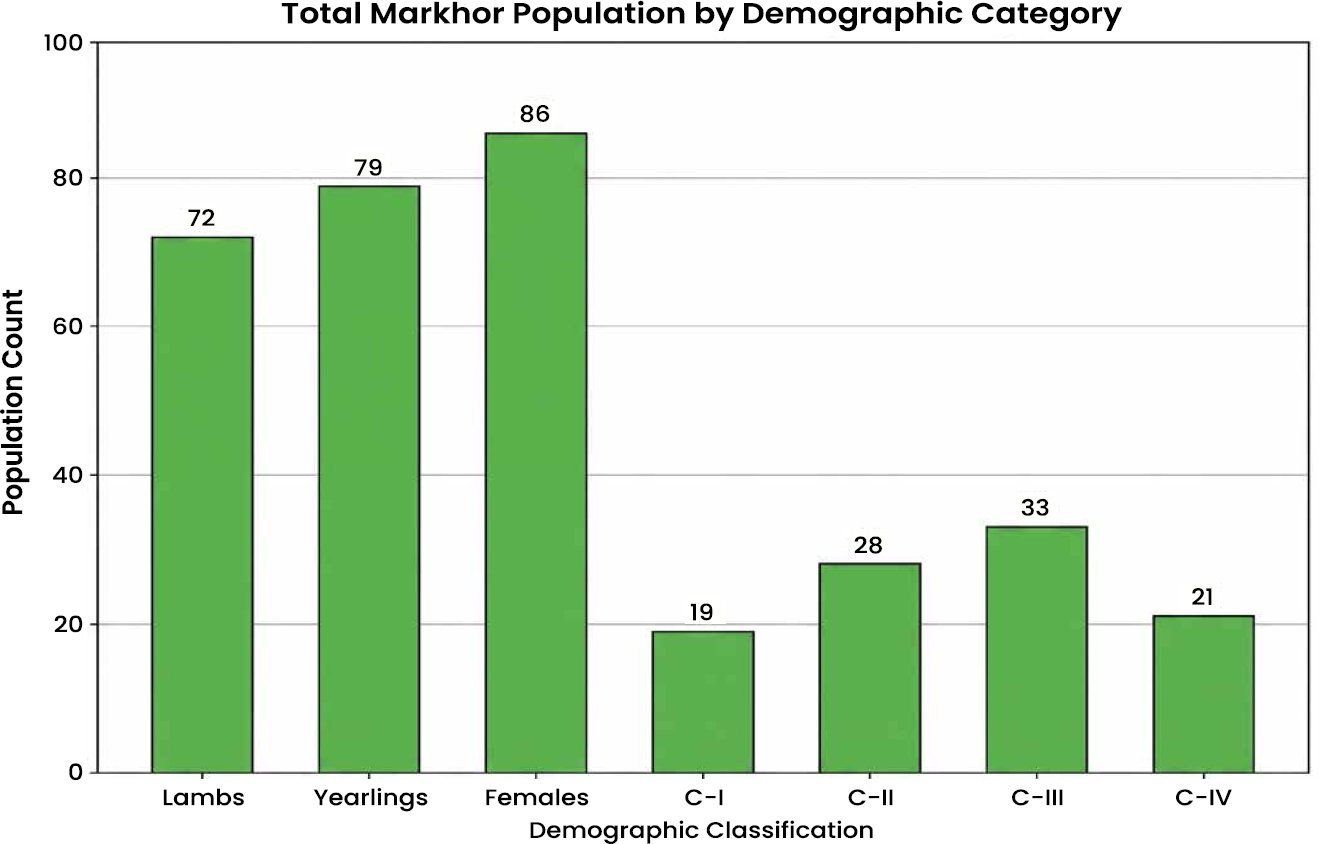
Fig. (8). Demographic status in the buffer zones.
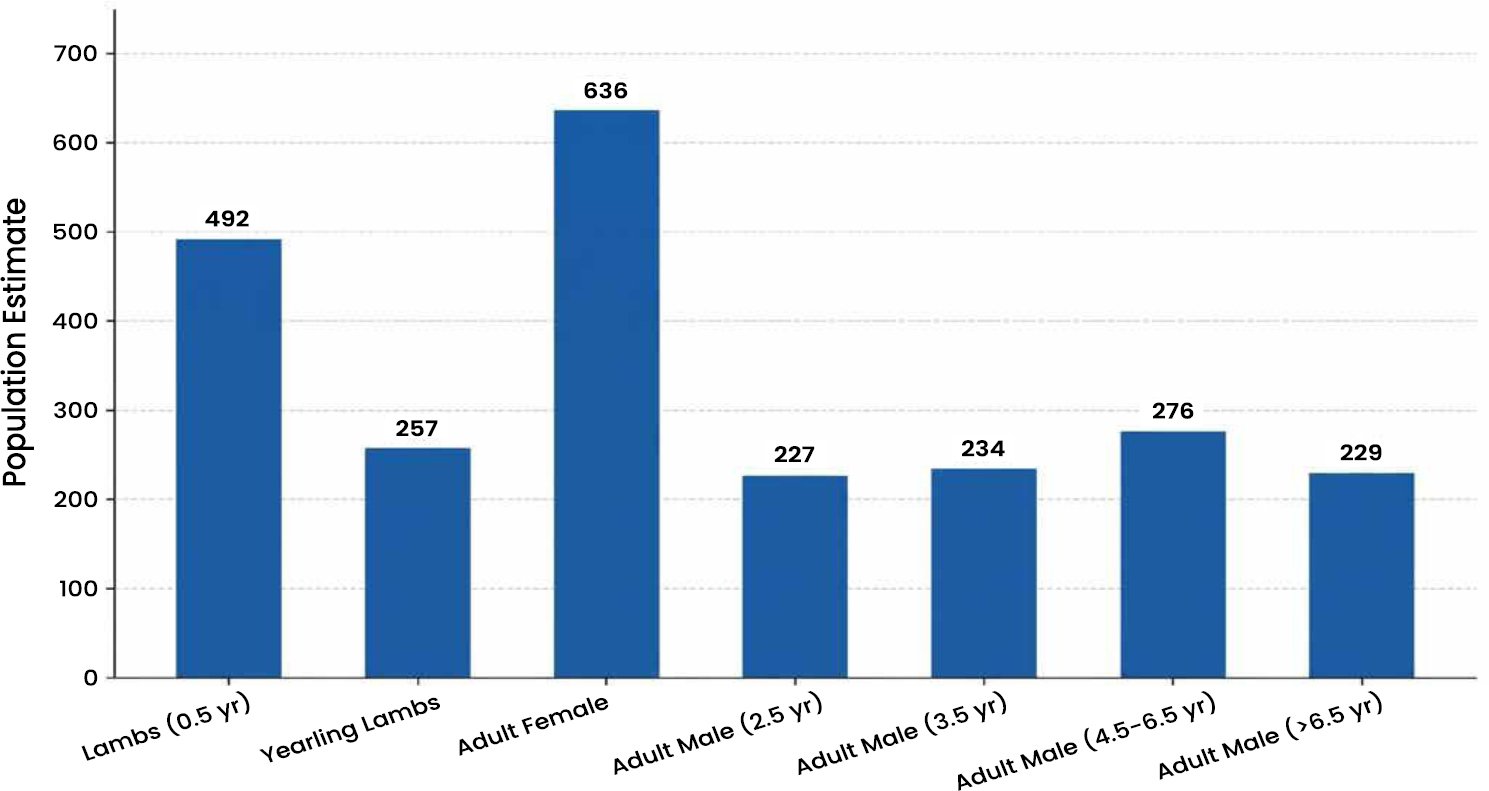
Fig. (9). Estimation of Kashmir Markhor population based on age and sex.
The 2,113 Capra falconeri cashmiriensis represent 86.2% of the total population observed across all four survey zones. Population abundance across the 14 core sites reports highest concentration at Sha Dehar (n = 405), followed by Merin Dehar (n = 235), while Benjsha represented the lowest concentration with only 43 individuals (Table 3). With 2,113 individuals heavily concentrated inside the primary park borders, this zone is approaching localized ecological carrying capacity. Considering the current 0.76 kid-to-female recruitment rate over the next 36 months, the core park population is projected to exceed 2,700 individuals, likely to trigger intense intraspecific competition for foraging space.
3.2. Rumbur Buffer Zone
The Rumbur Buffer Zone is subdivided into two vantage points. With the highest category by population in the Rumbur buffer zone being adult females, with 17 total individuals (29.3% of the entire dataset). The adult male category comprised 16 individuals, which were further classified into four subclasses (Class I to Class IV). Among these, the lowest activity category was Class III (≥ 4.5 years old), with the lowest volume containing only 2 total entries (3.4% of the entire dataset). Goranisak Bethini is the dominant location site, accounting for majority of the data at 67.2% (39 entries), while Palaro Dehar accounts for 32.8% (19 entries). These two vantage points represent 4.37% of the total regional population combined. However, they show highly unique male-to-female profiles (Tables 4 and 5; Fig. 10).
Table 4. Demographic status in different vantage points of the buffer Zones of CGNP.
| Range / Buffer Zone & Area | Lambs (½ yr) | Yearling | Females | C-I | C-II | C-III | C-IV | Total |
| Shoghor Wildlife Range | – | – | – | – | – | – | – | – |
| Panjio | 8 | 4 | 5 | 3 | 0 | 2 | 3 | 25 |
| Angarghon | 12 | 15 | 9 | 3 | 4 | 4 | 2 | 49 |
| Kaishmanja | 6 | 7 | 7 | 2 | 5 | 2 | 1 | 30 |
| Ruin Dehar | 11 | 7 | 19 | 3 | 1 | 5 | 3 | 49 |
| Doka | 5 | 8 | 7 | 0 | 3 | 3 | 1 | 27 |
| Avaxon | 9 | 9 | 9 | 0 | 4 | 2 | 1 | 34 |
| Ogdar Tower | 2 | 6 | 4 | 0 | 2 | 2 | 1 | 17 |
| Shoghor Total | 53 | 56 | 60 | 11 | 19 | 20 | 12 | 231 |
| Rumbur Buffer Zone | – | – | – | – | – | – | – | – |
| Palaro Dehar | 5 | 4 | 7 | 0 | 1 | 0 | 2 | 19 |
| Goranisak Bethini | 7 | 9 | 10 | 6 | 3 | 2 | 2 | 39 |
| Rumbur Total | 12 | 13 | 17 | 6 | 4 | 2 | 4 | 58 |
| Muleen Buffer Zone | – | – | – | – | – | – | – | – |
| Parpato Dehar | 7 | 10 | 9 | 2 | 5 | 11 | 5 | 49 |
| Shelio Mukh Dehar | – | – | – | – | – | – | – | – |
| Muleen Total | 7 | 10 | 9 | 2 | 5 | 11 | 5 | 49 |
| Buffer Zones Total | 72 | 79 | 86 | 19 | 28 | 33 | 21 | 338 |
Table 5. Population breakdown for Shoghor wildlife range zone.
| Demographic Category | Count | Percentage (%) |
| Female | 60 | 25.97% |
| Young and yearling | 56 | 24.24% |
| Lambs ½ year | 53 | 22.94% |
| Male C-I | 11 | 4.76% |
| Male C-II | 19 | 8.23% |
| Male C-III | 20 | 8.66% |
| Male C-IV | 12 | 5.19% |
| Total | 231 | 100.00% |
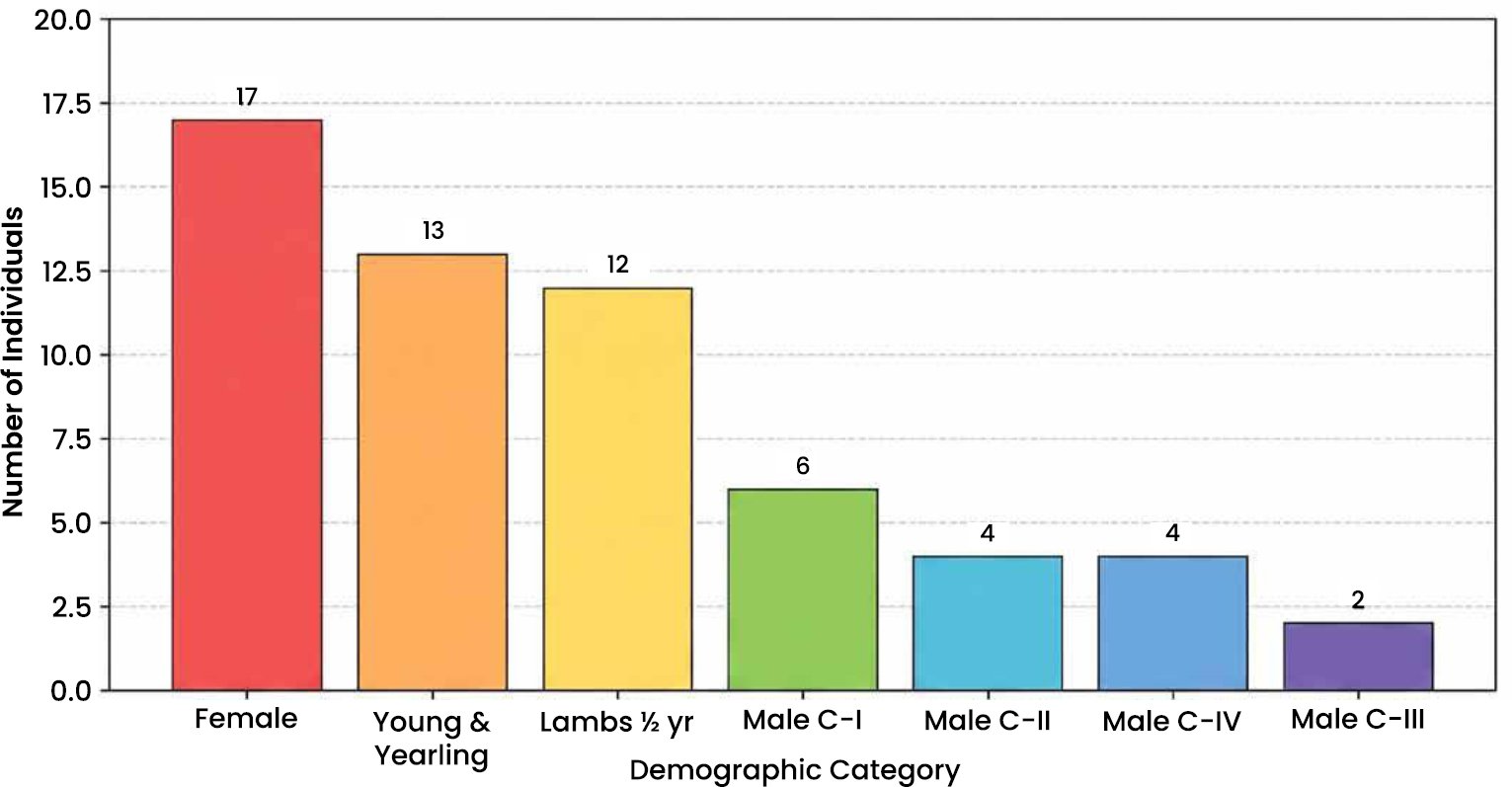
Fig. (10). Kashmir Markhor population in Rumbur zone.
3.3. Shoghor Wildlife Range
231 Markhors were recorded across this wildlife range with the dominant cohort being the adult female category, constituting the largest demographic group with 60 individuals (26% of the population). The high population density areas recorded were Angarghon and Ruin Dehar, which each hosting 49 individuals. The lowest density area was Ogdar Tower, with fewest sightings of17 individuals. The data shows a significant drop-off from young cohorts to adult classes, with Class I having the lowest adult representation at 11 individuals. Shoghor displays a highly balanced structure, carrying 231 individuals with almost uniform demographic buckets (53 lambs, 56 yearlings, 60 females, and 62 males). The high proportion of yearlings relative to lambs suggests almost complete (approximately 100%) cohort transition survival rate over the past winter cycle (Tables 4 and 5; Fig. 11).
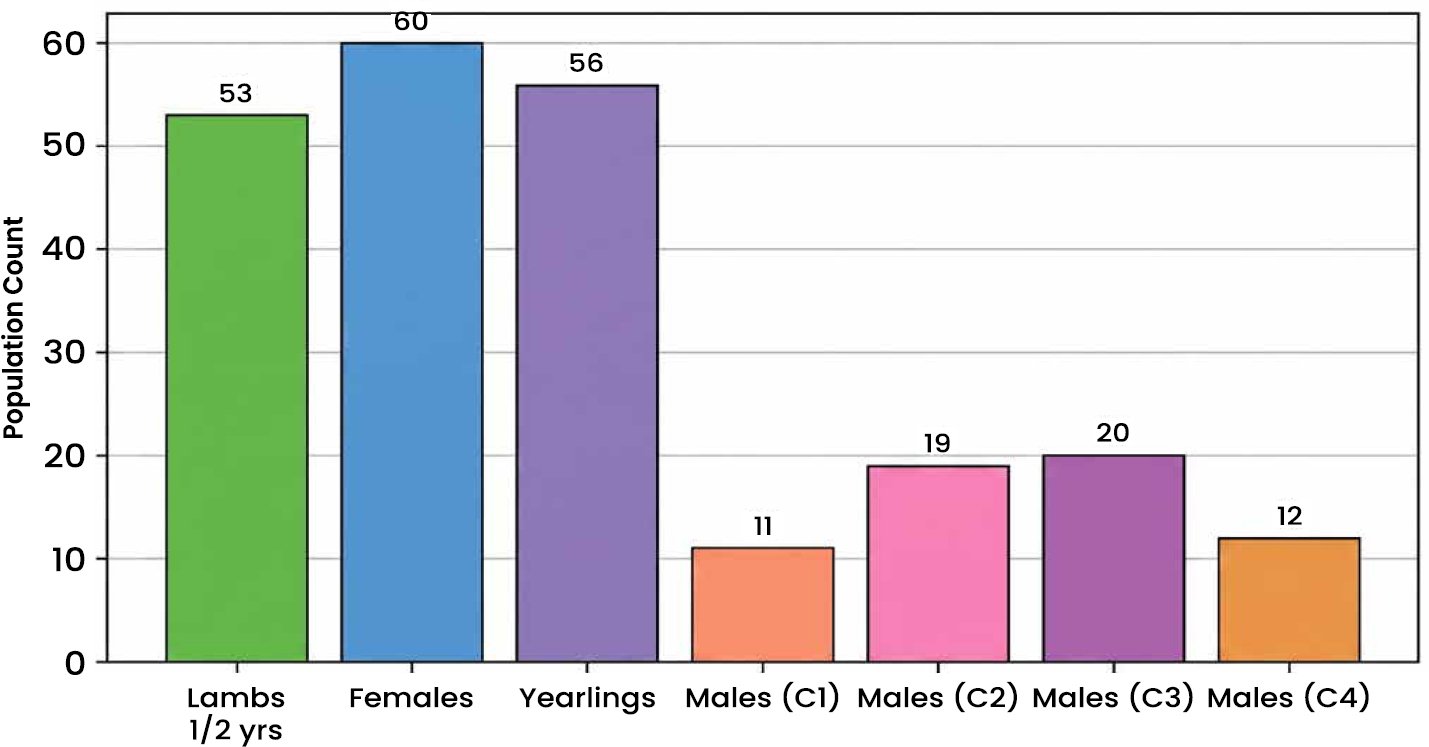
Fig. (11). Kashmir Markhor population in Shoghor wildlife range zone.
3.4. Muleen Buffer Zone
49 recorded individuals were sighted at Parpato Dehar within the Muleen buffer zone while none were sighted at the second vantage point, Shelio Mokh Dehar. Implementing localized habitat enrichment and strict restriction of infrastructure growth inside Muleen will help preserve this territory. The Muleen buffer zone indicates a skewed ratio with 23 mature males and 9 adult females thus demonstrating the usage of this zone as a winter rutting ground or a specialized male bachelor sanctuary (Table 6; Fig. 12).
Table 6. Population breakdown table for Muleen buffer zone.
| Demographic Category | Count | Percentage (%) |
| Male C-III | 11 | 22.45% |
| Young and yearling | 10 | 20.41% |
| Lambs ½ year | 9 | 18.37% |
| Female | 7 | 14.29% |
| Male C-II | 5 | 10.20% |
| Male C-IV | 5 | 10.20% |
| Male C-I | 2 | 4.08% |
| Total | 49 | 100.00% |
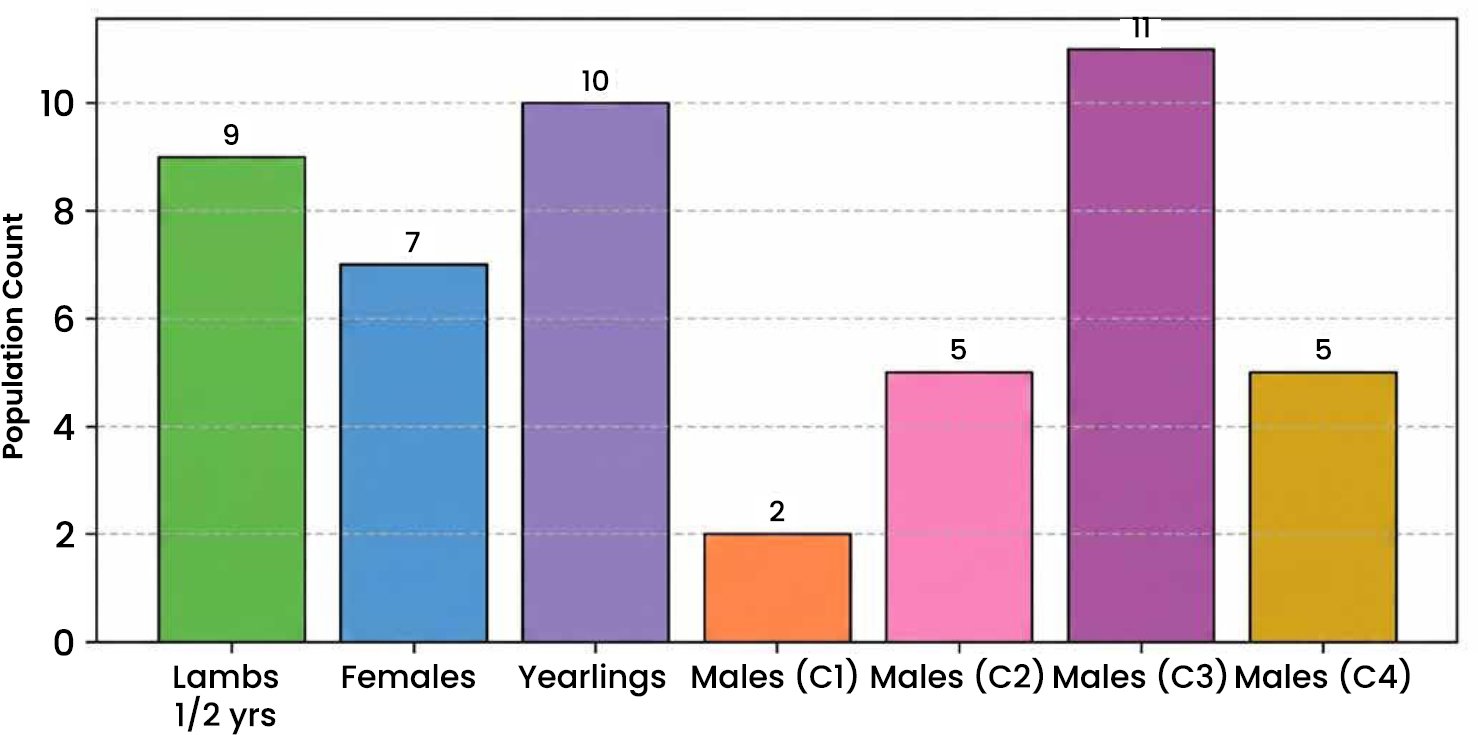
Fig. (12). Kashmir Markhor population in Muleen buffer zone.
3.5. Statistical Analysis and Interpretation Regional Concentration
CGNP holds the majority of Kashmir Markhors with 2,113 individuals (86.21%) as mentioned in Table 1. The other buffer zones include the Shoghor Wildlife Range with 231 individuals (9.42%), followed by Rumbur (2.37%) and Muleen (2.00%). The total population depicts a stable age-sex structure, with males from Class I to Class IV forming the largest segment including 966 individuals (39.41%), thus representing a substantial cohort within the ecosystem. Adult females account for 636 individuals (25.95%) while the lambs and yearlings combined account for 849 individuals (34.64%). The core biological health marker is analyzed by the ratio of lambs to females and is found to be exceptionally strong at 0.77 lambs per adult female (492/636). This index signals for an actively growing population with strong survival dynamics and optimal forage conditions (Tables 1, 2 and 5; Fig. 10).
3.6. Demographic Structure and Herd Composition
The demographic structure of the population was categorized into distinct sex and age cohorts. Adult males (Class I-IV), females, yearlings, and limbs (locally known as lambo) were evaluated as separate sovereign class groups. Adult males (Class I-IV) constituted the largest single demographic group (n = 966), followed by adult females (n = 636), and then yearlings (n = 492). The highest population points were Angarghon and Ruin Dehar are tied with the highest individual count (49 animals each) (Tables 1 and 2; Fig. 10). Among the mature males (Class I-IV), middle-aged males (C III; ≥4.5 years old) recorded the highest Markhor population with 33 individuals. Male markhors were classified into four separate age-based classes (Class I to Class IV). Among the male cohorts, Class III males (4.5 years old) were the most abundant (n = 276). The remaining male age classes showed a stable distribution (Tables 1–5, Fig. 5). These were Class I (2.5 years old): (n = 227), Class II (3.5 years old): (n = 234), Class III (4.5 Years old): (n = 276), Class IV (6.5 years old): (n = 229). They were classified into lambs (young’s of within one year), yearlings, adult males, and adult females. To analyze the population structure further, adult males were classified into four sub-categories (Class I, Class II, Class III, and Class IV). The high proportion of females and young individuals (lambs) relative to adult males indicates a positive population growth trajectory within the protected core zone of CGNP (Figs. 5–8).
3.7. Markhor Population Distribution and Localized Conservation Management Forecast
The current wildlife report outlines the population demographics, regional distribution and ecological footprint for the endangered flare-horned Markhor (Capra falconeri cashmiriensis) within the primary protected landscapes of CGNP. This study provides insights for wildlife preservation, identifies high-stress zones, and projects the distribution of three-to-five-years ecosystem balance indicators (Table 7; Fig. 13).
Table 7. Population estimation by various studies in the CGNP.
| Year / Period | Estimated Population | Researchers / Source | Key Breakdown / Details |
| 2024 | 2,451 individuals | Current study | 636 females, 461 yearlings, 849 fawns, and 505 trophy-sized males. |
| 2021 | 2,278 individuals | (Safi et al., 2024) | 636 lambs, 568 yearlings, 804 females, 270 males. |
| 2019–2020 | ~2,000 to 2,865 individuals | (Shabbir, 2021). Reported via Arab News | Official reports noted fluctuations/reductions due to counting challenges or localized pressures. |
| 2017 | 2,057 individuals | (Khan et al., 2018) | 39% fawns/lambs, 26% females, 24% young males, 11% trophy males. |
| 2016–2019 | Upward trend (~2,926 max in park limits) | Review of KP Wildlife Records (AJPO Journals) (Kakakhel, 2020) | Growth observed across park and surrounding buffer zones/conservancies. |
| 1990–2006 | 154 (1990) to 612 (2006) | Historical Park Surveys (Ali, 2008) | Gradual post-sanctuary establishment recovery phase. |
| 1975–1979 | 125–520 individuals | (Schaller & Khan, 1975); Periodic Sanctuary Assessments | Early baseline counts when designated as a game/wildlife sanctuary. |
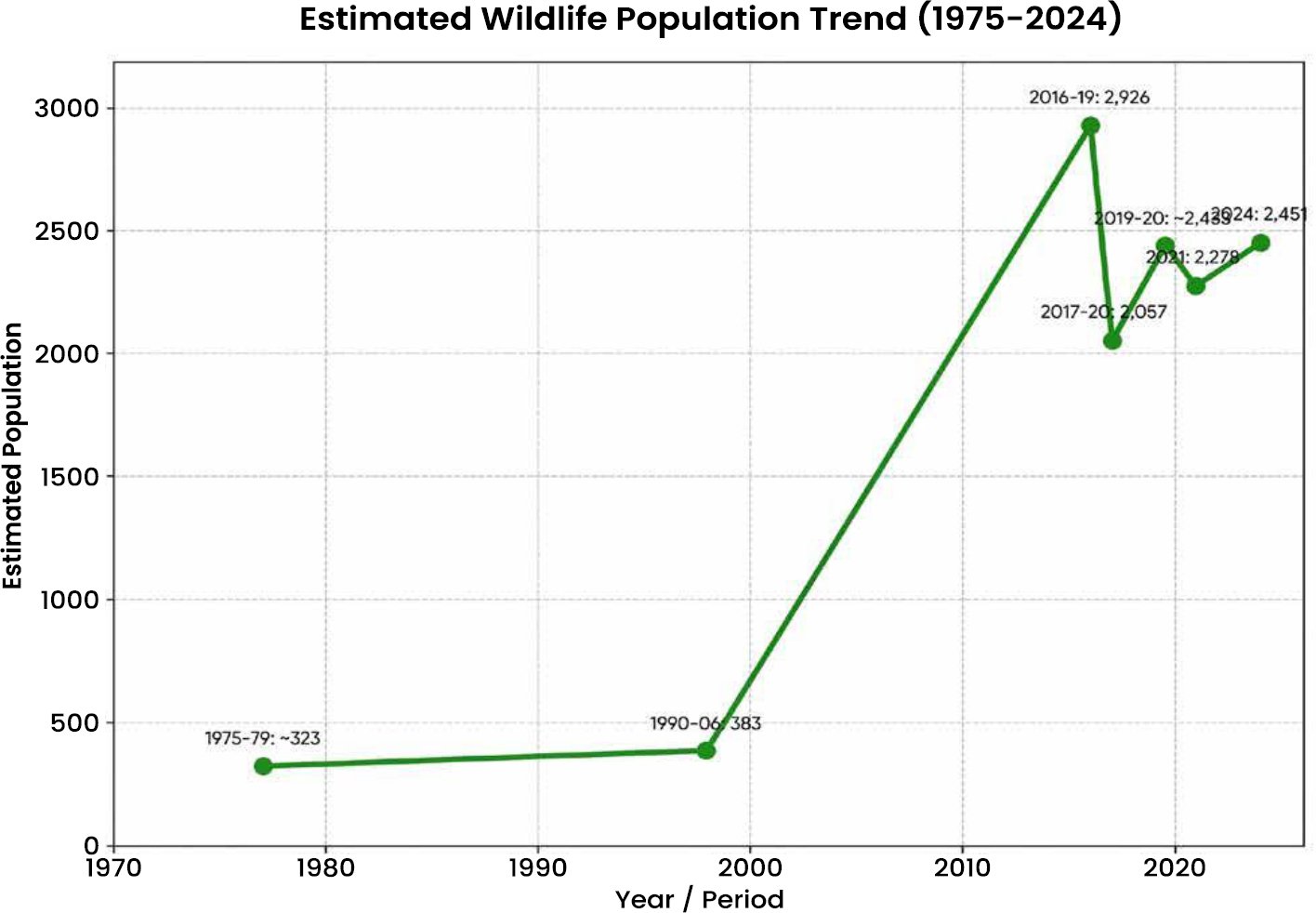
Fig. (13). Kashmir Markhor population estimation in different studies.
4. DISCUSSION
Chitral Gol National Park has earned international acclaim for its robust conservation strategies after being designated as a protected area in 1984, which successfully revived the park’s markhor population to approximately 2,000 individuals by 2020 (Kakakhel, 2020). We used questionnaire-based interviews with wildlife rangers, local communities, indigenous hunters, shepherds and field watchers during the current study. The gathered field observations were cross-referenced with secondary data from both historical and contemporary research literature to ensure accuracy (Younis et al., 2022). We recorded a total of 2,451 Kashmir Markhor (Capra falconeri cashmiriensis), which comprised 636 females, 492 lambs’ individuals, 357 fawns (yearlings), and 966 trophy-sized males during this survey in all the four areas (core Zone of CGNP and all of 3 associated buffer zones. Our findings show a slight increase indicated by the rising population compared to previous records within CGNP and surrounding buffer zones. This growth is attributed to the efforts carried out in terms of enhanced public programs, efforts for conservation, robust community engagement, and intensified habitat protection (CITES, 2026). The investigation highlights the success of the management of the Wildlife Department within the Buffer Zone. Strict law enforcements and active monitoring by the community game watchers have significantly mitigated human-wildlife conflict. Furthermore, the active participation of local communities, motivated by initiatives for promotion of conservation and trophy-hunting prize programs has fostered coexistence between the local population and wildlife (Younis et al., 2022; CITES, 2026).
The current survey identifies estimates for the species in Pakistan using empirical data while simultaneously building upon the prior methodologies. This approach is reported to be effective for monitoring different mountain ungulates across Pakistan (Ahmad et al., 2020; Safi et al., 2024). Field observations have been conducted by Baqi Kakakhel et al., 2017 to document morphological variations and behavioral traits unique to flare-horned Markhor. Markhors exhibit variation in abundance and density across geographic ranges while community-managed trophy hunting programs and protected area networks are vital in sustaining markhor populations across their native range.
The total markhor population in current study is 2,451 individuals, with the highest densities concentrated in the CGNP with fluctuations across different regions. The current survey conducted in CGNP indicates a robust and reproducing markhor population, which is heterogeneously spread across the primary zones including the core zone with a population size of 2,113 and the other three associated buffer zones containing 338 markhors. The variance in population density reflects localized habitat quality and ongoing conservation strategies. Our findings are aligned with the study by Ali, 2008 which indicates variable population densities throughout the species’ range. Furthermore, we observed a rapid increase in the fawn population, thus demonstrating a positive reproductive trend that improves on the earlier assessments carried out in the area (Ali, 2008).
(Safi et al., 2024) conducted a field survey in the rutting season (December 2021) on Markhor recording 2,278 Kashmir Markhor including 636 lambs’, 568 yearlings, 804 females and 270 males. The data observed in the current study when compared to the previous study by (Safi et al., 2024) demonstrates that the population of markhor in CGNP remains stable.
A distinguished outcome of this study is the well-balanced sex ratio within the CGNP markhor population as demographic equilibrium is directly attributed to active, collaborations for conservations by local communities and the provincial wildlife department. Previous studies have highlighted surveys conducted in Pakistan relying on vantage point approaches, that restrict species distribution through conventional point counting. To counter these limitations, our study highlights the effectiveness of active community engagements such as “The wildlife department statistics” in 2012 reported successful transitions of younger males into trophy sizes alongside favorable female demographics (Arshad et al., 2012).
Despite these positive conservation metrics, markhor populations continue to face ecological pressures. Previous research at CGNP utilizing pellet analysis revealed dietary overlap between domestic goats and markhor during the spring and summer seasons. This high degree of competition for food, particularly in limited pastures, poses a risk to sustainable population growth. Additionally, climate change introduces emerging threats to markhor behavioral ecology and habitat stability (Ashraf et al., 2014).
CONCLUSION
The current study provides insights into the population dynamics and conservation strategies for Kashmir Markhor (Capra falconeri cashmiriensis) within CGNP and its adjacent buffer zones. The study highlights the success of the management of the Wildlife Department within the Buffer Zone for strict law enforcements and active monitoring by the community game watchers. Moreover, the increase in markhor population is attributed to the effective programs conducted to encourage conservation of the endangered species, and active community engagements for habitat protection.
The strict enforcement and active monitoring by community game watchers have significantly mitigated human-wildlife conflict.
RECOMMENDATIONS
We recommend the establishment of a community-based conservation program while engaging the local communities with institutions for regional collaborations and research networking. These programs will help to develop mitigation strategies addressing human-markhor conflict and other ongoing threats, such as habitat shifts induced by climate change and interspecific resource competition.
Empowering the locals through sustainable management protocols will help to safeguard the long-term ecological balance of the markhor population. Moreover, continuous monitoring will provide longitudinal data to evaluate the temporal variations in spatial distribution and habitat utilization. There is a need for replication of these transects at regular intervals.
Policy efforts are required to focus on the integration of critical habitats, such as Kaft Wala, for safeguarding the survival of the species.
Structural ecological corridors are necessary to encourage natural spillover dispersion into the buffer valleys.
Researchers should build upon the existing findings and implement advanced population monitoring techniques.
LIST OF ABBREVIATIONS
CGNP | = | Chitral Gol National Park |
KPK | = | Khyber Pakhtunkhwa |
NT | = | Near Threatened |
VCF | = | Village Conservation Funds |
AUTHORS’ CONTRIBUTIONS
Y.S.U.D. was responsible for conceptualization and validation of the results. A.S. investigated the study, helped in data curation and formal analysis along with manuscript writing and editing. M.K. and Z.U.D. collected and analyzed the data.
ETHICAL APPROVAL & INFORMED CONSENT
This study involved questionnaire-based interviews with wildlife rangers, local community members, indigenous hunters, shepherds, and field watchers to obtain information on the Markhor population.
The purpose of the study was explained to all participants and the participation was voluntary, with informed consent obtained from each participant. Moreover, no personal identifiable information was collected, and all responses were treated confidentially.
The study involved observational demographic data collection and did not involve the capture, handling, treatment, or experimental manipulation of Markhors.
AVAILABILITY OF DATA AND MATERIALS
The data underlying the findings of this study are available from the authors upon reasonable request.
FUNDING
This research received no external funding.
CONFLICT OF INTEREST
The authors declare that they have no conflict of interest.
ACKNOWLEDGEMENTS
We express our sincere gratitude to all the faculty members of Gulabad Government Degree College, Chakdara, Dir (L), and the entire staff of CGNP for their cooperation in completing this research study.
We are especially grateful to Mr. Muhammad Altaf Ali Shah, DFO (CGNP), and Mr. Muhammad Ali Shah, Senior Clerk, along with the CGNP team, for their exceptional cooperation, inspiring guidance, and generous investment of time.
The authors are also grateful to the anonymous peer reviewers for their time, insightful feedback, and for their valuable suggestions that improved this manuscript.
DECLARATION OF AI
The author used the AI tool ChatGPT for final editing of the manuscript and takes responsibility of the published content.
REFERENCES
Ahmad, S., & Nabi, G. (2022). Pakistan’s markhor population in decline. Science, 375(6577), 153.
https://doi.org/10.1126/science.abn0745
Ahmad, S., Khan, T. U., Hacker, C., Yang, L., Nabi, G., Ullah, S., Wanghe, K., Shah, S., Chen, M., Saeed, S., & Luan, X. (2020). Critical assessment of Asiatic ibex (Capra ibex sibirica) for sustainable harvesting in northern areas of Pakistan. Global Ecology and Conservation, 22, e00907.
https://doi.org/10.1016/j.gecco.2020.e00907
Ahmad, S., Rehman, E. U., Ali, H., Din, N., Haider, J., Din, J. U., & Nawaz, M. A. (2022). Density pattern of flare-horned markhor (Capra falconeri) in Northern Pakistan. Sustainability, 14(15), 9567.
https://doi.org/10.3390/su14159567
Ali, S. (2008). Conservation and status of markhor (Capra falconeri) in the northern parts of North West frontier province, Pakistan. Scholar Works at University of Montana. Available from: https://scholarworks.umt.edu/etd/10919
Animalia Bio. (2024). Markhor. Available from: https://animalia.bio/markhor
Arshad, M., Qamer, F. M., Saleem, R., & Malik, R. N. (2012). Predication of Kashmir Markhor habitat suitability in Chitral Gol National Park, Pakistan. Biodiversity, 13(2), 78–87.
https://doi.org/10.1080/14888386.2012.684206
Ashraf, N., Anwar, M., Hussain, I., & Nawaz, M. A. (2014). Competition for food between the markhor and domestic goat in Chitral, Pakistan. Turkish Journal of Zoology, 38(2), 191-198.
https://doi.org/10.3906/zoo-1306-6
Convention on International Trade in Endangered Species [CITES]. (2026). Report on the status and annual census counts of Capra falconeri cashmirensis in Chitral Gol National Park (CGNP) (Document AC34-26-A2-R1). Available from: https://cites.org/sites/default/files/documents/AC/34/agenda/E-AC34-26-A2-R1.pdf
Din, J. U., & Nawaz, M. A. (2010). Status of the Himalayan lynx in district Chitral, NWFP, Pakistan. Journal of Animal and Plant Sciences, 20(1), 17-22. Available from: https://www.researchgate.net/publication/236414989_Status_of_the_Himalayan_lynx_in_district_Chitral_NWFP_Pakistan
Facts and Details. (2025). Markhor: Characteristics, Behavior and Reproduction. Available from: https://factsanddetails.com/central-asia/Central_Asian_Topics/sub8_8i/entry-4557.html
Groves, C., & Grubb, P. (2011). Ungulate taxonomy. Johns Hopkins University Press.
https://rhinoresourcecenter.com/wp-content/uploads/2012/01/1616146725.pdf
Grubb, P. (2005). Order Artiodactyla. In In Wilson, D.E. & Reeder, D.M. (eds.) Mammal Species of the World, Third Edition. The Johns Hopkins University Press, Baltimore: 637-722.
http://taxonomicon.taxonomy.nl/Reference.aspx?id=4997
Haider, J., Rakha, B. A., Anwar, M., Khan, M. Z., & Ali, H. (2021). An updated population status of Astor Markhor (Capra falconeri falconeri) in Gilgit-Baltistan, Pakistan. Global Ecology and Conservation, 27, e01555.
https://doi.org/10.1016/j.gecco.2021.e01555
Hess, R., Bollmann, K., Rasool, G., Chaudhry, A. A., Virk, A. T., & Ahmad, A. (1997). Wild sheep and goats, and their relatives. In Pakistan: Status survey and conservation action plan for Caprinae. Available from: https://cir.nii.ac.jp/crid/1970586434907335979
Khan, G., Khan, B., Qamer, F. M., Abbas, S., Khan, A., & Xi, C. (2016). Himalayan ibex (Capra ibex sibirica) habitat suitability and range resource dynamics in the Central Karakorum National Park, Pakistan. Journal of King Saud University-Science, 28(3), 245-254.
http://dx.doi.org/10.1016/j.jksus.2016.04.006
Khan, M. I., Yousafzai, A. M., & Hassan, M. N. (2024). Hotspot and distribution pattern of estimated population of Markhor in Pakistan. Scientific Reports in Life Sciences, 5(3), 71-82.
https://doi.org/10.5281/zenodo.13786729
Khan, M. S., & Bhagwat, S. A. (2010). Protected Areas: A Resource or Constraint for Local People? Mountain Research and Development, 30(1), 14–24.
https://doi.org/10.1659/MRD-JOURNAL-D-09-00024.1
Baqi Kakakhel, S. F., Ullah, A., & Rashid, A. (2017). Population and Distribution of Flare-Horned Markhor (Capra falconeri falconeri Wagner 1839) in District Swat, Khyber Pakhtunkhwa, Pakistan. Pakistan Journal of Zoology, 49(2), 747-750.
http://dx.doi.org/10.17582/journal.pjz/2017.49.2.sc7
Khan, M. Z., Alam, I., Gul, M., & Ahmed, H. (2018). Distribution and current trends in the population of Kashmir markhor in Chitral Gol national park district Chitral, Khyber Pakhtunkhwa. Canadian Journal of Pure and Applied Sciences, 12(2), 4561-4566. Available from: https://www.academia.edu/39512438/DISTRIBUTION_AND_CURRENT_TRENDS_IN_THE_POPULATION_OF_KASHMIR_MARKHOR_IN_CHITRAL_GOL_NATIONAL_PARK_DISTRICT_CHITRAL_KHYBER_PAKHTUNKHWA
Khan, M., Siddiqui, P. A., Raza, A., & Zahler, P. (2018). Status of flare-horned markhor (Capra falconeri falconeri) in Jutial Conservancy, District Gilgit, Gilgit-Baltistan (previously northern areas), Pakistan. International Journal of Biology and Biotechnology, 15(2), 343-349. Available from: https://www.researchgate.net/publication/331864904_STATUS_OF_FLARE-HORNED_MARKHOR_CAPRA_FALCONERI_ FALCONERI_IN_JUTIAL_CONSERVANCY_DISTRICT_GILGIT_GILGIT-BALTISTAN_PREVIOUSLY_ NORTHERN_AREAS_PAKISTAN
Kakakhel, S. F. B. (2020). A review on markhor (Capra falconeri falconeri Wagner 1839) population trends (2016–2019) and community-based conservation in Toshi Shasha, Gehrait Goleen, Kaigah Kohistan conservancies and Chitral Gol National Park, Khyber Pakhtunkhwa, Pakistan. American Journal of Natural Sciences, 3(1), 1–18.
https://doi.org/10.47672/ajns.569
Michel, S. & Rosen Michel, T. (2015). Capra falconeri. The IUCN Red List of Threatened Species 2015: e.T3787A97218336.
https://doi.org/10.2305/IUCN.UK.2015-4.RLTS.T3787A82028427.en
Niaz, M. (2017). Walking the trail majestic. Dawn. Available from: https://www.dawn.com/news/1337364
Roberts, T. J. (1997). The mammals of Pakistan. Oxford University Press. Available from: https://archive.org/details/mammalsofpakista0000robe/page/n1/mode/2up
Safi, A., Ali Hashmi, M. U., Din Yousufzai, S. U., Ur Rehman, S., Ahmed, Z., Ali, S., & Karl, H-V. (2024). Current population status, threats, and conservation of Kashmir Markhor, in Chitral Gol National Park, Pakistan. Sustainability and Biodiversity Conservation, 3(1), 1–17.
https://doi.org/10.5281/zenodo.10946280
Shabbir, S. (2021). Poaching, migration or climate change: The case of Chitral’s missing markhors. Arab News. Available from: https://www.arabnews.pk/pakistan/poaching-migration-or-climate-change-the-case-of-chitrals-missing-markhors-1969531
Schaller, G. B. (1977). Mountain monarchs. Wild sheep and goats of the Himalaya. Journal of Mammalogy, 60(1), 1979. 240–241.
https://doi.org/10.2307/1379791
Schaller, G. B., & Khan, S. A. (1975). Distribution and status of markhor (Capra falconeri). Biological Conservation, 7(3), 185-198.
https://doi.org/10.1016/0006-3207(75)90014-2
Shackleton, D. M. (1997). Wild Sheep and Goats and their Relatives: Status Survey and Action Plan for Caprinae. International Union for Conservation of Nature and Natural Resources. https://cir.nii.ac.jp/crid/1970586434907335979
Huffman, B. (2023). An Ultimate Ungulate Fact Sheet. Capra falconeri: Markhor. Available from: https://www.ultimateungulate.com/Artiodactyla/Capra_falconeri.html
Wikipedia Contributors. (2026). Markhor. In Wikipedia, The Free Encyclopedia. Available from: https://en.wikipedia.org/wiki/Markhor
Yasmeen, R., Hafeez, F., Qurashi, A. W., Mazhar, S. A., Ahmad, F., Arif, R., Nisar, S., Khatoon, A., & Ijaz, N. (2022). Conservation, Management and Threats to Markhor population in Pakistan: An Overview: Markhor Population in Pakistan. MARKHOR (The Journal of Zoology), 3 (02), 6-10.
https://doi.org/10.54393/mjz.v3i02.38
Younis, M., Khan, A., Hussain, I., & Ali, M. (2022). Relative abundance of mammalian fauna of Chitral Gol National Park, Pakistan. of Pakistan Journal Zoology, 55(1), 289–297.
https://dx.doi.org/10.17582/journal.pjz/20190524060510
Licensed
© 2026 Copyright by the Authors.
Licensed as an open access article using a CC BY 4.0 license.
Article Contents Author Abdul Ghafoor Memon1, * 1Emaan Institute of Management Sciences, Karachi, Pakistan Article History: Received: 01 April, 2026
Article Contents Authors Zixuan Zhao1, Ju Guo1, * 1School of Management, Chengdu University of Information Technology, Chengdu, China Article History:
Article Contents Authors Sultan Ud Din Yousufzai1, Amtyaz Safi2, * Maher Khan1, Zia Ud Din1 1Department of Zoology, Govt. College
Article Contents Author Nasir Uddin Khan1, * 1Department of Emaan Institute of Management Sciences, Karachi, Pakistan Article History: Received:
Article Contents Authors Putri Syabillah1 , Dian Pratiwi1, * , Anung Barlianto Ariwibowo1 1Department of Informatics Engineering, Universitas Trisakti, Jakarta,
Article Contents Author Srigopal Mohanty1, * 1Siksha O Anusandhan University, Bhubaneswar, India Article History: Received: 01 July, 2026 Accepted: 03