

















Article Contents
Article ID: CM2602112009
Views: 1020Marketing Pain: How Culturally Framed Discomfort Shapes Consumer Value Perception and Brand Positioning Across Markets
 DOI:
DOI:
 PDF
PDF
⬇ Downloads: 17
1Faculty of Engineering, Science, Technology & Management, Ziauddin University, Karachi, Pakistan;
2London South Bank University, London, United Kingdom
Received: 30 December, 2025
Accepted: 24 March, 2026
Revised: 24 February, 2026
Published: 27 April, 2026
Abstract:
Introduction: This research examined the effects of emotional sensitivity and discomfort-based advertising on brand trust, brand attitude, and purchase intention among Eastern and Western consumers. While emotional appeals are widely studied, empirical evidence on culturally moderated responses to discomfort-inducing advertising remains limited.
Methods: An experimental design was used, consisting of 200 participants, with a 4 (advertising frame: control, social shame, fear, neutral) × 2 (culture: Eastern, Western) design, including manipulation checks, reliability measures, and focus group discussions to validate findings. The results of MANOVA indicated that advertising frame had significant effects on brand trust (F(3,192) = 506.36, p < .001, η² p = 0.888), brand attitude (F(3,192) = 447.88, p < .001, η² p = 0.875), and purchase intention (F(3,192) = 501.35, p < .001, η² p The results of mediation analyses performed with the help of the Process showed that emotional sensitivity had a positive impact on brand trust (B = 0.453, p = 0.001), brand attitude (B = 0.478, p = 0.001) as well as purchase intention (B = 0.900, p = 0.001), but these relationships were partially mediated by the perceived value (indirect effects: BT = 0.436, BA = 0.382, PI = 0.09.
Results: These results were supported and elaborated by focus group discussions that traced how participants collectively interpreted and debated the discomfort-based adverts in their everyday cultural terms. Focus groups, rather than individual interviews, were used to foreground the social negotiation of cultural norms around shame and fear, allowing culturally specific patterns of emotional discomfort to emerge from group interaction.
Conclusion: In general, discomfort-based advertising greatly improves brand results, whose effects are moderated by cultural context and mediated by perceived value. In theory, the research will build on Fear Appeal and Cultural Dimension theories by combining emotional sensitivity and perceived value in cross-cultural situations. In practise, it offers the principles of culturally-specific emotional advertising in order to increase brand engagement and consumer responsiveness.
Keywords: Culturally framed discomfort, consumer value perception, brand positioning, marketing pain, fear appeal, emotional sensitivity.
1. INTRODUCTION
The recent years have been marked by a number of high-profile brand crises instigated by culturally insensitive or emotionally miscalculated marketing campaigns, proving that the risks of poorly-calibrated emotional appeals in different markets are quite high. With the growing trend of brands basing their communication strategies on personalisation, immersion, and emotive response, cultural interpretation of discomfort has become a strategic necessity, not a creative option (Sriramesh & Yeo, 2024). The emotional marketing strategies aimed at creating a powerful psychological response may either enhance brand engagement or cause consumer backlash, reputation, and brand equity loss when used inappropriately in relation to cultural expectations (Shukri & Hamid, 2025). Therefore, the perception of discomfort-based marketing messages by consumers of various cultural backgrounds is the key to the sustainability of the global brands and competitive positioning.
In the current market that is becoming more globalised, it is important to comprehend the way consumers value and place brands in the market to market effectively. Marketing pain is one of the emerging factors that has affected these perceptions, or the culturally constructed discomfort that consumers feel in reaction to marketing messages, product offers, or brand experiences (Sharma et al., 2023). The pain associated with marketing can also have a great influence on consumer assessment of product value and the brand positioning strategies (Korde & Mahmood, 2025). Despite the extensive studies conducted on the individual emotional appeal in advertising effectiveness, i.e., fear, guilt, and shame, there is a lack of empirical studies that combine the mechanisms of discomfort in one conceptual framework of marketing pain. More to the point, there are few systematic cross-cultural comparisons that analyse the interpretation and reaction of Eastern and Western consumers to such discomfort-based marketing strategies. The current literature, such as (Lopez & Monroy, 2023; Sharma et al., 2023; and Togans & McConnell, 2025), gives some background information about emotional persuasion yet fails to address how all these emotional discomfort cues can influence consumer value perception in different cultural settings. Such absence of integrative and comparative evidence poses a disabling gap in cross-cultural marketing research.
This gap is especially relevant to the modern marketing setting, in which global brands are aimed at culturally diverse audiences at the same time via digital platforms. In the absence of empirically based knowledge on the framing of culturally sensitive discomfort, marketers will run the risk of launching emotionally provocative campaigns that can be positive in one place and negative in another. Thus, creating a systematic knowledge of the cross-cultural framework of marketing pain is necessary in creating globally responsive and culturally sensitive brand positioning strategies.
By relying on the studies in emotional persuasion and adverse affective framing, marketing pain can be operationally described as the intentional application of discomfort-inducing cues in advertisements to cause psychological tension leading to behavioural or cognitive change. Although it is related to fear appeals, guilt appeals, and shame appeals, marketing pain is more extensive since it can include any emotionally disturbing frame that creates discomfort, such as social pressure, fear, threat, and negative expectancy (Mas et al., 2024). The previous literature indicates that shame enhances cognitive processing (So et al., 2024) and fear enhances compliance (Talebi et al., 2024), all of which are discomfort-related mechanisms. As such, the application of shame, fear, and fear-based cues as proxies is consistent with the existing evidence that these affective states are unique but convergent discomfort framing. Marketing pain in this work can be defined as this integrated pain-creating strategy, and the cross-cultural effect of marketing pain on brand positioning can be examined.
The particular issue is the interaction of marketing pain with consumer cognition and emotion in the perceived value. Although the brands tend to increase consumer satisfaction and loyalty, when the marketing strategies inadvertently cause discomfort, the objectives are hampered (Popovich et al., 2025). Moreover, such effects might be mitigated by cultural differences. As an example, Eastern consumers, who tend to value collectivism, harmony, and indirect communication, might perceive marketing discomfort differently than Western consumers, who are usually more individualistic and willing to see aggressive or confrontational messages (Sun, 2025). The choice of Eastern vs. Western consumers is a pragmatic cultural construct as opposed to a definite or essentialist dichotomy. Although modern studies acknowledge the existence of cultural convergence, significant variations in emotional processing and advertising response still exist between these general cultural groups. The Eastern cultures are also typically more interdependent in self-construal, socially evaluation sensitive, and shame- or norm-based responsive, and the Western cultures are more independent in self-construal and more tolerant of direct or confrontational messages (Mas et al., 2024; Patel & Dhurkari, 2025). In this paper, the Eastern-Western comparison is thus used to investigate whether the discomfort framing varies in different consumer groups of different cultures, as previous cross-cultural studies of advertising have found. Notably, the framework is applied sparingly, recognising its shortcomings, but it provides an empirically based analysis of cultural differences in reactions to discomfort-based marketing.
The study is timely and required since the brands are spreading into culturally diverse markets where emotional responses to advertising, particularly discomfort-based messages, may differ significantly and have a strong strategic implication. The wrong interpretation of such reactions may decrease brand equity, cause backlash, or cause reputational harm in the long term. With more domineering forms of marketing being personalised, emotional, and immersive, brands are increasingly walking the fine line between meaningful engagement and inadvertently causing psychological uneasiness (Alexander et al., 2025). However, the scholarly literature provides very scant information regarding the way the different cultures decipher discomfort cues or the role of discomfort cues in core positioning outcomes like trust, attitude, and intention to purchase. This lack of evidence leaves marketers working in risky situations with no empirically based models on how to design culturally sensitive messages. Thus, the research seeks to offer strong cross-cultural explanations of how discomfort framing influences brand positioning and explain how the concept of perceived value mediates these effects.
In contrast to the past studies where emotional appeals are independent variables of persuasion, this study is the first to conceptualise marketing pain as a framework of discomfort and empirically test its cross-cultural implications. The study offers a new multidimensional approach to both theory and practise in global marketing strategy by concurrently exploring emotional discomfort cues, perceived consumer value, and brand positioning results between Eastern and Western consumer groups.
The research has a number of contributions. In theory, it builds on consumer value theory and cross-cultural marketing research by incorporating the concept of marketing pain as a predictor of perceived value. Contextually, it offers information that is specific to both the Eastern and Western markets, bringing out the cultural moderation influences on consumer perceptions. The methodological approach of the study is a rigorous experimental design and a focus group approach, which enables the manipulation of marketing stimuli and a detailed qualitative understanding. The analysis of the experimental data is conducted with the help of MANOVA, which enables the revelation of the mean differences and the effects of the multi-group. The study empirically creates actionable evidence of the impact of marketing pain on brand positioning strategies in culturally diverse markets, which can be applied in global marketing management.
2. LITERATURE REVIEW
2.1. Theoretical Framework
The Fear Appeal Theory, firstly developed by (Janis & Feshbach, 1953), is that messages with fear-inducing content may influence behaviour change when people believe that there is a threat and a response to the threat that can be taken. Fear appeals are frequently applied in marketing to create a sense of fear, compliance, or immediate action (Mas et al., 2024; Sobol & Giroux, 2023; van Breda et al., 2023). The theory is also directly pertinent to the current study because one of the conditions of the experiment involves a fear frame aimed at inducing marketing discomfort. Fear appeal theory has, however, been criticised due to its inconsistent predictive ability across cultures and because it simplifies the response of emotion by suggesting that fear works equally with all consumers (Talebi et al., 2024). The given critique is addressed in the current research through a discussion of whether there is a difference between Eastern and Western cultural contexts in terms of fear-based marketing pain and the identification of culturally specific responses based on both experimental and focus group data.
According to the second theory, the Cultural Dimensions Theory by Hofstede (Hofstede, 1980), societies are different in terms of various cultural dimensions, including individualism-collectivism, uncertainty avoidance, and power distance, which determine values, communication patterns, and psychological processing (Patel & Dhurkari, 2025; Priporas et al., 2025). This theory guides the interest of the study in the culturally framed discomfort by establishing why Eastern consumers (who are generally collectivistic) can be more responsive to social shame signals, whereas Western consumers (who are generally individualistic) can be more responsive to fear-based or neutral messages (Mas et al., 2024). Although it has been widely used, Hofstede has been criticised as being fixed, too generalised, and lacking strength in terms of explaining emotion-based marketing reactions (Priporas et al., 2025). The research is valuable because it offers a more detailed and empirical evidence of the interaction of emotional advertising frames with modern cultural processes and, therefore, a more comprehensive interpretation of cross-cultural consumer discomfort.
In order to develop a general framework, this paper combines the cultural tightness-looseness theory (Gelfand et al., 2011), which describes the difference between societies that have tight norms and low tolerance of deviance and those that are loose in terms of emotional appraisal and reaction to marketing discomfort. The combination of Fear Appeal Theory, Hofstede dimensions, and cultural tightness-looseness makes the framework connect the emotional advertising frames to the culturally-regulated emotional responses, which can be considered as the complete explanation of the discomfort of cross-cultural marketing and the responsiveness of consumers.
2.2. Conceptual Distinction Between Marketing Pain and Traditional Emotional Appeal Theories
The marketing pain concept (also known as marketing discomfort) is an extension of the conventional theories of emotional appeal by offering a wider and integrative approach to negative emotional persuasion (van Breda et al., 2023). Classical theories, including Fear Appeal Theory, the contribution of Irving Janis and Seymour Feshbach, are mainly concerned with fear as a single emotional stimulus that is intended to induce behaviour change based on the perceived threat and coping strategies. Equally, shame and guilt appeals highlight certain negative emotional stimuli that are meant to shape consumer attitudes and behaviours based on social judgment or moral responsibility (Talebi et al., 2024).
Marketing pain, on the other hand, is a multidimensional construct that incorporates various discomfort-creating emotional cues in marketing communication. Instead of analysing fear, shame, or guilt as individual persuasive forces, marketing pain conceptualises discomfort as a complex psychological experience caused by exposure to emotionally stressful marketing messages (Kastanakis et al., 2026). This integrative view acknowledges that consumers are likely to have mixed emotional responses, such as social pressure, threat perception, embarrassment, and anxiety, when they are exposed to persuasive marketing stimuli.
The other unique feature of marketing pain is its high focus on the cultural understanding of discomfort. The conventional emotional appeal theories tend to presume that there are universal emotional reactions to persuasive communication (Talebi et al., 2024). Nevertheless, cultural frameworks play a major role in the way consumers perceive and respond to discomfort-based advertising. As an example, the cultural dimensions suggested by (Hofstede, 1980) indicate that collectivist cultures are more likely to be sensitive to social harmony and reputational assessment, and thus they are more sensitive to discomfort signals that are based on shame or social framing. On the other hand, individualistic cultures might react more to the threat-based or fear-oriented communication that focuses on individual implications (Priporas et al., 2025).
Moreover, the marketing pain concept also takes into consideration the idea of cultural tightness-looseness theory offered by (Gelfand et al., 2011), which describes the impact of tolerance to norm deviation in society on emotional appraisal (Gelfand et al., 2011). Societies with high levels of social normativity and intolerance to deviation may be more sensitive to discomfort-based marketing, and hence culturally loose societies may be more tolerant of emotionally provocative advertisements messages.
Thus, marketing pain is distinguished by three aspects as compared to classical emotional appeal theories. First, it follows an integrative emotional strategy instead of appealing to a single emotion. Second, it focuses on culturally ingrained sources of discomfort interpretations. Third, it presents a comprehensive description of the combination of various discomfort cues that determine consumer perceived value and brand positioning results. The current research has the potential to further the development of cross-cultural marketing theory and emotional persuasion studies because it defines marketing pain as a conceptual construct.
2.3. Discomfort Framing and Brand Positioning
The current literature offers useful information about the emotional impact on consumer behaviour, but it has some evident gaps in the area of discomfort framing and its involvement in cross-cultural brand positioning. (So et al., 2024) proved that shame can lead to better ad recall and better product attitudes, especially in high self-monitors, but their study does not go further to cultural comparisons and strategic brand positioning, which makes it less generalisable. (Yıldız & Kara, 2025) also emphasised the effectiveness of emotional narratives in enhancing brand trust, yet their one-sided approach to the subject matter that focuses solely on positive messages leaves a gap in answering the question of how messages based on discomfort work across cultures. (Yang et al., 2025) demonstrate that negative design signals are more powerful in emotion response but less beneficial in the longevity of brand interest. Their neurophysiological results are limited to product design instead of advertising frames and do not investigate the outcomes in terms of culture and positioning. Research on negative attitudes during a crisis, including the study by (Rahman & Chakraborty, 2025) on brand forgiveness or the study by (Jang et al., 2025) on consumer regret, offers applicable insights into emotions but is not related to discomfort-based advertising and cross-cultural implications. Lastly, (Garg et al., 2025) demonstrate the power of emotional appeals in enhancing brand relationships in the context of COVID-19, but they only discuss the positive emotions, not the discomfort framing, which is based on negative emotional cues, and how it can be applied to brand positioning in various cultural settings.
Emotional reactions to advertising vary in cultures, not only in terms of collectivism and individualism. The cultural tightness-looseness theory proposes that different societies have different levels of social norms and toleration of deviant behaviour. In culturally tight societies, discomfort signals like shame and social disapproval are more sensitive to individuals, whereas in culturally loose societies, individuals are less sensitive, because behavioural flexibility enables individuals to act more flexibly (Gelfand et al., 2011). These differences are also explained by the self-construal theory. People who have interdependent self-construals (which are commonly linked to Eastern cultures) are more concerned about group harmony and social relations, becoming more sensitive to the socially evaluative discomfort cues. On the other hand, people of independent self-construals, which are typically associated with Western societies, focus on personal autonomy and can be more responsive to fear-inducing or threat-related messages (So et al., 2024).
Taken together, these studies highlight how research that specifically examines the discomfort framing in advertising and determines its efficacy in cross-cultural settings and brand positioning situations is urgently needed. Therefore, this research hypothesises that;
H1: Brand trust, brand attitude, and purchase intention of consumers vary based on the level of discomfort framing in advertisements
H2: Brand trust, brand attitude, and purchase intention of consumers differ between Eastern and Western Consumers
2.4. Impact of Emotional Sensitivity on Brand Trust, Brand Attitude, and Purchase Intention
Emotional sensitivity is the extent to which consumers detect, interpret, and react to marketing communication messages that contain emotional appeals, both positive and discomfort-stimulating messages (Garg et al., 2025). It mirrors the vulnerability of a person to emotional stimulation and the severity of their affective reactions (Li et al., 2021). Based on the intensity theory (Averill, 1980) and research on consumer emotional susceptibility (Srisuk et al., 2023; Zaman et al., 2025), emotionally vulnerable consumers have greater and more direct responses to advertising frames, which, consequently, influence brand assessments, trust, and purchase intentions. The construct enables the study to measure the extent to which the emotional responsiveness variations affect consumer perceptions and behavioural consequences.
The literature has a common point in its emphasis on the increased significance of emotional sensitivity in the development of consumer reactions and, therefore, the brand positioning in contemporary markets. (Srisuk et al., 2023) emphasise the role of social media interaction in terms of likes, shares, and comments as indicators of emotional responsiveness, which directly increases brand-consumer relations and brand equity. Even though the research is based on digital interactions as opposed to particular emotional frames, it shows that emotionally sensitive behaviours have a considerable influence on the perception and positioning of brands in the mental schema of consumers. On the same note, (Zaman et al., 2025) emphasise the role of nostalgia proneness and brand trust in increasing the level of emotional involvement, which, in turn, increases brand engagement. This means that emotional sensitivity based on memory and trust enhances brand positioning through stronger psychological attachment, but the research does not address discomfort and negative emotional stimuli.
(Gao & Shen, 2024) also demonstrate that brand attitude and brand-self connection are emotional processes that affect brand loyalty via sensory brand experiences, confirming the fact that brand positioning is based on emotionally evoked experiences. Their results indicate that a brand that develops emotional sensitivity by having multi-sensory cues can take a more dominant and desirable place in the minds of consumers. In contrast to these optimistic-emotion schemas, (Kučinskas, 2024) discloses that promotional offers may adversely modify the perceived brand personality traits, which proves that emotional sensitivity also contributes to the inconsistencies or negative changes in brand identity. This brings about the point that emotionally sensitive consumers are not only responsive to positive signals but also to signals that can undermine brand positioning. All these studies demonstrate that emotional sensitivity, whether it is elicited by social media, nostalgia, sensory stimuli, or even promotions, has a significant impact on brand perceptions and positioning. Nevertheless, none of them focus on discomfort framing or cross-cultural differences, which is a major gap that the current research fills. Hence, this study hypothesised that;
H3: Emotional sensitivity positively and significantly impacts the brand trust, brand attitude, and purchase intention
2.5. Perceived Value as Mediator
The perceived value is a very important mediator between emotional sensitivity and brand positioning, as it converts the emotional reactions of consumers into brand worth and relevance evaluations. The theory of perceived value states that the emotional and affective elements, other than the functional utility, play an important role in influencing the overall value judgment (Ragab et al., 2024). Based on the S-O-R model, emotional sensitivity is the S-O-R Stimulus that causes internal appraisal or Organism responses that are cognitively and emotionally evaluated, which is in line with the appraisal theory. These affective evaluations have an impact on the brand value, relational value, and engagement perceptions of consumers. As an illustration, perceived brand equity is strengthened by socially and emotionally relevant content on social media, and brand engagement is supported by nostalgia-based trust (Zaman et al., 2025). On the same note, positive emotional reactions associated with sensory brand experiences lead to brand loyalty and positive attitudes (Gao & Shen, 2024).
According to this, (Srisuk et al., 2023) show that emotionally resonant social media communication has a positive impact on brand equity, which implies that emotional sensitivity increases perceived value in relational and affective dimensions. Likewise, (Zaman et al., 2025) demonstrate that nostalgia and trust-based emotional involvement enhance brand engagement, which means that positive emotional reactions contribute to perceived value, which supports brand positioning. (Gao & Shen, 2024) emphasise that sensory brand experiences drive loyalty through brand attitudes, which also promotes the idea that emotional experiences contribute to the perception of value and, therefore, brand positioning. With the perceived value being framed as the process connecting emotional sensitivity to strategic brand positioning, this study fills a theoretical gap, focusing on the role of affective consumer experiences in influencing brand equity and positioning outcomes in culturally diverse settings.
H4: Perceived value mediates the relationship of emotional sensitivity with brand trust, brand attitude, and purchase intention
2.6. Conceptual Framework
Fig. (1) shows the conceptual framework for the study. It shows that the emotional sensitivity towards Ads influences brand trust, brand attitude, and purchase intention, consistent with the study of (Srisuk et al., 2023; and Zaman et al., 2025). Perceived value is the mediator between this relationship, as explained by (Ragab et al., 2024) from the perspective of the theory of perceived value. The cross-cultural comparison is conducted in this study as well between Eastern and Western cultures.
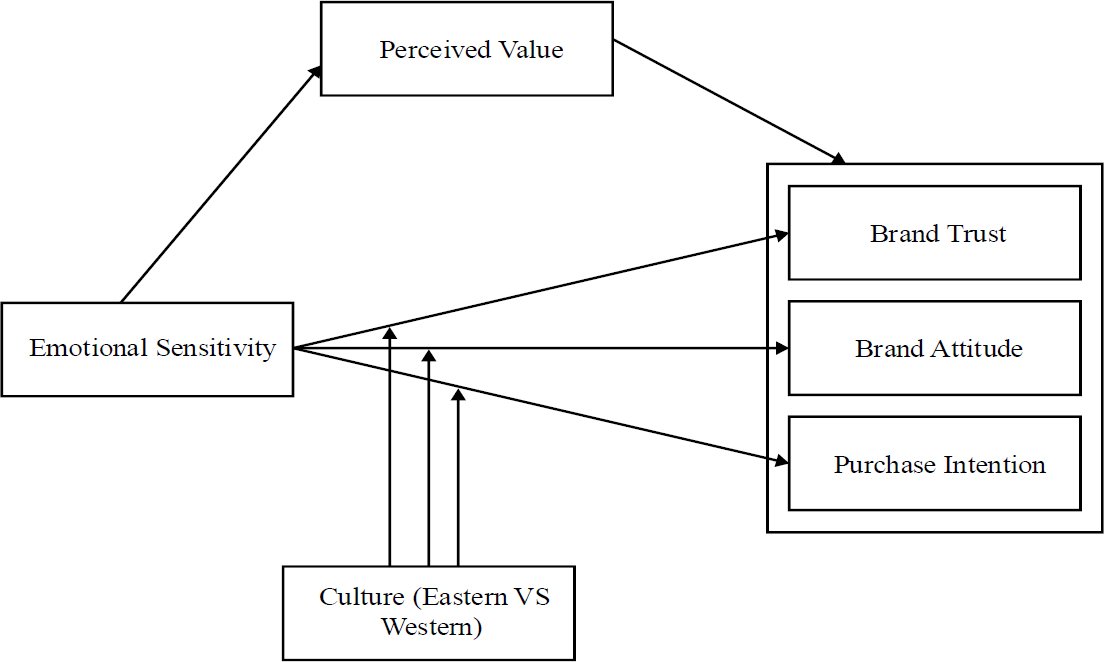
Fig. (1). Conceptual framework.
3. METHOD
3.1. Research Design and Data Collection
The research design used in this study was an experimental design to determine the impacts of culturally framed marketing pain on consumer value perception among different nationalities. The number of participants recruited was 200, randomly divided into four groups (50 each), and the balance of the experimental conditions was equal. Two hundred of the participants were recruited to provide adequate statistical power for statistical testing. (Cohen, 1992) points out that a sample size of 200 is sufficient to estimate medium to large effect sizes with a high level of confidence in a factorial design with multiple groups. The cross-cultural goals of the study were met through stratified convenience sampling to recruit the participants who would be representative of the main demographic variables, such as nationality, age, and gender. The recruitment was performed through online panels, social media, and university mailing lists that produced 500 invitations, 200 of which attended the experiment, and this gave a response rate of 40%. The respondents had to be adults (18 years and above) and frequent consumers of consumer products. Informed consent was obtained before the study, and the purpose of the study was clearly indicated in the recruitment materials. The demographic profile of respondents is provided in Table 1.
Table 1. Demographic profile.
| Demographic Variable | Category | n | % |
| Gender | Male | 100 | 50% |
| Female | 100 | 50% | |
| Age | 18–24 | 60 | 30% |
| 25–34 | 90 | 45% | |
| 35–45 | 50 | 25% | |
| Nationality | China | 40 | 20% |
| India | 30 | 15% | |
| Japan | 30 | 15% | |
| USA | 35 | 17.50% | |
| UK | 35 | 17.50% | |
| Germany | 30 | 15% | |
| Education | High School | 20 | 10% |
| Undergraduate | 120 | 60% | |
| Postgraduate | 60 | 30% | |
| Occupation | Student | 70 | 35% |
| Employed | 100 | 50% | |
| Self-Employed / Other | 30 | 15% |
The sample was divided into 50 males (n = 100) and 50 females (n = 100). The age of the participants was 18 to 45 years (M = 27.3, SD = 5.8). Cultural analysis was done by categorising participants based on their nationality of Eastern and Western. Eastern participants (n = 100) were mostly Chinese, Indian, and Japanese who had collectivist cultural backgrounds. Western participants (n=100) belonged to the United States, the United Kingdom, and Germany, and their cultural backgrounds were individualist. This classification corresponds to the individualism-collectivism dimension developed by (Hofstede, 1980), but it is clearly defined to prevent excessive generalisation.
The initial group acted as a control and was not subjected to any advertising stimuli, and this gave a baseline measure of consumer perceptions without being exposed to any marketing messages. The other three groups were subjected to advertisements that were supposed to trigger various emotions. The initial experimental group was a frame of social shame, whereby the message focused on social evaluation, i.e., “What will others think of you unless you take action?” The second condition employed a fear frame, and the message contained a sense of scarcity or the threat of missing out, as in “Act now or miss out forever!” The third experimental condition was that of a neutral frame, which presented informational information without any emotional or persuasive framing to act as a control of the effects of ad exposure per se. The design enabled the systematic manipulation of marketing pain in culturally diverse participants and the observation of the effect of various emotional frames on consumer value perception and the control of differences in responses as a baseline. According to (Deng et al., 2024), experimental design is valuable in marketing research as they provide causal relationships by manipulating the conditions while controlling extraneous factors.
In order to make the experimental manipulations effective, the manipulation check was performed in each of the advertising conditions. A different sample of respondents rated the degree of emotion aroused by the adverts to ensure that the social-shame adverts raised the concern of social evaluation, the fear adverts raised the concern of immediacy or scarcity, and the neutral adverts raised the concern of minimal emotion arousal. The reliability analyses showed high internal consistency of these ratings (Cronbach’s 85), and validity was demonstrated by the significant differentiation of conditions (p < .001). The Eastern (China, India, Japan) and Western (United States, United Kingdom, Germany) grouping of participants according to established cross-cultural frameworks (Hofstede, 1980; Gelfand et al., 2011) was made, and the fact that there is also intra-group variation was considered as a limitation of the study. Procedural controls minimized the risk of potential common-method bias and experimental demand effects and will be tackled in subsequent studies, which will increase transparency and reproducibility.
Some of the major assumptions were checked before the MANOVA was conducted. Skewness and kurtosis were used to test the normality, and were within the acceptable range. Levene’s Test established equal variances (p > .05). There was no multicollinearity in correlations, and independence was achieved by random assignment.
Besides the experimental study, focus groups were also carried out to get more qualitative information on the effects of culturally framed marketing pain on consumer perceptions and brand evaluation. These focus groups provide a deeper evaluation of the subjective interpretation of the subject and identify variability (Chand, 2025; Hantel et al., 2024; Pitt, 2024). Four focus groups were created, and the participants were selected in the same culturally diverse sample as the experimental research. Each group had 8 participants, which is enough to have manageable discussions and, at the same time, cover a variety of opinions. The guided discussions that were used in the focus groups discussed the emotional responses, thoughts, and interpretations of the various advertising frames of social shame, fear, and neutral messages. The moderators prompted the participants to discuss how cultural norms, social expectations, and personal values influenced their reactions to the ads. The audio-recorded discussions were transcribed and analysed on a thematic basis. This design allowed gathering rich context-specific data that supplemented the quantitative results and offered subtle insights into the cognitive and emotional mechanisms that drive marketing pain in various cultural contexts. Using focus groups rather than one-to-one interviews was particularly appropriate because the study is concerned with culturally normative understandings of discomfort, which are often articulated, reinforced, or challenged in interaction with others, rather than in isolated private accounts. The group setting allowed participants to respond to, agree with, and contest one another’s interpretations, offering a more naturalistic picture of how norms around shame, fear, and appropriateness are collectively negotiated in everyday conversation (Bloor et al., 2001).
3.2. Data Analysis
Data analysis was conducted through the statistical technique and thematic analysis. To determine group differences among various dependent variables in terms of consumer value perception and brand evaluation, Multivariate Analysis of Variance (MANOVA) was employed in the experimental aspect. The given approach enabled testing the effects of the advertising frames simultaneously and controlling the intercorrelations between variables (Finch, 2022; de Melo et al., 2022; Ntumi, 2021). To further analyse the underlying processes, the Process macro by Preacher and Hayes was used to test the mediation and moderation processes, which would help to understand how marketing pain affected consumer outcomes and whether there were any differences in such effects between cultural backgrounds. In the case of the qualitative component, the focus group transcripts were transcribed, and thematic analysis was carried out. An inductive coding method was used to establish patterns, cultural interpretations, and emotional responses to the advertising frames. The combination of statistical and thematic results provides a form of methodological triangulation that enhances the credibility, validity, and richness of the conclusions drawn from this mixed-methods design (Creswell & Clark, 2017).
4. RESULTS
4.1. MANOVA
Table 2 provides descriptive statistics for all variables. It shows that brand trust, brand attitude, and purchase intention have significant differences in all categories of experiments and cultures. Eastern participants scored more than the Western participants in all conditions, which implies greater emotional responsiveness. Frames of discomfort (social shame and fear) significantly enhanced all the outcomes more than the control group, where fear had the greatest effects preceding the neutral condition. The neutral frame yielded the most overall scores, implying that positive and non-threatening messaging continues to yield the best consumer responses. Overall, brand ratings are enhanced by discomfort framing, yet the cultural disparity and the dominance of neutral framing are still noticeable.
Table 2. Descriptive statistics.
| Dependent Variable | Experiment Category | Culture | M | SD | n |
| Brand Trust | Control | Eastern | 2.31 | 0.27 | 25 |
| Western | 1.59 | 0.32 | 25 | ||
| Social Shame | Eastern | 3.23 | 0.27 | 25 | |
| Western | 2.57 | 0.48 | 25 | ||
| Fear | Eastern | 3.91 | 0.33 | 25 | |
| Western | 3.31 | 0.33 | 25 | ||
| Neutral | Eastern | 4.65 | 0.28 | 25 | |
| Western | 4.08 | 0.26 | 25 | ||
| Brand Attitude | Control | Eastern | 2.37 | 0.29 | 25 |
| Western | 1.79 | 0.3 | 25 | ||
| Social Shame | Eastern | 3.15 | 0.39 | 25 | |
| Western | 2.61 | 0.25 | 25 | ||
| Fear | Eastern | 4.01 | 0.42 | 25 | |
| Western | 3.4 | 0.32 | 25 | ||
| Neutral | Eastern | 4.65 | 0.38 | 25 | |
| Western | 4.08 | 0.26 | 25 | ||
| Purchase Intention | Control | Eastern | 2.49 | 0.37 | 25 |
| Western | 1.79 | 0.35 | 25 | ||
| Social Shame | Eastern | 3.25 | 0.35 | 25 | |
| Western | 2.53 | 0.33 | 25 | ||
| Fear | Eastern | 4.15 | 0.39 | 25 | |
| Western | 3.37 | 0.26 | 25 | ||
| Neutral | Eastern | 4.77 | 0.23 | 25 | |
| Western | 4.25 | 0.29 | 25 |
Table 3 shows the result of between-subject effects. It indicates that the effect of experiment category on brand trust, brand attitude, and purchase intention is statistically significant and very large in effect sizes (η²p = 0.88). This implies that the nature of the framing applied by the advertisement has a significant impact on how consumers consider and react to the brand. The large effect size reflects the strong impact of ad frames on brand trust, attitude, and purchase intention. It is due to potent emotional manipulation, highly relevant parental-focused stimuli, controlled experimental conditions and consistent participant responsiveness that amplifies the observed effects of marketing pain. The main effect of culture is also significant in all three dependent variables with large effect sizes (η²p = 0.44 – 0.53), indicating that Eastern and Western consumers respond differently, probably because of differences in culture in terms of emotional processing and sensitivity to advertising. Nonetheless, the experiment category and culture interaction do not mean anything to all outcomes (p >.23). This implies that both the framing type and the culture have an impact on responses, but still, the trend of the differences between the Eastern and Western participants is the same in all advertising conditions. That is, culture does not alter the presence of various frames in the process of brand evaluations. The high effect sizes can be explained by the strong manipulations of emotions, the high relevance of parental-oriented stimuli, the control of the experiment conditions, and the stability of the responsiveness of the participants. The values of R2 also demonstrate high explanatory power: brand trust (R2 =.899, Adjusted R2 =.896), brand attitude (R2 =.886, Adjusted R2 =.882) and purchase intention (R2 =.900, Adjusted R2 =.896). The insignificant interactions imply that the overall responsiveness varies across cultures, but the frame effect pattern is similar across groups.
Table 3. Tests of between-subjects’ effects.
| Source | DV | F | df | P | η²p |
| Experiment Category | Brand Trust | 506.36 | 3, 192 | 0.000 | 0.888 |
| Brand Attitude | 447.88 | 3, 192 | 0.000 | 0.875 | |
| Purchase Intention | 501.35 | 3, 192 | 0.000 | 0.887 | |
| Culture | Brand Trust | 193.19 | 1, 192 | 0.000 | 0.502 |
| Brand Attitude | 150.9 | 1, 192 | 0.000 | 0.44 | |
| Purchase Intention | 217.88 | 1, 192 | 0.000 | 0.532 | |
| Experiment * Culture | Brand Trust | 0.5 | 3, 192 | 0.683 | 0.008 |
| Brand Attitude | 0.13 | 3, 192 | 0.945 | 0.002 | |
| Purchase Intention | 1.44 | 3, 192 | 0.233 | 0.022 |
The pairwise comparisons in Table 4 show that there are significant differences in all the experimental conditions in brand trust, brand attitude, and purchase intention. In comparison with the control group, social shame framing yields relatively more positive evaluations, whereas fear framing yields even more. The highest scores are always observed with the neutral condition, with the greatest mean differences compared to the control group. These findings prove the existence of a clear gradient where the emotional intensity boosts consumer reactions, whereas positive or non-discomfort cues (neutral condition) are more effective than negative emotional frames. Also, social shame scores are considerably lower than fear and neutral conditions, which means that it is the least efficient of the non-control frames. The negative mean differences between all comparisons and highly significant p-values (p =.000) indicate that all the experimental conditions have a significant impact on consumer perceptions. Altogether, the findings prove that framing type can have a significant impact on brand assessment, and neutral messaging is the most convincing.
Table 4. Post hoc comparisons (Tukey HSD) for experiment category.
| DV | (I) Experiment Category | (J) Experiment Category | Mean Difference (I–J) | SE | P |
| Brand Trust | Control | Shame | -0.95 | 0.065 | 0.000 |
| Control | Fear | -1.66 | 0.065 | 0.000 | |
| Control | Neutral | -2.42 | 0.065 | 0.000 | |
| Shame | Fear | -0.71 | 0.065 | 0.000 | |
| Shame | Neutral | -1.47 | 0.065 | 0.000 | |
| Fear | Neutral | -0.76 | 0.065 | 0.000 | |
| Brand Attitude | Control | Shame | -0.80 | 0.066 | 0.000 |
| Control | Fear | -1.63 | 0.066 | 0.000 | |
| Control | Neutral | -2.29 | 0.066 | 0.000 | |
| Shame | Fear | -0.83 | 0.066 | 0.000 | |
| Shame | Neutral | -1.49 | 0.066 | 0.000 | |
| Fear | Neutral | -0.66 | 0.066 | 0.000 | |
| Purchase Intention | Control | Shame | -0.75 | 0.065 | 0.000 |
| Control | Fear | -1.62 | 0.065 | 0.000 | |
| Control | Neutral | -2.37 | 0.065 | 0.000 | |
| Shame | Fear | -0.87 | 0.065 | 0.000 | |
| Shame | Neutral | -1.62 | 0.065 | 0.000 | |
| Fear | Neutral | -0.75 | 0.065 | 0.000 |
Fig. (2) shows the estimated marginal means of Brand Trust across the four experimental conditions. Brand trust is lowest in the control condition, increases with shame and fear frames, and is highest in the neutral condition. It indicates that emotional and informational framing significantly influences consumer trust in the brand.
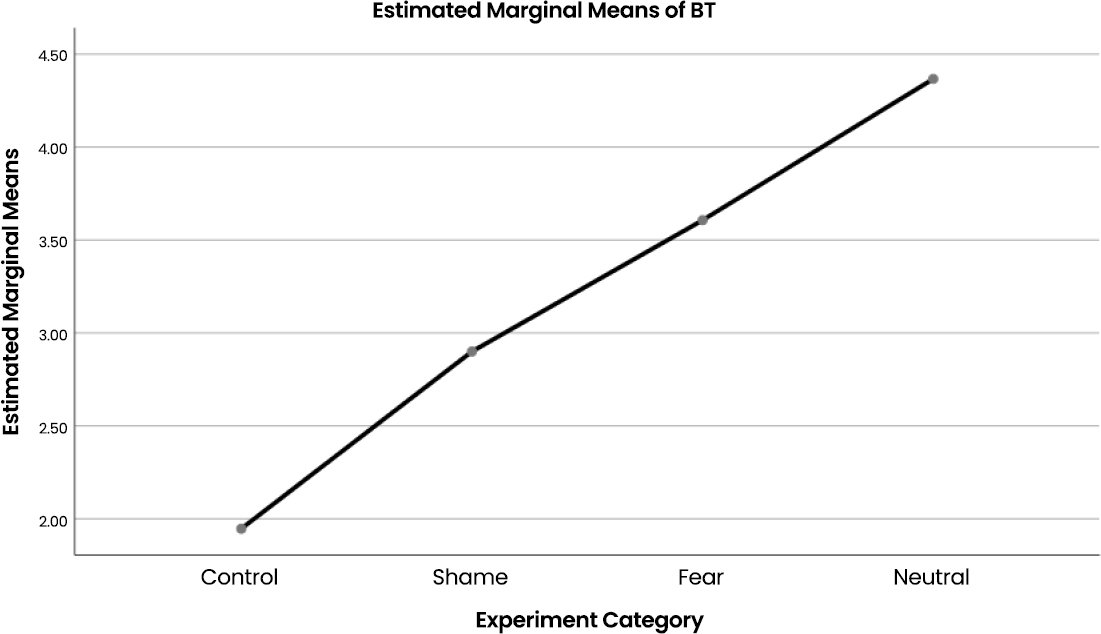
Fig. (2). Experiment category and brand trust.
Fig. (3) shows the estimated marginal means of Brand Trust across the two cultures. It shows that Eastern culture has the highest brand trust as compared to Western culture.
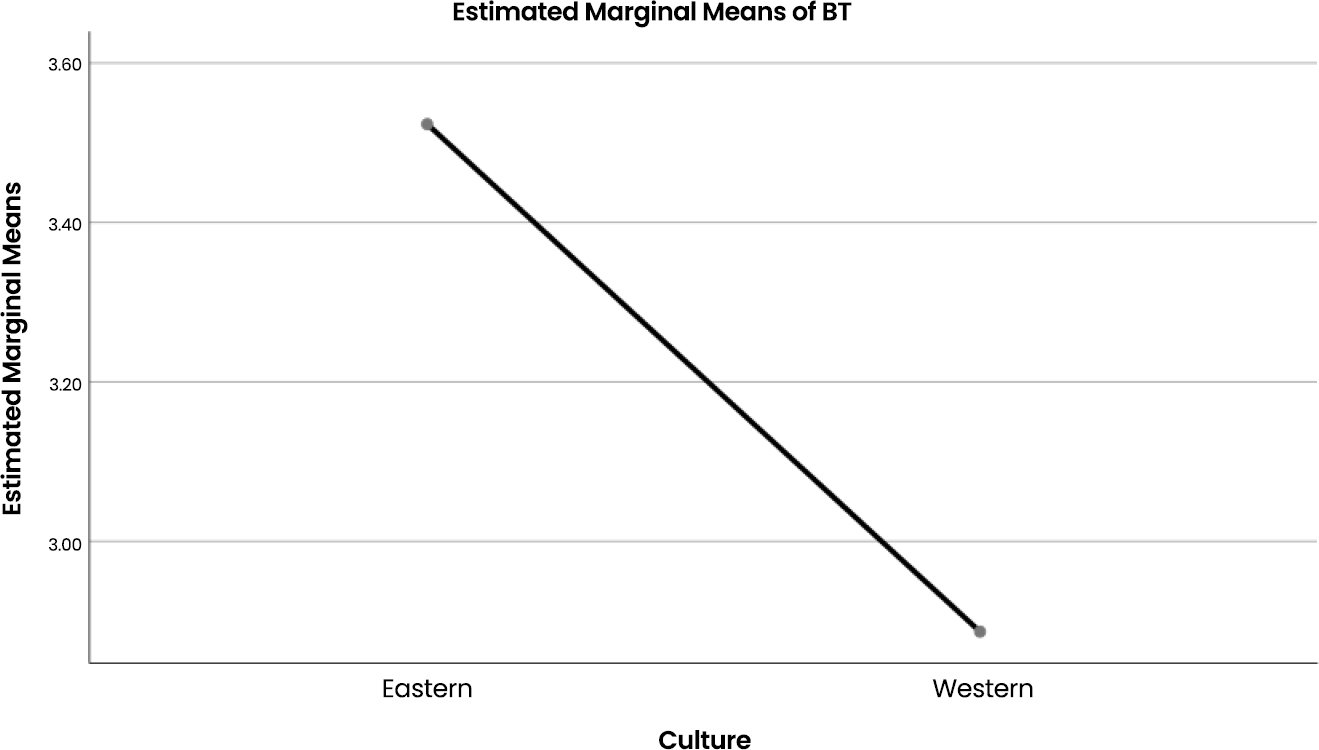
Fig. (3). Culture and brand trust.
Fig. (4) shows the estimated marginal means of Brand Attitude across the four experimental conditions. Brand attitude is lowest in the control condition, increases with shame and fear frames, and is highest in the neutral condition.
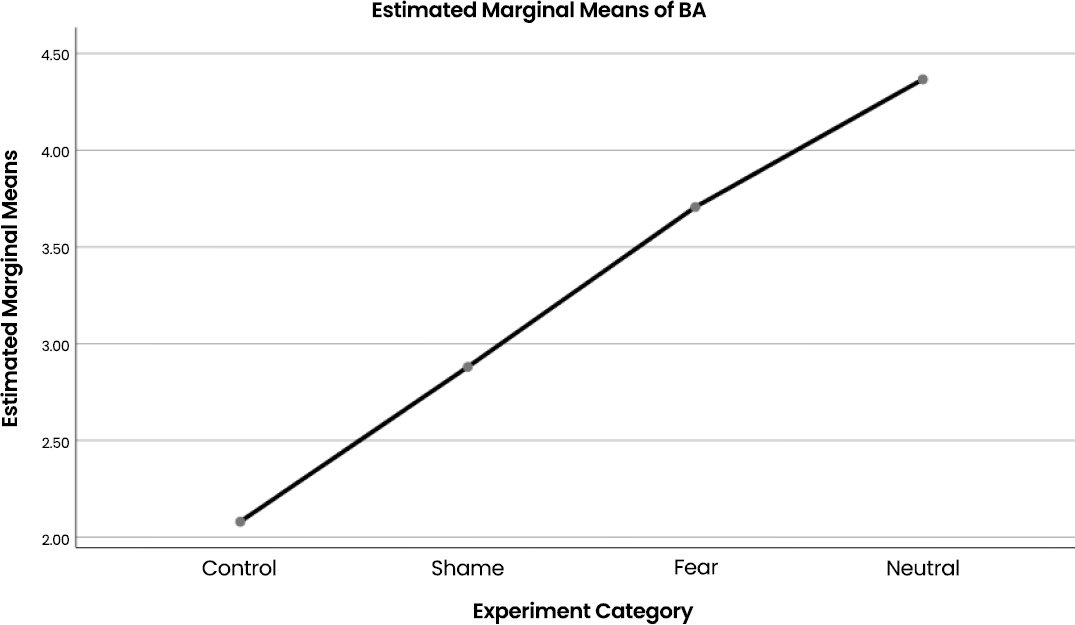
Fig. (4). Experiment category and brand attitude.
Fig. (5) shows the estimated marginal means of Brand attitude across the two cultures. It shows that Eastern culture has the highest brand attitude as compared to Western culture.
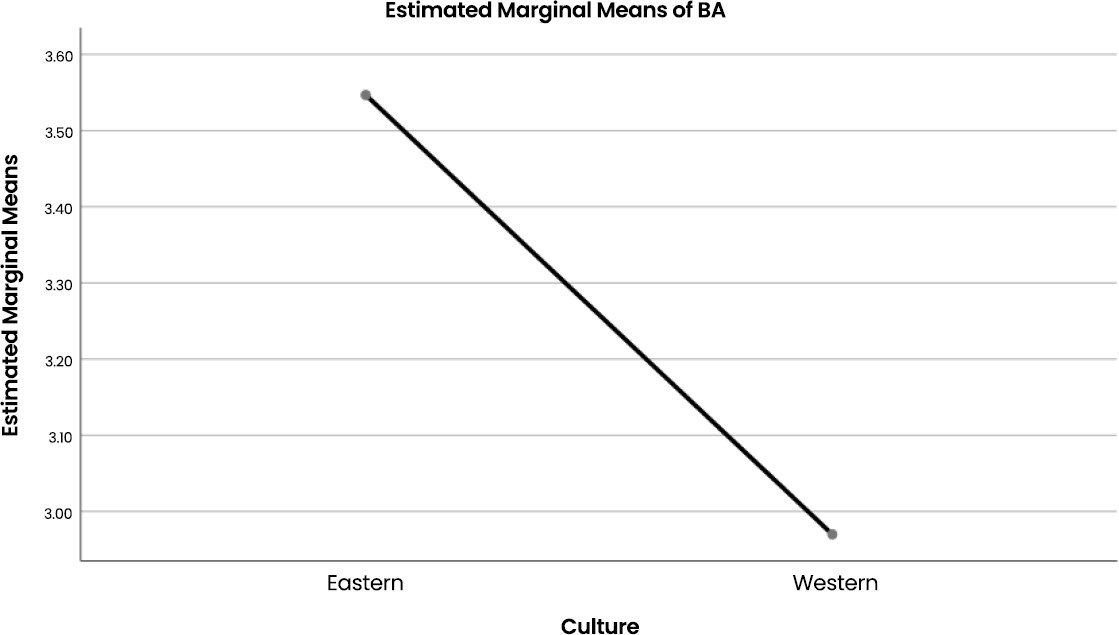
Fig. (5). Culture and brand attitude.
Fig. (6) shows the estimated marginal means of Purchase intention across the four experimental conditions. Purchase intention is lowest in the control condition, increases with shame and fear frames, and is highest in the neutral condition.
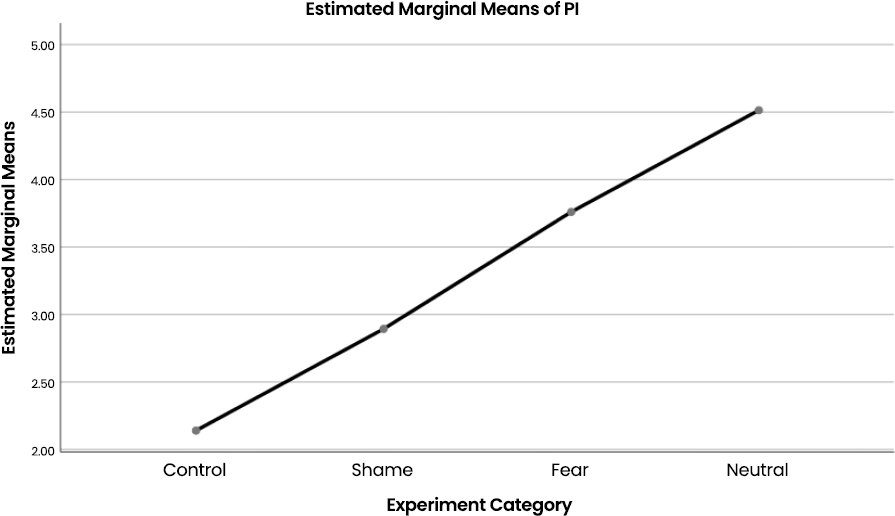
Fig. (6). Experiment category and purchase intention.
Fig. (7) shows the estimated marginal means of purchase intention across the two cultures. It shows that Eastern culture has the highest purchase intention as compared to Western culture.
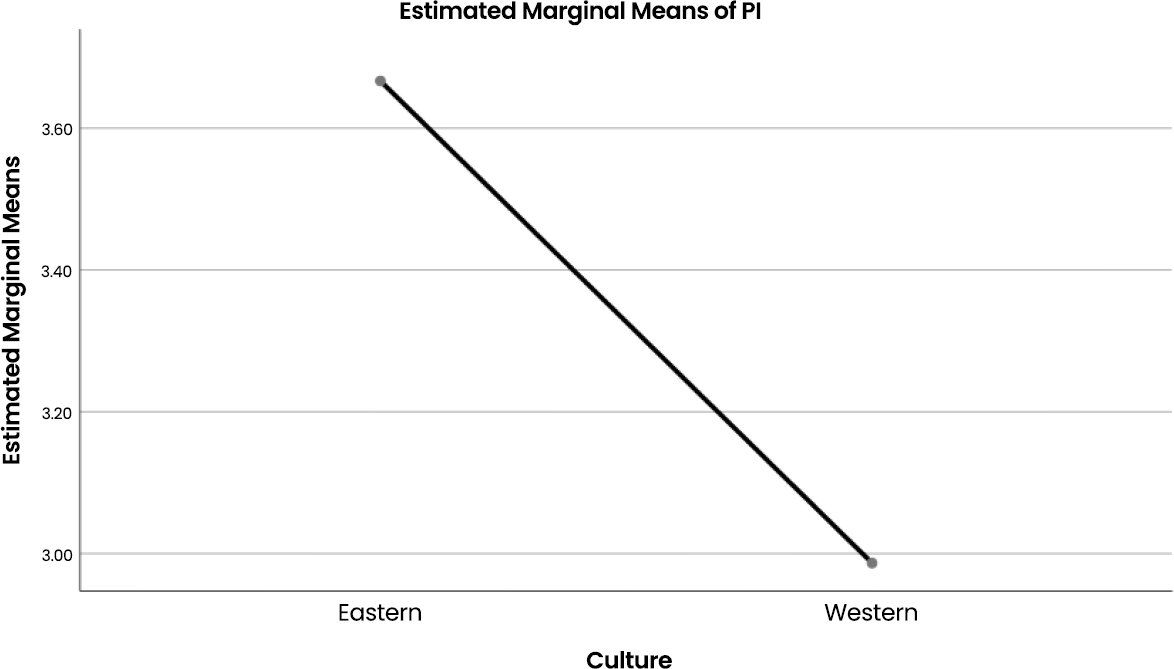
Fig. (7). Culture and purchase intention.
4.3. Preacher and Hayes Process
The findings of mediation analysis in Table 5 indicate that emotional sensitivity is a strong predictor of perceived value (B = 0.874, p < 001), and so, more emotionally sensitive individuals perceive advertisements to have more value. Perceived value, in its turn, is a significant predictor of brand trust, brand attitude, and purchase intention, which proves its key position in influencing consumer reactions. In the case of brand trust and brand attitude, emotional sensitivity and perceived value are important predictors, which confirms the partial mediation. Emotional sensitivity has a direct impact on both of them, but also has an indirect impact through perceived value. In purchase intention, emotional sensitivity has a very strong direct impact (B = 0.900, p < .001) and the perceived value has an added positive impact (B = 0.106, p < .001), but to a lesser degree. The confidence interval of all the indirect paths does not contain zero, indicating that mediation is significant. In general, perceived value is an effective psychological process that connects emotional sensitivity to positive brand appraisals and intentions to behave.
Table 5. Mediation analyses of perceived value.
| Outcome | Predictor | B | p | 95% CI Lower | 95% CI Upper |
| Perceived Value | Constant | 0.156 | 0.187 | -0.077 | 0.388 |
| Perceived Value | 0.874 | 0.000 | 0.807 | 0.941 | |
| Brand Trust | Constant | 0.165 | 0.094 | -0.028 | 0.358 |
| Emotional Sensitivity | 0.453 | 0.000 | 0.338 | 0.568 | |
| Perceived Value | 0.499 | 0.000 | 0.383 | 0.615 | |
| Brand Attitude | Constant | 0.324 | 0.001 | 0.135 | 0.513 |
| Emotional Sensitivity | 0.478 | 0.000 | 0.365 | 0.591 | |
| Perceived Value | 0.437 | 0.000 | 0.324 | 0.551 | |
| Purchase Intention | Constant | 0.003 | 0.949 | -0.085 | 0.091 |
| Emotional Sensitivity | 0.9 | 0.000 | 0.848 | 0.952 | |
| Perceived Value | 0.106 | 0.000 | 0.053 | 0.158 |
The findings in Table 6 indicate that emotional sensitivity has a strong direct influence on brand trust, brand attitude and purchase intention, with purchase intention having the greatest direct influence. These relationships are also mediated by perceived value, where all the indirect effects are significant and the confidence interval does not include zero. Brand trust and brand attitude have the strongest mediation, whereas purchase intention is the weakest.
Table 6. Direct and indirect effects of ES on outcome variables.
| Outcome | Effect Type | Effect | SE | 95% CI Lower | 95% CI Upper |
| Brand Trust | Direct | 0.453 | 0.059 | 0.338 | 0.568 |
| Indirect (via PV) | 0.436 | 0.048 | 0.343 | 0.533 | |
| Brand Attitude | Direct | 0.478 | 0.057 | 0.365 | 0.591 |
| Indirect (via PV) | 0.382 | 0.054 | 0.282 | 0.491 | |
| Purchase Intention | Direct | 0.9 | 0.027 | 0.848 | 0.952 |
| Indirect (via PV) | 0.092 | 0.031 | 0.035 | 0.159 |
4.4. Focus Group Analysis
The focus group data were thematically analysed through a six-phase approach by (Braun & Clarke, 2006) Table 7. The analysis produced four overall themes that describe the perception of discomfort-based advertisements by participants and how these perceptions influenced perceived value, brand ratings, and cultural interpretations. Each theme is supported with illustrative quotes from the participants.
Table 7. Thematic coding.
| Themes | Codes | Keywords |
| Emotional Discomfort as a Motivational Trigger | Attention-grabbing, Emotional arousal, and Cognitive engagement | Unsettling, Hard to ignore, Push, Stress, Alert |
| Perceived Value as an Emotional Interpretation | Product relevance, Meaningfulness, Necessity, Importance | Valuable, Necessary, Important, Memorable, Meaningful |
| Cultural Differences in Responding to Discomfort | Cultural acceptability, Shame sensitivity, Fear receptiveness, Collectivism vs. Individualism | Shame, Urgency, Fear, Manipulative, Normal, Acceptable, Persuasive |
| Brand Positioning and Trust Negotiation | Brand memorability, Differentiation, Trust perception, Credibility | Memorable, Stand out, Serious, Responsible, Trust, Credibility, Reputation |
The initial theme, Emotional discomfort as Motivational trigger, was used to describe the consistency of the responses of the participants to the shame- and urgency-based advertisements. According to respondents, the messages were emotionally disturbing and effective in attracting attention. One of the participants in the East said,
“That shame had struck me on the spot. I had the feeling that people were staring at me, and I felt I should do something.”
Equally, one participant, who was in the West, mentioned that
“The urgency ad made me feel stressed, but in a manner that made me listen.”
Some of the participants concurred that the ad was difficult to ignore due to discomfort, which implies that negative emotional stimuli elicited more intense thinking. Emotional discomfort, therefore, acted as a stimulus that increased the processing of the message and relevance.
The second theme, Perceived Value as an Emotional Interpretation, involved the influence of emotional resonance on product value judgments. Emotionally framed ads were often perceived by the participants as being of higher value since the message seemed relevant or even urgent. As an example, one respondent said,
“Since the advertisement evoked emotions in me, I figured that the product must be something worthwhile.”
Another one added,
“When the message is intense, the product appears to be more needed.”
Conversely, neutral advertisements were characterised as boring and unmemorable, and this translated into a decreased perceived value. This is in line with quantitative results that perceived value is an intermediate between emotional sensitivity and brand evaluations.
The third theme developed is Cultural Differences in Responding to Discomfort. Eastern respondents tended to perceive messages that were framed in shame as culturally appropriate and compelling. One of the Eastern participants says,
“In our culture, it is normal to consider what other people think about you. The shame advertisement sounded like a natural one to me.”
On the other hand, Western participants were very conservative. One of them said that the shame ad was manipulative. I do not like feeling guilty about purchasing something. Westerns were, however, more willing to be framed with fear, with one saying,
“Fear is all around us in our ads, so it was not an issue with me.”
These cultural differences explain how collectivistic and individualistic orientations determine the meaning and acceptability of discomfort cues.
The fourth theme, the Brand Positioning and Trust Negotiation, was the reflection of the long-term effects of discomfort appeals on brand judgments. Most respondents admitted that emotionally evoking advertisements increased brand differentiation and recall. One of them replied that they will not forget the brand that employed the ‘shame’ message since it was memorable. Others focused on issues of trust, more so in the Western group. One of the Western respondents cautioned,
When a brand applies excessive fear, I begin to distrust it.
On the contrary, one of the Eastern participants replied,
“To me, the brand appears more serious and responsible when it employs such messages”.
These opposite perspectives emphasise the importance of culturally specific communication approaches.
On the whole, the thematic analysis indicates that the discomfort framing has a powerful impact on emotional processing, perceived value, and brand positioning, although the effectiveness of these strategies is different in the cultural contexts. The quotes show how the participants make sense of these messages and negotiate them, which provides a better understanding of the mechanisms that underlie the experimental results.
5. DISCUSSION
This research was aimed at examining the effect of emotional sensitivity, especially towards discomfort-framed advertising, on brand trust, brand attitude and purchase intention among Eastern and Western consumers, and the mediator is perceived value. The study applied a mixed-method approach, where an experimental design was used to manipulate emotional frames, mediation analysis with the Preacher and Hayes process macro, and focus group discussions to investigate the perceptions and experiences of participants in detail.
The results of MANOVA showed that the nature of the experimental condition was a significant influence on all three dependent variables, which represented H1. Urgency, fear and social shame resulted in high-arousal conditions, which produced more brand trust and more positive brand attitudes and purchase intentions than control or neutral conditions. The cultural differences were also important, which validated H2, as the Eastern participants responded more to the social shame appeals, which is aligned with the (Hofstede, 1980) collectivism framework. The effect of the category of the experiment and culture was not found to be significant, which indicates that culture has a tendency to affect the overall responsiveness, but the effects of emotional frames are the same across the groups. These results are consistent with the Fear Appeal Theory (Janis & Feshbach, 1953), which states that emotionally-laden messages enhance behavioural motivation and are built on the previous studies by (Mas et al., 2024; and So et al., 2024) in cross-cultural environments.
Furthermore, H3 is accepted, and it demonstrates that emotional sensitivity has a significant positive impact on brand trust (0.453), brand attitude (0.478), and purchase intention (0.900, all p <.001). This validates that the consumers who are sensitive to emotions react intensely to marketing, such as discomfort-related frames, which builds on previous studies of positive emotional involvement (Srisuk et al., 2023; Zaman et al., 2025; Gao & Shen, 2024). Mediation tests have shown that the effect of emotional sensitivity on brand trust, brand attitude, and purchase intention was partially mediated by perceived value, which confirms H4. The direct and indirect effects were significant on brand trust and attitude, and on purchase intention. The direct effect of emotional sensitivity was greater, with a smaller, significant indirect effect on purchase intention through perceived value. These findings support the theoretical framework of perceived value as a process of converting emotional responses to brand-relevant judgments (Ragab et al., 2024; Srisuk et al., 2023). These results expand on the current theoretical views by pointing to the fact that Fear Appeal Theory and Cultural Dimensions Theory might need some further contextual requirements to be implemented across cultures. Precisely, fear, urgency, and social shame appeals are effective moderately depending on the cultural norms and self-construal differences, which imply the lack of universal applicability of classical fear appeal mechanisms. In addition, the discovery of perceived value as a partial mediator shows a heretofore ignored process: the emotional sensitivity is converted into brand-relevant judgments using the cognitive appraisal of value, which adds to the theoretical comprehension of how discomfort-based advertising is converted into consumer behaviour.
Even though the cultural category and experiment interaction were not significant, the general cultural responsiveness varied, which means that marketing pain frames have strong influences across cultures. This result can be seen as an expansion of Fear Appeal and Cultural Dimension theories in that it shows that integrated discomfort cues can have a universally different impact on brand outcomes, with some strength. Further studies can be done to investigate other psychological variables (e.g., emotional regulation, previous brand attitude) and market variables (e.g., product familiarity, cultural relevance) that might interact with discomfort framing to deepen theoretical knowledge and practical implications of cross-cultural emotional marketing.
These quantitative results were also endorsed by focus group discussions. Participants emphasised that messages that were discomfort-focused increased attention and perceived relevance of the brand, and Eastern participants were especially sensitive to social shame messages, whereas Western participants were more sensitive to fear and urgency messages. Cognitive and affective brand judgments were confirmed by the appearance of such codes as attention-grabbing, trustworthy, and valuable, which proves that emotional sensitivity is a motivating force behind brand judgments.
Triangulating these findings, the research shows that emotional sensitivity, be it aroused by fear and urgency or social shame, has a significant impact on brand outcomes, and perceived value is a key mediating process. The magnitude of the reaction is softened by cultural variations, especially to socially framed discomfort, which is why marketing strategies should be culturally oriented. The results demonstrate one major gap between quantitative and qualitative data. The neutral frame leads to the highest numeric scores of brand trust, attitude, and purchase intention; however, the participants of the focus group referred to neutral advertisements as being boring and less interesting. This implies that the ratings can be increased to indicate ease of processing instead of actual emotional effect. Further, the assertions of the universal trends between the Eastern and Western consumers are exaggerated because the researchers only sampled two broad cultural groups, which cannot be generalised. Such quantitative-qualitative discrepancies need to be resolved by using more representative and diverse samples in future studies, as well as by using affective involvement and cognitive appraisals.
Theoretically, the findings can be added to the cross-cultural marketing theory by showing that emotional appeals do not have a homogenous impact on cultural frameworks, but instead, they interact with them. The results indicate that Hofstede dimensions, though helpful, should consider multi-dimensional emotional reactions and perceived value in forecasting brand results. That is, the cross-cultural models of consumer behaviour can be enhanced by integrating emotional sensitivity and value appraisal as the two key mechanisms in the interpretation of the effectiveness of advertisements.
These findings further contribute to the theoretical knowledge on emotional marketing by differentiating marketing pain and conventional fear or shame appeals. In contrast to single-emotion negative appeals, marketing pain incorporates several discomfort-inducing cues and takes into account the culturally mediated conversion of emotional sensitivity to perceived value and brand results, providing a more detailed approach to cross-cultural advertising research.
Overall, these results possess significant theoretical and practical implications. They apply Fear Appeal Theory and Cultural Dimensions Theory to contemporary advertising situations and demonstrate that positive and negative emotional stimuli can be used to strengthen brand positioning, provided that they are culturally sensitive. In practice, the discomfort-framed appeals can be used by marketers to increase the perceived value and brand trust, attitude, and purchase intention, and take into account the cultural subtleties to maximise the cross-cultural campaigns. The research is not only able to fill the gap in knowledge about negative emotional appeals in advertising, but also contributes to the theoretical knowledge by identifying how the classical theories, Fear Appeal Theory and Cultural Dimensions Theory, work in culturally diverse environments. The research determines a new pathway of how emotional sensitivity is converted into brand trust, attitude, and purchase intention by empirically showing the mediating role of perceived value to other existing consumer behaviour theories.
CONCLUSION AND RECOMMENDATION
This paper examined the effect of discomfort-based advertising on brand trust, brand attitude, and purchase intention in Eastern and Western cultures and controlled for the effect of emotional sensitivity and perceived value. The results of the experimental, mediation, and focus group designs show that discomfort-framed advertising is a powerful method in influencing consumer perceptions, but the responses are different across cultures. Precisely, campaigns that focus on collective norms are better received by Eastern viewers (China, India, and Japan), and campaigns that focus on fear, urgency, and appeals to fear are better received by Western viewers (the United States, the United Kingdom, and Germany). These effects are augmented by emotional sensitivity, and perceived value is a significant mediator between emotional framing and consumer reactions.
There was a significant gap between quantitative and qualitative data: neutral-framed ads received the greatest number of points, but the participants of the focus group referred to them as being boring and less interesting, which argues that the increased scores might be the result of easier processing, instead of the actual emotional appeal. Also, the allegations of the universal tendencies are to be taken with a grain of salt, since the research only sampled two general types of cultures.
The research is significant to the literature on fear-appeal because it establishes that discomfort-based advertising that is culturally-oriented may be used to increase brand positioning when it is aligned with emotional sensitivity and perceived value of consumers. It also expands on the cross-cultural emotional marketing theory by demonstrating that the framing of the campaign must take into account the regional cultural norms and emotional responsiveness. In practice, these findings emphasise the strategic importance of customising advertising messages to the emotional profile of consumers as well as to their culture in order to optimise the effect of the brand.
POLICY IMPLICATIONS
The findings show that policymakers and regulatory agencies need to take into account cultural and emotional elements when coming up with advertising regulations. As Eastern (China, India, Japan) and Western (United States, United Kingdom, Germany) customers react differently to discomfort-based advertising, the regulations may promote culturally-specific emotional appeals. As an example, in Eastern collectivist markets, brands might use social-norm or group-harmony messaging, which focuses on shared values and benefits to the community without being overtly shaming, which can cause aversion. Fear or urgency appeals, when created to reflect personal consequences or benefits, can be made to look not manipulative or coercive in Western individualist markets. Moreover, the educational programmes may educate consumers on the issue of emotional sensitivity in buying, which allows them to be more conscious in their interaction with advertising. These guidelines offer practical guidelines on culturally sensitive marketing, which will ensure good brand communication and meet evidence-based ethical guidelines.
LIMITATIONS AND FUTURE DIRECTION
There are a few limitations that can be identified in this study. To begin with, the experimental design and focus group data were restricted to particular cultural settings- Eastern and Western, which might not be entirely representative of the diversity in these broad groups. Second, it has a sample size, which is sufficient to conduct a statistical analysis, but which may not be generalizable to the larger population. Third, the research concentrated on the chosen emotional frames (social shame, fear, neutral) and failed to address other possible negative emotional appeals or mixed ones. Also, the perceived value was studied as a mediator, but no other psychological or contextual factors, including brand familiarity or previous experience, were considered.
Future studies would overcome these limitations by using more culturally diverse samples, larger sample sizes, and more emotional frames. The longitudinal studies would be able to test the long-term sustainability of discomfort-based marketing impact. Besides, the investigation of other mediators and moderators, including personality traits, brand loyalty, or digital interaction, would offer more detailed results on the emotional sensitivity and brand positioning in different contexts.
One of the major limitations of this study is the operationalisation of cultural groups. China, India, and Japan were all categorised as Eastern, although there was a great difference among Easterns in terms of collectivism, social norms, and expression of emotions. In addition, the Eastern sample was mostly Chinese, which could have biased the findings. Future studies ought to quantify individual-level cultural values, including self-construal and norm tightness, to enhance the intra-cultural variance and enhance the external validity of the results to the broad Eastern populations. The product attitude, pre-existing brand familiarity, and individual emotional regulation were not controlled, and this could impact internal validity. These variables should be measured in future studies as covariates or possible moderators.
ABBREVIATION
| MANOVA | = | Multivariate Analysis of Variance |
AUTHORS’ CONTRIBUTIONS
A.M.G. has contributed to conceptualization, idea generation, problem statement, methodology, results analysis, results interpretation.
ETHICAL APPROVAL & INFORMED CONSENT
All procedures were carried out in accordance with institutional research ethics committee guidelines and Declaration of Helsinki. Informed consent was obtained from all participants. To ensure participant protection, all data were fully anonymized at the point of collection, and no personal or identifiable data was recorded.
AVAILABILITY OF DATA AND MATERIAL
The data will be made available on reasonable request by contacting the corresponding author [A.M.G.].
FUNDING
None.
CONFLICT OF INTEREST
The authors declare that there is no conflict of interest regarding the publication of this article.
ACKNOWLEDGEMENTS
Declared none.
DECLARATION OF AI
During the preparation of this work the authors used ChatGPT for editing purposes. After using this tool, the authors reviewed and edited the content as needed and take full responsibility for the content of the published article.
APPENDIX A: EXPERIMENTAL QUESTIONNAIRE
Section 1: Demographics
- Gender
- Male
- Female
- Age
- 18-24
- 25-34
- 35-45
- Nationality
- China
- India
- USA
- UK
- Germany
- Education
- High School
- Undergraduate
- Postgraduate
- Occupation
- Student
- Employed
- Self-Employed/Other
Section 3: Emotional Sensitivity Scale
Rate the following on the scale of 1-5, 1 being strongly disagree and 5 being strongly agree.
- I am easily affected by emotional messages.
- Advertisements that evoke strong feelings usually influence me.
- I often react strongly to emotionally charged content.
Section 4: Perceived Value
- This brand offers good value for the price.
- The ad made the brand seem worthwhile.
- The brand appears beneficial and useful.
Section 5: Brand Trust
- I trust this brand.
- This brand seems dependable.
- This brand is honest with customers.
Section 6: Brand Attitude
- My attitude toward this brand is favourable
- I find this brand appealing.
- This brand leaves a positive impression.
Section 7: Purchase Intention
- I would consider purchasing this brand.
- I am likely to buy this product in the future.
- I would recommend this brand to others.
Appendix B: Focus Group Questionnaire
- How did each advertisement (shame-based, fear-based, and neutral) make you feel, and what specific elements triggered those feelings?
- In what ways do you think your cultural background shaped how you interpreted the emotional tone of the ads?
- How did the advertisements influence your perception of the product’s value, usefulness, or credibility?
- Which of the ads felt uncomfortable or inappropriate to you, and why? Where do you personally draw the line between persuasive messaging and discomfort?
- How did each advertisement affect your trust in the brand or your overall attitude toward it?
- Based on the ads, would you be more or less likely to buy the product, and what factors (emotional tone, cultural norms, relevance) influenced that decision?
REFERENCES
Alexander, B., Blazquez, M., Chrimes, C., & Boardman, R. (2025). The role of immersive spaces on the customer experience: An exploration of fashion metaverses. Psychology & Marketing, 42(2), 539–553. https://doi.org/10.1002/mar.22140
Averill, J. R. (1980). A constructivist view of emotion. In Theories of emotion (pp. 305–339). Academic Press. https://doi.org/10.1016/B978-0-12-558701-3.50018-1
Bloor, M., Frankland, J., Thomas, M., & Robson, K. (2001). Focus groups in social research. SAGE Publications Ltd, https://doi.org/10.4135/9781849209175
Braun, V., & Clarke, V. (2006). Using thematic analysis in psychology. Qualitative research in psychology, 3(2), 77-101. https://doi.org/10.1191/1478088706qp063oa
Chand, S. P. (2025). Methods of data collection in qualitative research: Interviews, focus groups, observations, and document analysis. Advances in Educational Research and Evaluation, 6(1), 303-317. https://doi.org/10.25082/AERE.2025.01.001
Cohen, J. (1992). Statistical power analysis. Current Directions in Psychological Science, 1(3), 98-101. https://doi.org/10.1111/1467-8721.ep10768783
Creswell, J. W., & Clark, V. L. P. (2017). Designing and Conducting Mixed Methods Research. Sage Publications Ltd. Available from: https://www.scirp.org/reference/referencespapers?referenceid=2875785
de Melo, M.B., Daldegan‐Bueno, D., Menezes Oliveira, M.G. & de Souza, A.L., (2022). Beyond ANOVA and MANOVA for repeated measures: Advantages of generalized estimated equations and generalized linear mixed models and its use in neuroscience research. European Journal of Neuroscience, 56(12), pp.6089-6098. https://doi.org/10.1111/ejn.15858
Deng, P., Zhou, X., Xie, D., & Zheng, P. (2024). How to drive tourists’ pro-environmental behavior: interactive effect of benefit appeals and goal framing. Sustainability, 16(13), 5600. https://doi.org/10.3390/su16135600
Finch, W. H. (2022). Multivariate analysis of variance for multilevel data: A simulation study comparing methods. The Journal of Experimental Education, 90(1), 173-190. https://doi.org/10.1080/00220973.2020.1718058
Gao, F., & Shen, Z. (2024). Sensory brand experience and brand loyalty: Mediators and gender differences. Acta Psychologica, 244, 104191. https://doi.org/10.1016/j.actpsy.2024.104191
Garg, P., Singh, S., Chamola, P., Kumar, A., & Paliwal, M. (2025). Elucidating the linkage between advertisements embedded with emotional appeals and the brand relationship quality during the COVID pandemic. Journal of Marketing Communications, 31(2), 126-150. https://doi.org/10.1080/13527266.2023.2220338
Gelfand, M. J., Raver, J. L., Nishii, L., Leslie, L. M., Lun, J., Lim, B. C., … & Yamaguchi, S. (2011). Differences between tight and loose cultures: A 33-nation study. Science, 332(6033), 1100-1104. https://doi.org/10.1126/science.1197754
Hantel, A., Senay, E., Richie, C., Revette, A., Nava-Coulter, B., Hlubocky, F. J., … & Abel, G. A. (2024). A focus group study of ethical issues during climate-informed health decision-making. Nature Climate Change, 14(10), 1040-1046. https://doi.org/10.1038/s41558-024-02121-z
Hofstede, G. (1980). Culture and organizations. International Studies of Management & Organization, 10(4), 15-41. https://doi.org/10.1080/00208825.1980.11656300
Jang, J., Kang, J., & Huan, C. (2025). A committed brand facing moral dilemma crises: the role of inferred goodwill and self-brand connection in consumer regret. Journal of Product & Brand Management, 34(3), 347-363. https://doi.org/10.1108/JPBM-09-2023-4704
Janis, I. L., & Feshbach, S. (1953). Effects of fear-arousing communications. The Journal of Abnormal and Social Psychology, 48(1), 78-92. https://doi.org/10.1037/h0060732
Kastanakis, M. N., Magrizos, S., & Belk, R. W. (2026). “No pain no Gain”: understanding and applications of pain in marketing scholarship and practice. Journal of Business Research, 203, 115814. https://doi.org/10.1016/j.jbusres.2025.115814
Korde, S., & Mahmood, A. (2025). Unpacking Consumer Envy Towards Virtual Influencers: Role of Deservingness and Impact on Consumer Engagement. Journal of Advertising Research, 66(1), 63-81. https://doi.org/10.1080/00218499.2025.2491873
Kučinskas, G. (2024). Promotion Hurts Brand Personality and Consumer Responses. International Journal of Business & Management Studies, 5(05), 97-106. https://doi.org/10.56734/ijbms.v5n5a10
Li, M., Fu, B., Ma, J., Yu, H., & Bai, L. (2021). Sensitivity and emotional intelligence: An empirical study with mental health as a regulating variable. Current Psychology, 40(6), 2581-2589. https://doi.org/10.1007/s12144-020-00669-5
López, J. L. P., & Monroy, C. R. (2023). The neuroconsumer: a narrative review of the literature in light of mental and emotional patterns. Revista Latina de Comunicación Social, 81, 34-57. https://www.doi.org/10.4185/RLCS-2023-1913
Mas, J. M., Gómez, A., & Carrero, O. (2024). Emotions in fear communication: A cross‐cultural neuromarketing approach. Psychology & Marketing, 41(4), 697-718. https://doi.org/10.1002/mar.21947
Ntumi, S. (2021). Reporting and interpreting multivariate analysis of variance (MANOVA): Adopting the best practices in educational research. Journal of Research in Educational Sciences (JRES), 12(14), 48-57. Available from: https://www.ceeol.com/search/article-detail?id=1011315
Patel, K., & Dhurkari, R. K. (2025). Cross-cultural perspectives on fast-moving consumer goods branding strategy: An analytic hierarchy process approach. Global Business Review, 09721509251379112. https://doi.org/10.1177/09721509251379112
Pitt, H., McCarthy, S., Randle, M., Daube, M., & Thomas, S. L. (2024). Young people’s views about the use of celebrities and social media influencers in gambling marketing. Health Promotion International, 39(1), daae012. https://doi.org/10.1093/heapro/daae012
Popovich, D., Trussell, M., & Frias, K. M. (2025). Pain exchange consumption: An exploration of taking risks to avoid the pain of paying. Journal of Business Research, 197, 115460. https://doi.org/10.1016/j.jbusres.2025.115460
Priporas, C. V., Hussain, S., & Rahman, H. (2025). The effects of AI-generated advertisements on customer engagement and emotions based on Hofstede’s cultural dimensions: a study from the generation Z international optic. International Marketing Review, 42(4), 633-665. https://doi.org/10.1108/IMR-10-2024-0433
Ragab, H., Polo-Peña, A. I., & Mahrous, A. A. (2024). The effect of airline service quality, perceived value, emotional attachment, and brand loyalty on passengers’ willingness to pay: The moderating role of airline origin. Case Studies on Transport Policy, 18, 101313. https://doi.org/10.1016/j.cstp.2024.101313
Rahman, M. M., & Chakraborty, S. (2025). “I know the brand is better than that”: brand trust and consumer-brand identification evoking brand forgiveness after CSR-related wrongdoings. Social Responsibility Journal, 21(7), 1401-1420. https://doi.org/10.1108/SRJ-01-2025-0072
Sharma, R., Mohan, M., & Gupta, S. K. (2023). Emotions in retail setting: a systematic literature review based on current research. International Journal of Experimental Research and Review, 30, 416-432. https://doi.org/10.52756/ijerr.2023.v30.039
Shukri, A. T., & Hamid, N. A. (2025). The Role of Emotional Marketing in Achieving Marketing Ambidexterity: An Analytical Study of Opinions from a Sample of Commercial Bank Managers in Duhok Governorate. Danadyaksa: Post Modern Economy Journal, 3(1), 61-73. https://doi.org/10.69965/danadyaksa.v3i1.196
So, J., Yi, Y., & Agrawal, N. (2024). The hidden power of shame: how feeling ashamed enhances advertisement recall and positive attitude. International Journal of Advertising, 43(5), 777-797. https://doi.org/10.1080/02650487.2023.2247902
Sobol, K., & Giroux, M. (2023). Threat specificity in fear appeals: Examination of fear response and motivated behavior. Journal of Consumer Marketing, 40(4), 470-480. https://doi.org/10.1108/JCM-02-2021-4487
Sriramesh, K., & Yeo, S. L. (Eds.). (2024). Crisis communication cases from Asia: A cultural approach. Taylor & Francis. ISBN 9781032533889. https://doi.org/10.4324/9781003411802
Srisuk, N., Puriwat, W., Ratanatamskul, C., & Hoonsopon, D. (2023). Deciphering emotional sensitivity in social media: A paradigm for brand equity enhancement. Journal of Human Earth and Future, 4(4), 391-410. http://dx.doi.org/10. 28991/HEF-2023-04-04-02. http://dx.doi.org/10.28991/HEF-2023-04-04-02
Sun, M. (2025). AI-Driven Cross-Cultural Consumer Purchase Intention Prediction Methods for E-commerce Platforms: An Applied Research Approach. Spectrum of Research, 5(2), 1-21. Available from: https://spectrumofresearch.com/index.php/sr/article/view/40
Talebi, A., Mukherjee, S., & Das, G. (2024). Unmasking the pivotal role of ad–target ethnic congruence in driving consumers’ response to fear appeals. Psychology & Marketing, 41(6), 1346-1362. https://doi.org/10.1002/mar.21984
Togans, L. J., & McConnell, A. R. (2025). How Should I Feel About This? Investigating the Emotions and Processes Involved in Indulging in Guilty Pleasures. Personality and Social Psychology Bulletin, 01461672251327440. https://doi.org/10.1177/01461672251327440
van Breda, L., Terblanche-Smit, M., & Pelser, T. (2023). The effectiveness of sustainability social marketing use of fear and guilt appeals to influence the behavioural intention of millennials. European Business Review, 35(2), 202-222. https://doi.org/10.1108/EBR-05-2022-0080
Yang, C. Y., Wang, C. Y., & Pao, C. L. (2025). The impact of negative emotions on product purchase decisions: a study of watch design. BMC Psychology, 13(1), 1-14. https://doi.org/10.1186/s40359-025-02775-0
Yıldız, A., & Kara, Ç. (2025). The Effect of Mental and Emotional Involvement in Stories in Advertisements on Brand Trust. MTÜ Sosyal ve Beşeri Bilimler Dergisi, 5(1), 153-170. Available from: https://dergipark.org.tr/en/download/article-file/4824813
Zaman, S., Haq, H., Ashfaq, U., & Mushtaq, D. (2025). The Power of Emotion: How Nostalgia and Trust Drive Brand Engagement Through Emotional Involvement. Social Science Review Archives, 3(1), 2359-2378. https://doi.org/10.70670/sra.v3i1.545
Licensed
© 2026 Copyright by the Authors.
Licensed as an open access article using a CC BY 4.0 license.
Article Contents Authors Saman Ismail1, * Imran Iqbal2 1Faculty of Management Science, Department of Business Administration, Salim Habib University, Karachi,
Article Contents Author Michael Dolinsky1, * 1Faculty of Mathematics and Technologies of Programming, Francisk Skorina Gomel State University,
Article Contents Author Abdul Ghafoor Memon1, * 1Emaan Institute of Management Sciences, Karachi, Pakistan Article History: Received: 01 April, 2026
Article Contents Authors Zixuan Zhao1, Ju Guo1, * 1School of Management, Chengdu University of Information Technology, Chengdu, China Article History:
Article Contents Authors Sultan Ud Din Yousufzai1, Amtyaz Safi2, * , Maher Khan1, Zia Ud Din1 1Department of Zoology, Govt.
Article Contents Author Nasir Uddin Khan1, * 1Department of Emaan Institute of Management Sciences, Karachi, Pakistan Article History: Received: 16