







Article Contents
Article ID: CM2601117002
Views: 25Survival Rate and Marginal Bone Loss in Screwable Basal Implants- A Systematic Review
 DOI:
In process
DOI:
In process
⬇ Downloads: 0
1Oral and Maxillofacial Surgery, Stomatology Faculty, Herat University, Herat, Afghanistan
2Stomatology Faculty, Herat University, Herat, Afghanistan
Received: 12 July, 2025
Accepted: 23 June, 2026
Revised: 19 June, 2026
Published: 25 July, 2026
ABSTRACT:
Introduction: The conventional dental implant treatment of severely atrophic jaws involves many surgical procedures to provide sufficient bone support involving guided bone regeneration or sinus floor elevation. Screwable basal implants are introduced as an alternate treatment modality because they fix the cortical and basal bone, providing excellent primary stability, especially in damaged ridges. Although it is increasingly used in the clinic, the available data on implant survival rate and marginal bone loss are still conflicting. Therefore, the present systematic review aims to analyze the existing evidences on survival rate and marginal bone loss of screwable basal implants.
Method: The systematic review was conducted using the Preferred Reporting Items for Systematic Reviews and Meta-Analyses (PRISMA) criteria. Literature search was done utilizing database of PubMed and Google Scholar which gave 193 records and 38 papers were included in the research. A quantitative meta-analysis could not be performed due to variability in research design, implant systems, follow-up durations and outcome measures.
Results: The survival rate of screwable basal implants analysed from the included studies varied from 87% to 100%. The implant-weighted mean survival rate was around 96.1% at a mean follow-up of 34.6 months with an average of 326 implants per trial. A few studies indicated minor bone loss with mean value of 1.15 mm after one year. The research claimed positive clinical results, although the data were from observational studies, case series, and case reports.
Conclusion: Screwable basal implants have shown great survival rate and may be considered as a realistic therapeutic option for the rehabilitation of severely atrophic ridges, particularly when further augmentation operations are required for traditional implants. However, the overall quality of the research is affected by limitations owing to the frequency of low-level study design and absence of randomized controlled trials. Moreover, well-designed prospective studies with a long-term follow-up are needed to optimize the efficacy, safety, and clinical indications of screwable basal implants.
Keywords: Atrophic jaws, dental implants, screwable basal implants, survival rate, marginal bone loss, PRISMA.
1. INTRODUCTION
Dental implants are considered among the most successful modalities for restoration of partially and completely edentulous patients. The long-term success of these implants depends on availability of sufficient alveolar bone density and volume. Therefore, patients suffering from moderate to severe alveolar ridge atrophy often require other surgical procedures, such as sinus floor elevation, alveolar nerve repositioning, guided bone regeneration or alveolar bone grafting. Although these procedures facilitate implant placement, they increase complications in surgery and lengthen treatment time resulting in increased cost of treatment and patient morbidity [1, 2].
To overcome these limitations, alternative implant designs have been introduced for patients with severely resorbed ridges; among these are basal implants. They are also known as strategic implants, biocortical implants or smooth-surface implants, have gained attention as they are designed to engage the cortical and basal bone rather than solely relying on alveolar ridges as a supporting medium [1, 2]. As these implants require anchorage from cortical and basal bone to achieve stability, basal implants have been used as a potential alternative treatment to conventional implant therapy in situations where extensive augmentation procedures would otherwise be necessary [1, 3, 4].
Unlike conventional implants, which primarily rely on osseointegration within the alveolar bone, basal implants obtain initial stability through cortical anchorage and osseofixation. This biomechanical concept has facilitated the development of immediate loading protocols, often allowing prosthetic rehabilitation within a short period following implant placements [1–5]. In the basal implant literature, the long-term biological response around these implants has been described as osseoadaptation, reflecting continuous bone remodeling and adaptation under functional loading conditions [1, 6].
Among the various basal implant systems, screwable basal implants are one of the most frequently reported designs and include Compression Screw Design (KOS) implant, Bi-Cortical Screw Design (BCS) implants, and Compression + Bi-Cortical Screw Design (KOS Plus) implants and Basal Osseo Integration (BOI)/ Trans Osseous (TOI)/ Lateral Implant Designs (Fig. 1). Basal implant systems may also be classified according to their mode of insertion as axially inserted implants or laterally inserted implants (Fig. 2).
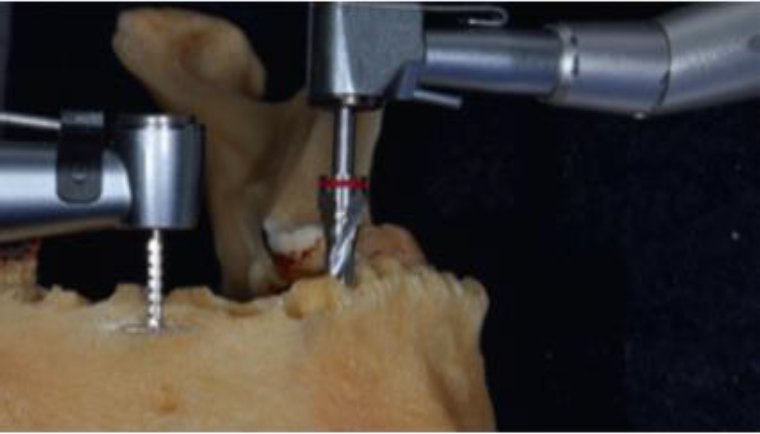
Fig. (1). Types of basal implants.
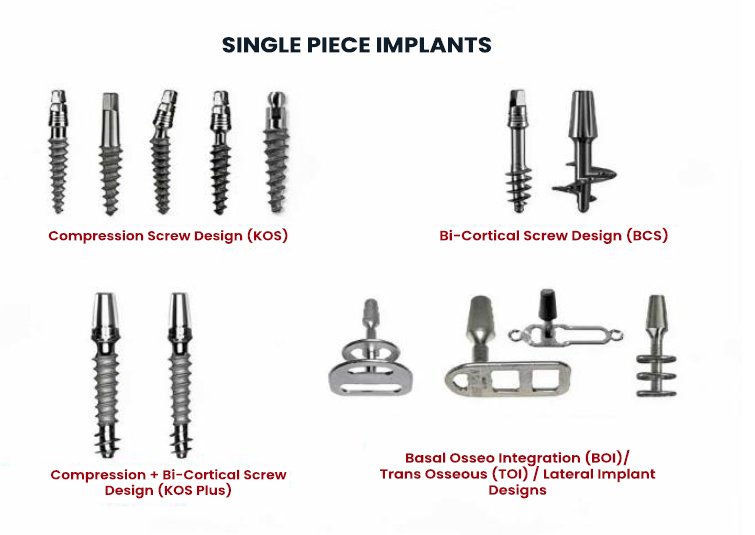
Fig. (2). Lateral osteotomy vs. axial osteotomy.
Several clinical studies have reported high survival rates for screwable basal implants; however, reported outcomes vary across study designs, follow-up durations, and patient populations [1, 7]. Furthermore, available evidence consists predominantly of case reports, case series, and observational studies, with limited high-level evidence and relatively few randomized controlled trials. Consequently, the overall strength of evidence supporting the use of screwable basal implants remains uncertain.
Therefore, a comprehensive synthesis of the available evidence regarding the survival rate and marginal bone loss associated with screwable basal implants is warranted. The aim of this systematic review was to evaluate the survival rate and marginal bone loss of screwable basal implants and to critically assess the current evidence supporting their clinical use.
2. MATERIALS AND METHODS
2.1. Study design
This systematic review was conducted according to the Preferred Reporting Items for Systematic Reviews and Meta-Analyses (PRISMA) standards.
2.2. Data Sources and Research Strategy
A comprehensive literature search was performed on PubMed, Google Scholar and other sites specified in Table 1 using boolean operators AND, OR and NOT for relevant research published from 2013 to 2024. The data search was performed between 21 April 2024 and 20 August 2024.
Table 1. Characteristics of included studies.
| No. | Authors & Year | Type of Research | Journal | Country | No. of Implants | Follow-Up | Findings (Survival Rate and/or MBL) |
| 1 | Gosai et al. [3] | Single Center Prospective Study | Journal of Maxillofacial and Oral Surgery | India | 125 | 20.07(± 4.23) Months | 96.8 % The mean bone loss after one year was 0.33 mm (E) and -1.57 mm (ES). |
| 2 | Lazarov. [5] | Prospective Cohort Study | Annals of Maxillofacial Surgery | Bulgaria | 217 | 66 Months | 99.54% |
| 3 | Patel et al. [6] | Prospective Cohort Study | Annals of Maxillofacial Surgery | India | 157 | 1 Year | 97.50% |
| 4 | Mitra et al. [7] | Observational Study | Cureus | India | 30 | 6 Months | 1.06 mm of MBL after 6 Months |
| 5 | Anuradha et al. [8] | Prospective Clinical Study | Journal of Family Medicine and Primary Care | India | 57 | 6 Months | 100% |
| 6 | Abdali et al. [10] | Retrospective Assessment | Journal of Oral Research | Iraq | 156 | 1 Year | 100% and MBL was 0.64 mm |
| 7 | Száva et al. [11] | Prospective Cohort Study | Journal of Interdisciplinary Medicine | Romania | 56 | 12 Months | 100% MBL after 6 months = 1.59 mm and after 12 months = 2.05 mm. |
| 8 | Aleksandar Lazarov, [12] | Prospective Cohort Study | Annals of Maxillofacial Surgery | Bulgaria | 1169 | 57 Months | 100% |
| 9 | Pałka and Lazarov. [14] | Retrospective Cohort Study | Annals of Maxillofacial Surgery | Bulgaria | 1019 | Mean follow‑up time: 22.2 ± 7.3 Months | 99% |
| 10 | Mundt et al. [15] | Randomized Controlled Clinical Trial | Clinical Oral Investigations | Germany | 232 | 3 Year | 99% in the mandible versus 87% in the maxilla |
| 11 | Gaur et al. [21] | Case Report | BAOJ Dentistry | India | 8 | 6 Months | 100% |
| 12 | Awadalkreem et al. [22] | Case Report | International Journal of Surgery Case Reports | Sudan | 6 | 5 Years | 100% |
| 13 | Awadalkreem et al. [23] | Case Series | International Journal of Surgery Case Reports | Sudan | 18 | 5,6,7 Years | 100% |
| 14 | Jani et al. [24] | Prospective Cohort Study | Journal of Dental and Medical Sciences | India | 2193 | 90 Months | >90% |
| 15 | Ahmad et al. [25] | Retrospective Cohort Study | Journal of Contemporary Dental Practice | Sudan | 172 | Mean = 3.76 Years (2-5 Years) | 100% |
| 16 | Awadalkreem et al. [26] | Prospective Observational Study | The Journal of Contemporary Dental Practice | Sudan | 174 | 18 Months | 100% |
| 17 | Oleg et al. [27] | A Multi-Center Retrospective Cohort Clinical Study | Journal of Evolution of Medical and Dental Sciences | Russia | 4570 | 24 Months | 95.70% |
| 18 | Ahmad et al. [28] | Case Report | International Journal of Surgery Case Reports | Sudan | 14 | 3 Years | 100% |
| 19 | Gaur et al. [29] | Case Report | International Journal of Surgery Case Reports | India | 18 | 4 Years | 100% |
| 20 | Ahmad et al. [30] | Case Report | International Journal of Surgery Case Reports | Sudan | 15 | 7 Years | 100% |
| 21 | Chaturvedi et al. [31] | Case Series | National Research Denticon | India | 50 | 6 Months | 100% |
| 22 | Osman et al. [32] | Case Report | Case Reports in Dentistry | Sudan | 4 | 4 Years | 100% |
| 23 | Hassan et al. [33] | Case Report | Cureus | India | 1 | 5 Years | 100% |
| 24 | Inbarajan et al. [34] | Case Report | Cureus | India | 3 | 5 Years | 100% |
| 25 | Ihde et al. [35] | Case Report | Case Reports in Dentistry | Germany | 2 | 12 Months | 100% |
| 26 | Nelluri et al. [36] | Prospective Clinical Study | Contemporary Clinical Dentistry | India | 90 | 3 Years | 93% in anterior maxilla and 91% in posterior mandible. D3 bone showed more MBL than D2 bone. |
| 27 | Radhakrishnan et al. [37] | Case Report | Journal of Pharmacy and BioAllied Sciences | India | 3 | 3 Years | 100% |
| 28 | Manjunath et al. [38] | Case Report | International Journal of Applied Dental Sciences | India | 20 | 6 Months | 100% |
| 29 | Awadalkreem et al. [39] | Observational Study | Annals of Maxillofacial Surgery | Sudan | 45 | 18 Months | 100% |
| 30 | Khazaal & Ismael. [40] | Comparative Study | The Iraqi Postgraduate Medical Journal | Iraq | 158 | 6 Months | 98.11% |
| 31 | Morgano. [41] | Case Series | Journal of Oral Implantology | Italy | 13 | 8 Years | 100% |
| 32 | Nikhil et al. [42] | Prospective Cohort Study | Global Journal of Medical Research: J Dentistry & Otolaryngology | India | 15 | 6 Months | 100% |
| 33 | Sharma et al. [43] | Case Series | Indian Journal of Dental Sciences | India | N/A (30 Patients) | 9 Months | 100% |
| 34 | Gaur et al. [44] | Prospective Cohort Study | Dentistry Journal | India | 471 | 22 Months | ~99% |
| 35 | Chakranarayan et al. [45] | Longitudinal Observational Study | IP Annals of Prosthodontics and Restorative Dentistry | India | 265 | 1 Year | 97.84% |
| 36 | Gaur et al. [46] | Case Report | Annals of Maxillofacial Surgery | India | 9 | 3 Years | 100% |
| 37 | Garg et al. [47] | Comparative Study | Annals of Maxillofacial Surgery | India | 52 (34 Endoosseous, 18 Basal) | 3 Years | 100% |
| 38 | Gangadhar et al. [48] | Case Series | Journal of Orthodontic Sciences | India | 473 | 1 Year | 100% |
2.3. Eligibility Criteria
The present review included studies evaluating screwable/ screw-form basal implants in partial or complete edentulous patients, while studies evaluating disk-form basal implants, plate-form basal implants, zygomatic screw implants, tubero-pterygoid (pterygoid) implants, or conventional crestal implants were excluded.
2.4. Selection of Studies
A literature search yielded a total of 193 records, of which 88 studies were from Google Scholar, 69 studies from PubMed and 36 studies from other sources. Duplicates were deleted and 132 entries were checked for titles and abstracts only, with a further 56 items discarded. The remaining 76 papers were read in full text and 38 studies were discarded because they did not match the inclusion criteria. The evaluation comprised 38 papers in the end (Fig. 3).
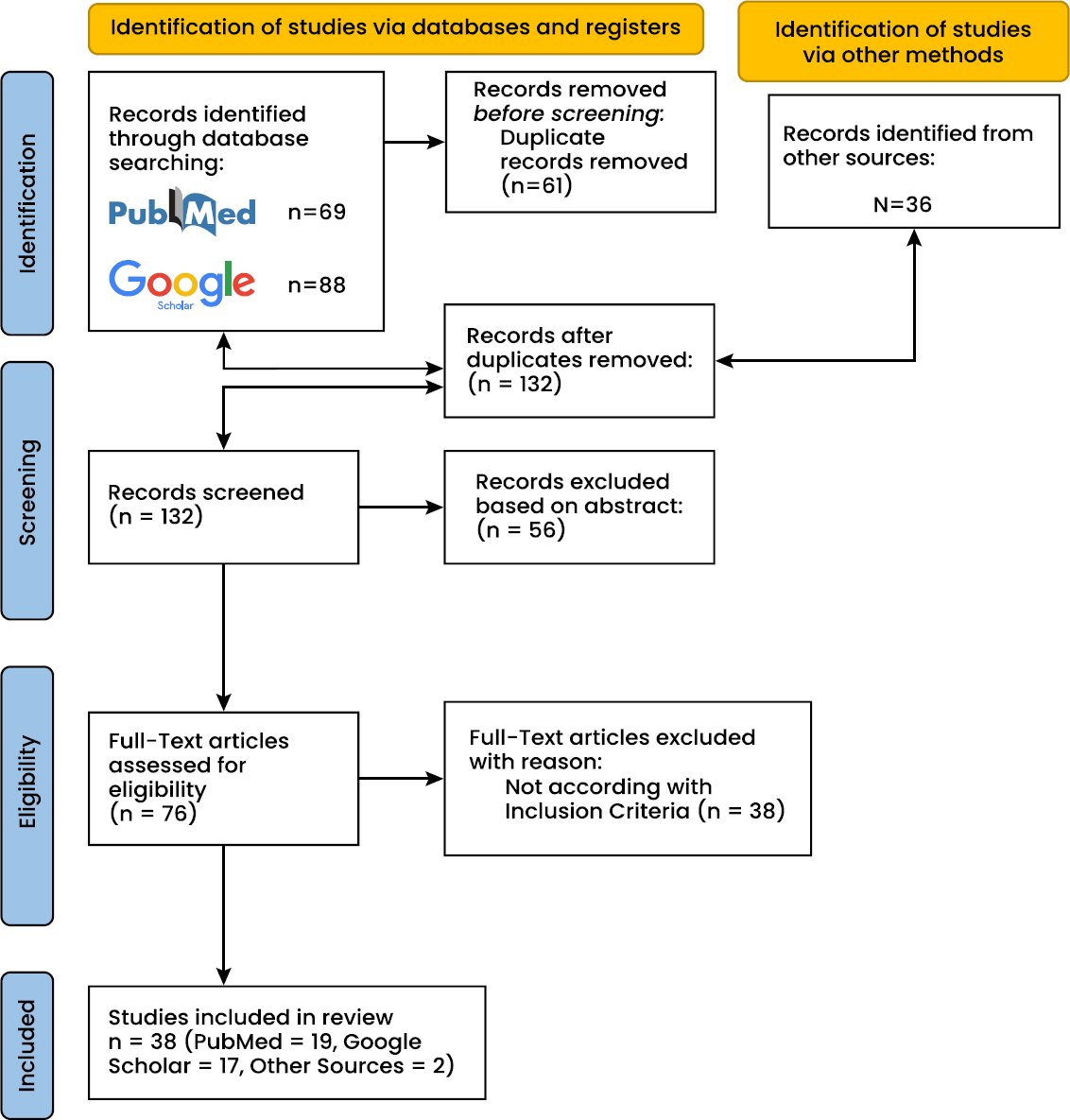
Fig. (3). PRISMA flow diagram of the literature search and study selection process for the systematic review.
2.5. Data Extraction
Data from the 38 papers included in the systematic review were collected using a standardized data collecting form. The data retrieved included: research design, sample size, country, number of implants, follow-up period, marginal bone loss, implant survival rate and other clinical outcomes.
2.6. Risk of Bias Evaluation
The quality of the cohort and comparative studies was rated using the Newcastle-Ottawa Scale (NOS). Case reports and case series were descriptively reviewed since formal procedures for assessment of risk of bias are not explicitly developed for this research type.
2.7. Data integration
Because of the high heterogeneity of the included papers, a quantitative meta-analysis was not possible. Moreover, the patient demographics, implant systems, outcome measures, and length of follow-ups varied, not allowing for meaningful comparisons of the data provided. Therefore, the results were summarized descriptively.
Survival rates and marginal bone loss were summarized and the implant-number weighted mean survival rate was determined using the number of implants reported in each trial.
3. RESULTS
A total of 193 records were identified through database and manual searches. Following duplicate removal and eligibility assessment, 38 studies were included in the review (Fig. 3).
The included studies consisted of 10 prospective studies, 4 retrospective cohort studies, 2 comparative studies, 1 randomized controlled trial, 2 observational studies, 14 case reports and 5 case series. The characteristics of the included studies are summarized in Table 1. These studies were conducted from several countries, with the largest proportion conducted in India (52%), followed by Sudan (21%) and Bulgaria (8%). The geographic distribution of the included studies is presented in Fig. (4). The follow-up period ranged from 6 to 96 months, with a mean follow-up duration of 34.6 months. The average number of implants per study was 326. The reported survival rate of screwable basal implants ranged from 87% to 100%. The implant-number weighted mean survival rate across the included studies was approximately 96.1%.
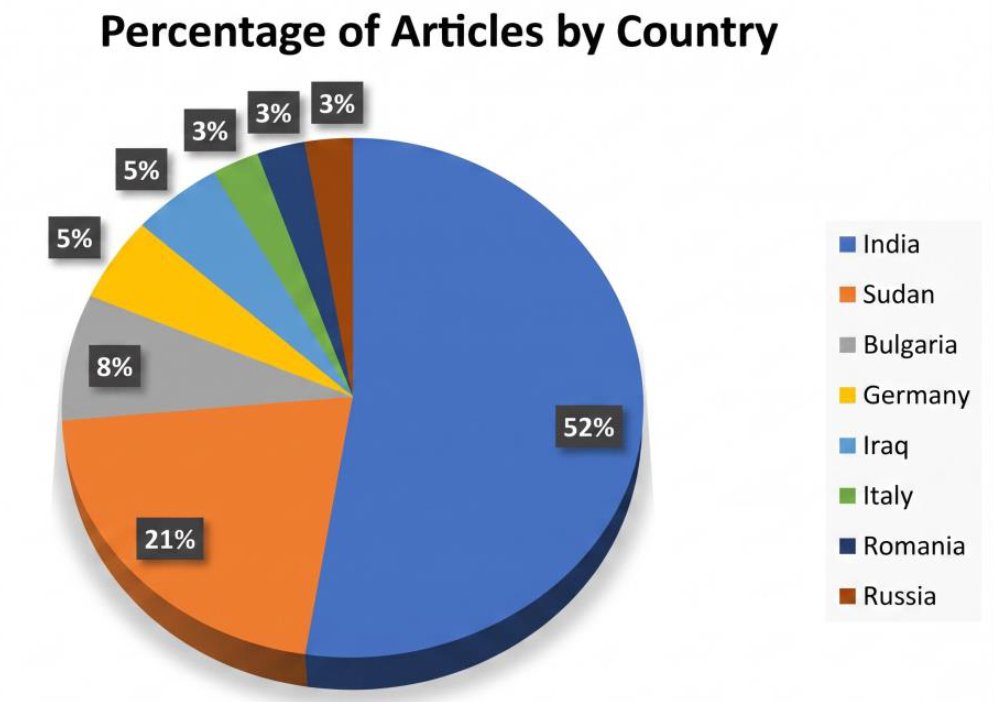
Fig. (4). Percentage of articles included in the review by country.
3.1. Marginal Bone Loss
Marginal bone loss data were reported in a limited number of studies. Abdali et al. [10] reported a mean marginal bone loss of 0.64 mm after one year. Száva et al. [11] reported marginal bone loss values of 1.59 mm after 6 months and 2.05 mm after 12 months. Gosai et al. [3] reported marginal bone loss of 0.33 mm in healed edentulous ridges and 1.57 mm in fresh extraction sockets after one year. Another study by Mitra et al. [7], the mean crestal bone level decreased from 10.76 mm before surgery to 9.7 mm after 6 months (Fig. 5).
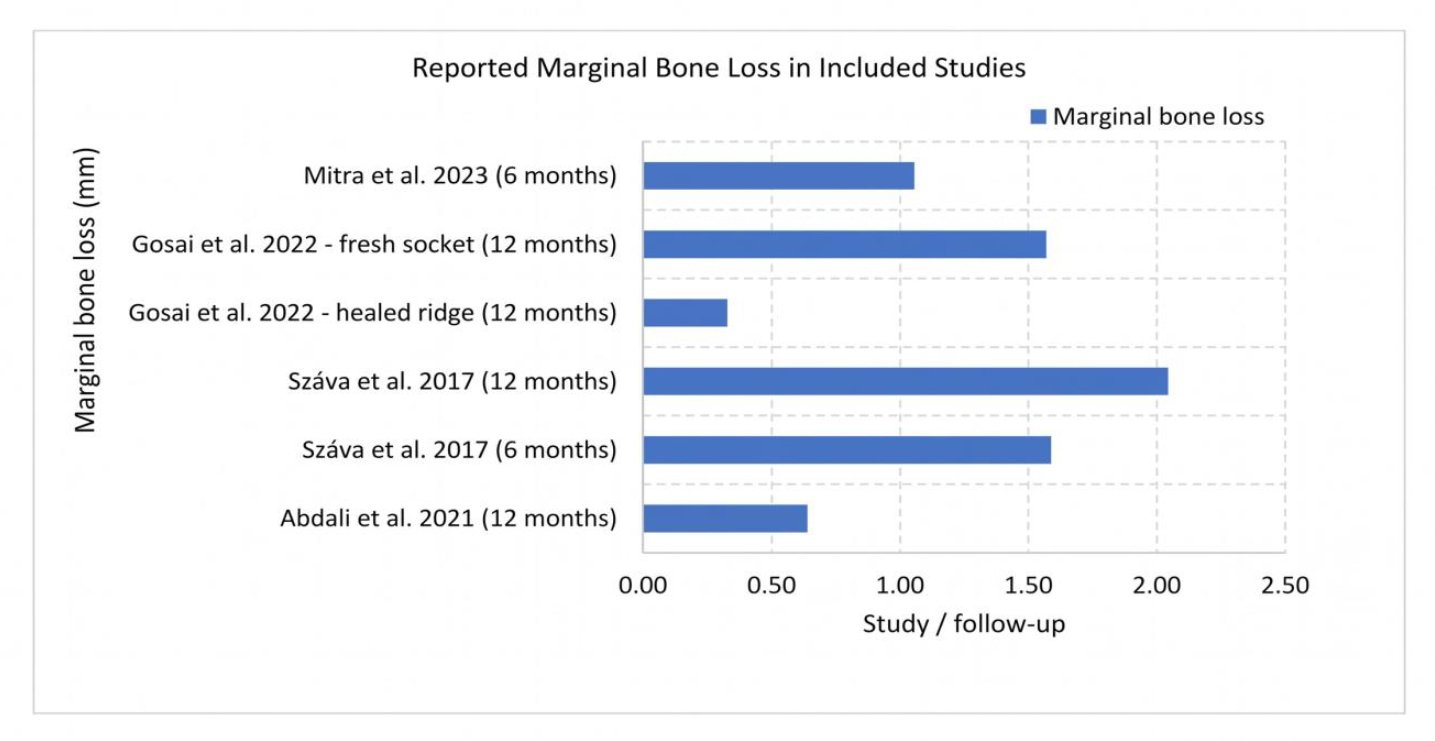
Fig. (5). Marginal bone loss.
Based on the studies reporting marginal bone loss outcomes, the arithmetic mean marginal bone loss was 1.15 mm after one year. However, this value should be interpreted with caution because it was derived from a limited number of heterogeneous studies and does not represent a pooled estimate or a weighted mean value.
4. DISCUSSION
This systematic study aimed to analyze the survival rate and marginal bone loss of screwable basal implants. Survival rates varied from 87% to 100%. The implant-number weighted mean survival rate was around 96.1% The average follow-up time of the included studies was 34.6 months. These data indicate that screwable basal implants may provide good therapeutic results in several clinical scenarios including rehabilitation of severely atrophic ridges.
The weighted mean survival rate found in the current study seems to be similar to survival rates reported in the literature for both conventional and basal implant treatment. Basal implants have been described as having excellent clinical performance in previous evaluations, especially in patients with weakened alveolar ridges and in instances when traditional augmentation operations may be avoided [8, 9]. Moreover, clinical trials have shown stable peri-implant bone levels and little marginal bone loss surrounding basal implants with rapid loading procedures [10, 11]. Moreover, rapid loading of basal implants has been linked with good patient satisfaction and predictable clinical performance in healed and new extraction sockets [12, 13–15].
In the case of conventional implant treatment, a systematic review and meta-analysis showed an estimated survival percentage of around 96.4% (95% CI: 95.2-97.5%) during a 10-year period [16]. Similar survival rates were found in immediate implant placement protocols, around 90%–95%, [17, 20] whereas implants implanted in ideal clinical settings included guided bone regeneration treatments, with survival rates between 97% and 100% [18, 19]. Direct comparison between screwable basal implants and conventional implants has to be interpreted cautiously owing to variations in implant design, research methodology, patient demographic, follow-up length and outcome evaluation methodologies.
Most of the studies included in the current review indicated good survival rates for screwable basal implants. For example, Jani et al. [24] reported a survival rate of more than 90% after 4 years in 291 patients with 2193 basal implants. Similarly, Lazarov reported total survival up to 57 months follow-up of 95.7% [5, 12, 14]. Gosai et al. [3] reported a 96.8% survival rate in patients treated with bicortical basal implants under rapid loading procedures. Taken together, these results imply that positive outcomes are possible with the right therapeutic practices.
The data on marginal bone loss were provided by just a few research. The average marginal bone loss recorded in these investigations was 1.15 mm at the end of one year. This estimate should be used with caution, since it is based on a limited number of diverse research, and is not a pooled estimate. However, the values found are frequently within the limits that are clinically appropriate for implant treatment [10, 11]. However, the overall level of evidence remains low with the majority of research including observational cohort studies, case reports and case series with just one RCT found for the study. Moreover, there was a large variation across trials for implant design, patient characteristics, loading techniques, outcome measures and follow up time. Therefore, a quantitative meta-analysis was not practicable, and the results of the research should be interpreted with care.
PATIENT-CENTERED OUTCOMES
The research included in this evaluation seldom addressed patient reported outcomes. While several studies have indicated improvements in masticatory performance, esthetics and patient satisfaction after treatment with screwable basal implants, the data is still limited and varied. Future studies should include standardized patient-reported outcome measures to properly assess the effect of screwable basal implants on quality of life and functional results.
LIMITATIONS OF THE CURRENT STUDY
Despite these results, the overall quality of the research is restricted with most studies consisting of case reports, case series and observational cohort studies [22, 28] and just one randomized controlled trial reported by Mundt et al. [15]. In addition, there was significant variation across trials regarding implant design, patient selection, loading methods, outcome evaluation, and follow-up time. These factors prevented direct comparison of studies and prohibited quantitative meta-analysis [14]. More well-designed prospective research and randomized controlled trials are required to enhance the present evidence base.
CONCLUSION
The survival rates for screwable basal implants were reported between 87% and 100% within the limits of the available data, with an implant number weighted mean survival rate of around 96.1%. Within the limitations of the existing research, screwable basal implants may be a feasible therapy option for selected individuals, especially in the cases with severe ridge atrophy. However, the present data is mostly case reports, case series and observational studies with only very little high-level evidence. no conclusive conclusion about the superiority of screwable basal implants against standard implant treatment can be formed. Future well-designed prospective studies and randomized controlled trials are needed to further examine the long-term survival, marginal bone loss, patient-reported outcomes and clinical indications of screwable basal implants.
LIST OF ABBREVIATIONS
BCS | = | Bi-Cortical Screw Design |
BOI | = | Basal Osseo Integration |
KOS | = | Compression Screw Design |
KOS Plus | = | Compression + Bi-Cortical Screw Design implants |
NOS | = | Newcastle-Ottawa Scale |
AUTHORS’ CONTRIBUTIONS
O.E. was responsible for conceptualizing the study design and finalization of the manuscript. A.R.A. was responsible for data collection, analysis and interpretation as well as manuscript writing.
REPORTING GUIDELINES
PRISMA guidelines were followed in this study.
FUNDING
None
CONFLICT OF INTEREST
The authors declare that they have no conflict of interest.
ACKNOWLEDGEMENTS
None
DECLARATION OF AI
The authors used ChatGPT for manuscript editing and take responsibility for the published content.
REFERENCES
[1] Gil LF, Suzuki M, Janal MN, et al. Progressive plateau root form dental implant osseointegration: A human retrieval study. J Biomed Mater Res Part B Appl Biomater. 2015; 103(6):1328-32.
https://doi.org/10.1002/jbm.b.33311
[2] Habash G, Jayash S, Albanna SJ, Al-Omiri MK. Literature review regarding the applicability and clinical out-come of basal implant. Open Dent J. 2024; 18:
https://doi.org/10.2174/0118742106283694240422063539
[3] Gosai H, Anchlia S, Patel K, Bhatt U, Chaudhari P, Garg N. Versatility of basal cortical screw implants with immediate functional loading. J Maxillofac Oral Surg. 2022; 21(3): 824-32.
https://doi.org/10.1007/s12663-021-01638-6
[4] Sahoo SK, Mishra S, Chinnannavar SN, Bajoria AA, Das A, Singh DK. Assessment of oral health-related quality of life in patients receiving corticobasal dental implants. J Pharm Bioallied Sci. 2023; 15(Suppl 2): S1036-9.
https://doi.org/10.4103/jpbs.jpbs_236_23
[5] Lazarov A. A prospective cohort study of maxillary sinus complications in relation to treatments with strategic implants® penetrating into the sinus. Ann Maxillofac Surg. 2020; 10(2): 365-9.
https://doi.org/10.4103/ams.ams_85_20
[6] Patel K, Madan S, Mehta D, Shah SP, Trivedi V, Seta H. Basal implants: An asset for rehabilitation of atrophied resorbed maxillary and mandibular jaw–A prospective study. Ann Maxillofac Surg. 2021; 11(1): 64-9.
https://doi.org/10.4103/ams.ams_446_20
[7] Mitra GV, Agrawal N, Shukla N, Aishwarya K, CC, Raj A. An evaluation of the efficacy and acceptability of basal implants in traumatically deficient ridges of the maxilla and the mandible. Cureus. 2023; 15(8): e43443.
https://doi.org/10.7759/cureus.43443
[8] Anuradha M, Babaji HV, Hiremath NV, Usha VA, Kumar A, Nandkeoliar T, Verma S. Assessment of basal implants in compromised ridges. J Family Med Prim Care. 2020; 9(4): 2067-70.
https://doi.org/10.4103/jfmpc.jfmpc_1149_19
[9] Suin MBF, Pintado JPG, Carrasco MFL. Basal implants and their importance in clinical dentistry: Literature review. Res Soc Dev. 2024; 13(5): e11713545835.
http://dx.doi.org/10.33448/rsd-v13i5.45835
[10] Abdali Y, Kashmoola S, Al-Mash’hadani M, Albaaj FS. A one-year retrospective radiographic assessment of marginal bone loss around basal implants and impact of multiple risk factors using multivariate analysis. J Oral Res. 2021; 10(5): 1-8.
https://doi.org/10.17126/joralres.2021.063
[11] Száva D-T, Ormenișan A, Markovics E, Bögözi B, Mártha K. Alveolar bone resorption evaluation around single-piece designed bicortical implants, using immediate loading protocol, based on orthopantomographs. J Interdiscip Med. 2017; 2(4): 328-31.
https://doi.org/10.1515/jim-2017-0087
[12] Lazarov A. Immediate Functional Loading: Results for the Concept of the Strategic Implant. Ann Maxillofac Surg. 2019; 9(1): 78-88.
https://doi.org/10.4103/ams.ams_250_18
[13] Awadalkreem F, Khalifa N, Satti A, Suleiman AM. The influence of immediately loaded basal implant treatment on patient satisfaction. Int J Dent. 2020; 2020: 6590202.
https://doi.org/10.1155/2020/6590202
[14] Pałka ŁR, Lazarov A. Immediately loaded bicortical implants inserted in fresh extraction and healed sites in patients with and without a history of periodontal disease. Ann Maxillofac Surg. 2019; 9(2): 371-8.
https://doi.org/10.4103/ams.ams_147_19
[15] Mundt T, Heinemann F, Müller J, Schwahn C, Al Jaghsi A. Survival and stability of strategic mini‑implants with immediate or delayed loading under removable partial dentures: A 3‑year randomized controlled clinical trial. Clin Oral Invest. 2023; 27(4): 1767–79.
https://doi.org/10.1007/s00784-022-04805-2
[16] Howe M-S, Keys W, Richards D. Long-term (10-year) dental implant survival: A systematic review and sensitivity meta-analysis. J Dent. 2019; 84: 9-21.
https://doi.org/10.1016/j.jdent.2019.03.008
[17] Patel R, Ucer C, Wright S, Khan RS. Differences in dental implant survival between immediate delayed placement: A systematic review and meta-analysis. Dent J. 2023; 11(9): 218.
https://doi.org/10.3390/dj11090218
[18] Chatzopoulos GS, Wolff LF. Survival rates and factors affecting the outcome following immediate and delayed implant placement: A retrospective study. J Clin Med. 2022; 11(15): 4598.
https://doi.org/10.3390/jcm11154598
[19] Clementini M, Morlupi A, Canullo L, Agrestini C, Barlattani A. Success rate of dental implants inserted in horizontal and vertical guided bone regenerated areas: A systematic review. Int J Oral Maxillofac Surg. 2012; 41(7): 847-52.
https://doi.org/10.1016/j.ijom.2012.03.016
[20] Mello CC, Lemos CAA, Verri FR, Dos Santos DM, Goiato MC, Pellizzer EP. Immediate implant placement into fresh extraction sockets versus delayed implants into healed sockets: A systematic review and meta-analysis. Int J Oral Maxillofac Surg. 2017; 46(9): 1162-77.
https://doi.org/10.1016/j.ijom.2017.03.016
[21] Gaur V, Doshi A, Ihde S, Fernandes G. Immediate Loading of Edentulous Mandibular Arch with Screw Retained Final Prosthesis on Strategic Implants® With Single Piece Multi Unit Abutment Heads: A Case Report. BAOJD. 2018; 4(2):040. Available from: https://www.researchgate.net/publication/326177767_Immediate_Loading_of_Edentulous_Mandibular_Arch_with_Screw_Retained_Final_Prosthesis_on_Strategic_ImplantsR_With_Single_Piece_Multi_Unit_Abutment_Heads_A_Case_Report
[22] Awadalkreem F, Khalifa N, Ahmad AG, Suliman AM, Osman M. Oral rehabilitation of maxillofacial trauma using fixed corticobasal implant-supported prostheses: A case series. Int J Surg Case Rep. 2022; 100(C): 107769.
https://doi.org/10.1016/j.ijscr.2022.107769
[23] Awadalkreema F, Khalifa N, Ahmad AG, Suliman AM, Osman M. Prosthetic rehabilitation of maxillary and mandibular gunshot defects with fixed basal implant-supported prostheses: A 5-year follow-up case report. Int. J. Surg. Case Rep. 2020; 68(C): 27-31.
https://doi.org/10.1016/j.ijscr.2020.02.025
[24] Jani M, Doshi AG, Gaur V. Long term evaluation of the immediate functional loading of single piece implants. IOSR J. Dent. Med. Sci. 2023; 22(4): 28-38. Available from: https://www.drvivekgaur.com/wp-content/uploads/2024/04/Article-17.pdf
[25] Ahmad AG, Awadalkreem F, Osman M, Palka L. Does the protrusion of corticobasal implants in the maxillary sinuses affect sinus health? A retrospective study. J Contemp Dent Pract. 2023; 24(6): 357-63.
https://doi.org/10.5005/jp-journals-10024-3521
[26] Awadalkreem F, Khalifa N, Satti A, Suliman AM. Rehabilitation of patients with compromised ridge support using immediately loaded corticobasal implant-supported prostheses: A prospective observational study. J Contemp Dent Pract. 2022; 23(10): 971-8.
https://doi.org/10.5005/jp-journals-10024-3416
[27] Dobrinin Oleg LA, Konstantinovic Vitomir S, Sipic Olga, Siljanovski Damir, Milicic Biljana. Immediate-functional loading concept with one-piece implants (BECES/BECES N/KOS/BOI) in the mandible and maxilla-A multi-center retrospective clinical study. J Evolution Med Dent Sci. 2019; 8(05): 306-15.
https://doi.org/10.14260/jemds/2019/67
[28] Ahmad AG, Osman M, Awadalkreem F. Full-mouth rehabilitation of a patient with cleidocranial dysplasiausing immediately loaded basal implant-supported fixed prostheses: A case report. Int J Surg Case Rep. 2019; 65(C): 344-8.
https://doi.org/10.1016/j.ijscr.2019.11.005
[29] Gaur V, Singh N, Doshi AG, Chandrahas B. Immediate rehabilitation of a rheumatoid arthritis patient with single-piece implants. Int J Surg Case Rep. 2021; 82(C): 105874.
https://doi.org/10.1016/j.ijscr.2021.105874
[30] Ahmad AG, Osman M, Awadalkreem F. Orthognathic correction and corticobasal implant-supported prostheses as a treatment modality for partial edentulism with mandibular prognathism: A case report and review of literature. Int J Surg Case Rep. 2022; 95(C): 107219.
https://doi.org/10.1016/j.ijscr.2022.107219
[31] Chaturvedi A, Kumar V, Mittal S, Jakhar S, Agrawal M, Bhansali SP. Efficacy of Single Piece Basal Implant in Dentoalveolar Rehabilitation. NRD. 2022; 11(2): 1-8. Available from: https://nrdruhs.in/uploads/NRDRUHS-1718289725786-ARTICLES-MERGED-JUL-DEC-2022-VOL-11-ISSUE-2.pdf#page=25
[32] Osman M, Ahmad AG, Awadalkreem F. A novel approach for rehabilitation of a subtotal maxillectomy patient with immediately loaded basal implant-supported prosthesis: 4 years follow-up. Case Rep Dent. 2020; 2020(1): 9650164.
https://doi.org/10.1155/2020/9650164
[33] Hassan S, Dhadse P, Mundada BP, Bajaj P, Subhadarsanee C, Oza RR. Single tooth replacement using immediately loaded basal implant-supported fixed prosthesis in a hyperdense lesion: A case report. Cureus. 2023; 15(2): e34946.
https://doi.org/10.7759/cureus.34946
[34] Inbarajan A, Anusha K S, Raju K, Maheshwaran K S. Esthetic Rehabilitation of a young patient with immediately loaded single-piece basal implants following a trauma involving the anterior maxilla: Case report with five-year follow-up. Cureus. 2023; 15(8): e42782.
https://doi.org/10.7759/cureus.42782
[35] Ihde S, Pałka L, Janeczek M, Kosior P, Kiryk J, Dobrzyński M. Bite reconstruction in the aesthetic zone using one-piece bicortical screw implants. Case Rep Dent. 2018; 2018(1): 4671482.
https://doi.org/10.1155/2018/4671482
[36] Nelluri VV, Gedela RK, Roseme KM. A 3‑year prospective clinical study to evaluate the outcome of single‑piece implant‑prosthetic complex after immediate nonfunctional loading in the maxillary anterior and mandibular posterior areas in varied bone densities. Contemp Clin Dent. 2022; 13(2): 140-9.
https://doi.org/10.4103/ccd.ccd_698_20
[37] Radhakrishnan S, Biju KA, Anbuselvan GJ, Chinnannan M, Sivakumar KD. Distally edentulous maxillary left‑sided arch with pneumatized sinus area restored with corticobasal implants – A case report. J Pharm Bioallied Sci. 2021; 13(Suppl 2): S1759-62.
https://doi.org/10.4103/jpbs.jpbs_75_21
[38] Manjunath KS, Pawar A, Parthipady K, Shamra F, Ghorpade B, Sajeev N. Cortical implants: An alternate treatment modality for atrophied ridges. Int J Appl Dent Sci. 2020; 6(3): 411-4. Available from: https://www.oraljournal.com/archives/2020/vol6issue3/PartF/6-3-46-775.pdf
[39] Awadalkreem F, Ahmad AG, Ihde S, Osman M. Effects of corticobasal implant protrusion inside the nasal and maxillary sinus. Ann Maxillofac Surg. 2020; 10(1): 114-21.
https://doi.org/10.4103/ams.ams_42_20
[40] Khazaal AF, Ismael WK. Evaluation of outcomes associated with the use of screwable basal and compressive immediately loaded dental implants (comparative study). Iraqi Postgrad Med J. 2021; 20(4): 355-60. Avaliable from: https://ipmj.researchcommons.org/journal/vol20/iss4/9/
[41] Morgano AT. Functional load in oblique bicortical implants: Parasinusal implants and palatine implants. J Oral Implantol. 2013; 39(4): 467-74.
https://doi.org/10.1563/aaid-joi-d-09-00121.1
[42] Nikhil D, Rajasekhar G, Sudhakar GVS, Sudhir R, Kumari BR. immediate functional loading-evaluation of bicortical screw implants. Glob J Med Res J Dent Otol. 2021; 21(1), 1–8. Available from: https://pdfs.semanticscholar.org/859d/729f8b47c7ee36308992d6970e19dac3256f.pdf
[43] Sharma P, Bawa SKS, Jindal V, Malhotra R, Malhotra D, Chauhan P, Thakur D. Immediate loading of bicortically engaged long implants in maxillary and mandibular esthetic region- A clinicoradiographic evaluation. Indian J Dent Sci. 2023; 15(4): 168-74.
https://doi.org/10.4103/ijds.ijds_32_22
[44] Gaur V, Doshi AG, Bengani AKS. Evaluation of the success of strategic implant placement for imeediate loading prosthesis in edentulous cases. Dent J. 2020; 10(6): 565. Available from: https://www.walshmedicalmedia.com/open-access/evaluation-of-the-success-of-strategic-implant-placement-for-immediate-loading-prosthesis-in-edentulous-cases.pdf
[45] Chakranarayan A, Soni P, Kapri A, Kumar R. Effectiveness of strategic corticobasal implants in the management of edentulism. IP Ann Prosthodont Restor Dent. 2020; 6(2): 77-86.
https://doi.org/10.18231/j.aprd.2020.018
[46] Gaur V, Doshi AG, Gandhi S. Immediate prosthetic rehabilitation of marginal mandibulectomy post radiation case by single‑piece implant- A case report. Ann Maxillofac Surg. 2020; 10(2): 501-6.
https://doi.org/10.4103/ams.ams_260_20
[47] Garg R, Mishra N, Alexander M, Gupta SK. Implant survival between endo-osseous dental implants in immediate loading, delayed loading, and basal immediate loading dental implants: A 3-year follow-up. Ann Maxillofac Surg. 2017; 7(2): 237–244.
https://doi.org/10.4103/ams.ams_87_17
[48] Gangadhar B, Ila A, Kumar R, Ruban B, Punnoose K, Dandekeri S, Babu SJ, Swarnalatha C, Nayyar AS. Strategic implants and bone morphogenic changes: Survival and clinical success in long-term. J Orthod Sci. 2023; 12(1): 24.
https://doi.org/10.4103/jos.jos_43_22
Licensed
© 2026 Copyright by the Authors.
Licensed as an open access article using a CC BY 4.0 license.
Article Contents Author Ozair Erfan1, * Orcid logo Ali Reza Atlas2, Orcid logo 1Oral and Maxillofacial Surgery, Stomatology Faculty, Herat
Article Contents Author Farooq Ahmad Bajwa1, * 1Department of Management, Hainan University, Haikou, China Article History: Received: 13 April, 2026
Article Contents Authors Beenish Nawaz Awan1, * , Imran Iqbal2 1Department of Business Management, SIRM College, University of Salford, Salford,
Article Contents Author Hafiz Muhammad Zohaib1, 2,* 1Institute of Biopharmaceutical and Health Engineering, Shenzhen International Graduate School, Tsinghua University, Shenzhen
Article Contents Author Burhanettin Uysal1, * Maria Malik2 1Department of Healthcare Management, Bilecik Şeyh Edebali University, Turkey Article History: Received: