






Article Contents
Article ID: CM2601107002
Assessing the Benefits of Bilingual Speech Therapy in Multicultural Populations
 PDF
PDF
⬇ Downloads: 1
1Independent Researcher, Pakistan
Received: 30 April, 2025
Accepted: 17 September, 2025
Revised: 08 August, 2025
Published: 12 January 2026
Abstract:
Aim: The study evaluated how bilingual speech therapy serves speech therapists who work with multicultural communities throughout the United Kingdom from both a benefits and a challenge perspective. The study investigated how bilingual therapy influences language development, cognitive outcomes, and eventual results from speech therapy interventions for bilingual clients. The aim was also to highlight how bilateral therapy benefits cognition and cultural factors, language barriers, and training standards.
Method: The study utilised a qualitative method and gathered interview data from 15 speech therapists who delivered bilingual therapy to clients in UK settings. Healthcare providers who delivered bilingual therapy to multicultural patients formed the basis for participant selection. The interviews explored how bilateral therapy benefits cognition, cultural factors, language barriers, and training standards.
Results: Research evidence showed that bilingual speech therapy leads to increased cognitive capability in terms of mental adaptability and enhanced language self-awareness while improving problem-solving capability. A key variable for constructing successful therapeutic bonds was recognised as cultural sensitivity because therapists stated that their knowledge of clients’ cultural origins permitted them to create more joint therapeutic encounters. Therapists encountered major obstacles because of imbalanced language skills and language switching challenges, and because they lacked specialised training alongside required bilingual resources. Barriers emerged from these issues, which made effective bilingual therapy challenging to deliver.
Conclusion: This research showed that bilingual speech therapy contains significant intellectual advantages and social gains, but met obstacles that limit its operational success. The delivery of bilingual treatment could be advanced by investing in therapist training that focuses on bilingual therapy skills and by developing specific bilingual resources and cultural competence training. These challenges needed a solution to increase the quality of bilingual therapy services throughout the UK so that therapists can serve a growing multicultural population more effectively.
Keywords: Bilingual speech therapy, multicultural populations, cognitive benefits, cultural sensitivity, language proficiency, code-switching.
1. INTRODUCTION
Access to speech and language therapy faces complexity because the United Kingdom experiences rapid multicultural growth, featuring 14.4% foreign-born citizens who speak more than 300 languages across London urban areas (Office for National Statistics, 2021). The substantial increase in demand for culturally sensitive and language-inclusive therapeutic methods has occurred because bilingual children, primarily from refugee and immigrant families, now increasingly access classrooms and clinics (Oxley et al., 2019). The relationship between bilingualism and cognitive advantages includes better executive functioning, attentional control, and metalinguistic awareness (Libesman et al., 2020). Under the present system of speech-language therapy in UK facilities, the structure remains predominantly monolingual, with insufficient attention to the actual linguistic practices of their clients (Howard et al., 2021; Stanford et al., 2024).
Recent research studies have been able to develop cognitive and developmental benefits relating to bilingualism, which is considerably relevant in the domain of speech and language therapies (Antoniou, 2019; Crowe et al., 2021; Fox et al., 2019; Harvey et al., 2021). (Bialystok & Craik, 2022) argue that combining two languages increases executive control and our ability to be more flexible in our thoughts. (Freeman & Schroeder, 2022) notice that bilinguals are more effective in solving problems and multitasking. Such mental benefits are particularly relevant in the United Kingdom, where the number of bilingual children in the therapy caseload is becoming progressively large but still has a disproportionate lack of services. According to (Mulgrew et al., 2022), bilingual therapy not only contributes to the development of language. However, it should also enhance the general cognitive strength, particularly of children, who do not use the same language as those addressed in the classroom. (Narayanan & Ramsdell, 2022) further state that bilingualism enhances metalinguistic awareness, thus allowing children to have an improved grasp and control of the language structures. Despite such definite advantages, the problem of language predominance, code-switching, and insufficient bilingualism resources is often reported by therapists working in the United Kingdom (Parveen & Santhanam, 2021). Incorporation of these ideas in the beginning stages of the research develops a stronger foundation upon which to interpret the outcome, and this is why it is crucial to build linguistically inclusive and culturally competent therapy models in the United Kingdom.
The main issue emerges from a misalignment between how populations require care and the current clinical training methods, evaluation resources, and intervention protocols (Fumero & Tibi, 2020; Grote et al., 2021; Hay et al., 2021). The literature indicates that speech therapists express gaps in their ability to assist bilingual clients because they received insufficient education about second-language acquisition and lacked standardised bilingual treatments (Gréaux et al., 2024; Harvey et al., 2021). Service inequalities continue to exist for children with language difficulties stemming from diverse linguistic backgrounds because there is a lack of evidence-based bilingual practice.
The increasing lingual plurality in the UK poses an opportunity, and the speech and language therapy services face challenges. In the urban centres, particularly in London, hundreds of languages are spoken, which amounts to the rising need for culturally responsive and linguistically inclusive therapy. In current Britain, more than 300 languages are spoken by children in London schools and above 15% of the primary school pupils depend on languages other than English as their home language. However, the speech and language therapy services have problems addressing this requirement; whereas, about 59 % of the paediatric therapists include at least one bilingual child in their caseload, just 11 % who have 20 or more (Bloder et al., 2021). This discrepancy is also worsened by the unavailability of bilingual medical practitioners in SLT-only 14 full-time equivalents speak community languages (not including Welsh). Therefore, most children are treated using a language that is not native to them.
Still, the services continue working in monolingual models, so many bilingual children remain unaddressed due to the lack of proper evaluation instruments, bilingual therapists, and training (Müller et al., 2020; Rezaeerezvan et al., 2022). Despite several practitioners’ support, bilingual therapy still bears structural barriers, where limited funds, unstable policies, and a lack of professional development are key concerns (Sinclair et al., 2025). More than the recognition that bilingualism is a clinical resource, this problem requires strategic investment in training, culturally competent practice, as well as a restructuring of policy at a national scale to guarantee an equal and appropriate coverage of multilingual populations across the UK (Eikerling et al., 2023). Hence, the outcome of this study would benefit the concerned authorities by considering the needs of and promptly addressing those in devising required policies, injecting investment, and designing training programs.
The study evaluates the perspectives of speech-language therapists working in UK offices regarding bilingual therapy delivery systems and associated obstacles and advantages. Data collection from frontline staff regarding therapy’s cognitive, linguistic, and cultural aspects helps develop improved policies, clinical education, and therapeutic resource development to establish effective services in multicultural speech-language therapy contexts.
2. Materials and Methods
The researcher has used a qualitative design structure to conduct semi-structured interviews as their primary data collection method. Semi-structured interviews are the perfect fit for this research because they allow participants to depict their experiences extensively through open-ended questions focused on the main research topics. The approach enables professional and personal insights from speech therapists to emerge, enhancing understanding of realistic hurdles and advantages of bilingual speech therapy (Garrido et al., 2024; Gréaux et al., 2024). This research included seven semi-structured open-ended questions in its interview guide to examine the advantages and barriers of bilingual speech therapy. Appendix 1 includes the questions used to interview the study participants.
The research participant sample for this study consisted of 15 UK-based speech therapists who work with bilingual clients. These bilingual practitioners worked with individuals from multicultural backgrounds. The sample employed therapists whose work took place in different professional healthcare environments, such as public health agencies, private healthcare, and educational facilities.
Each participant in the study had at least two years of professional practice in offering speech therapy to bilingual clients. They were proven to be competent in the provision of therapy in at least two languages. They were drawn among the multicultural populations to give complete insights into how bilingual speech therapy can be administered in different settings. Different methods, such as face-to-face, telephone, and online sessions, were used to conduct the interviews based on participants’ personal choices. The study received consent from participants to record their interviews, which lasted from minutes to one hour in a semi-structured interview guide containing essential topics to explore both the advantages of bilingual therapy and the challenges and cultural sensitivity issues. Due to the interview’s adaptability, the participants could share additional material they believed was significant to the research topic. Therapists conducted interviews in English but permitted participants to speak their second language to clarify therapy procedures. The therapists received the opportunity to provide well-defined insights during the interview.
The researcher used transcript recordings to gather data, which were faithfully transcribed from each recorded session to maintain precise data accuracy. The researcher examined the interview transcripts to find the major themes present within the information. The research adhered to ethical principles by getting participants to consent and guaranteeing their answers remained secret throughout the investigation. All participants were guaranteed that their personal information would be kept anonymous and that no personal information would be reported about the study. The researcher used thematic analysis as their data analysis method when examining interview data. The study has utilised this method to extract relevant patterns and thematic structures from gathered data for comprehending bilingual speech therapy benefits and obstacles. According to (Braun & Clarke, 2006), data analysis proceeded in six distinct stages that spanned data familiarisation and initial coding, then theme searching and reviewing, defining and naming, and producing the final report. Two stages formed the basis for ensuring the rigour of the analysis. The researcher conducted initial coding, and a different researcher reviewed the created codes to verify consistency. The study evaluated themes by defining them from the interview data collection responses.
3. Results
- Demographic Profile of the Respondents
Table 1 shows the demographic information of fifteen participating speech-language therapists (SLTs) through a table that shows their professional experience and language skills, workplace location, and patient group’s age distribution. The practice location of SLTs either occurs in towns or in countryside communities. The study participants received identifiers such as Respondent 1 and Respondent 2, and they represented different levels of language abilities and years of clinical practice within both urban and rural regions of England. The analysis delivers information regarding bilingual language proficiency and the professional clinical experience of speech therapists working in a multicultural UK healthcare environment.
- Thematic Analysis
Table 2 presents information about themes, sub-themes, responses, and the method used to obtain them in a tabular format. A coding system labels every entry, while keywords from each theme and sub-theme capture essential concepts. The well-structured approach makes it easy to understand and categorise participant answers during analysis. Contemporary data retrieval and analysis methods benefit from implementing keywords and codes, which enable additional research into bilingual therapy methods.
Fig. (1) shows that most therapists discussed Cognitive Benefits as their primary concern. At the same time, cultural sensitivity and Language Proficiency Challenges occupy the second and third places, respectively, in the bar chart distribution. Social workers demonstrate that they prioritise cognitive advantages and cultural considerations in their bilingual therapy work.
Table 1. Demographic profile of participating speech-language therapists.
No. | Participants | Gender | Years of Clinical Experience | Languages Spoken | Country of Practice | Primary Ages of Children on Caseload (years) | Urban/Rural Setting |
1 | Respondent 1 | F | 8 | English, Urdu | England | 5–11 | Urban |
2 | Respondent 2 | F | 5 | English, Punjabi | England | 2.5–5 | Mixed |
3 | Respondent 3 | F | 2 | English, Arabic | England | 11–18 | Urban |
4 | Respondent 4 | F | 10 | English, Bengali | England | 5–11 | Urban |
5 | Respondent 5 | M | 4 | English, Polish | England | 2.5–5 | Rural |
6 | Respondent 6 | F | 7 | English, Somali | England | 5–11 | Urban |
7 | Respondent 7 | F | 3.5 | English, French | England | 5–11 | Urban |
8 | Respondent 8 | F | 1 | English, Hindi | England | 2.5–5 | Urban |
9 | Respondent 9 | F | 6 | English, Cantonese | England | 11–18 | Mixed |
10 | Respondent 10 | F | 9 | English, Persian | England | 5–11 | Urban |
11 | Respondent 11 | F | 12 | English, Gujarati | England | 2.5–5 | Urban |
12 | Respondent 12 | M | 3 | English, Spanish | England | 5–11 | Mixed |
13 | Respondent 13 | F | 2.5 | English, Turkish | England | 11–18 | Rural |
14 | Respondent 14 | F | 7 | English, Yoruba | England | 2.5–5 | Urban |
15 | Respondent 15 | F | 5 | English, Mandarin | England | 5–11 | Urban |
Table 2. Thematic analysis table.
Theme | Sub-Theme | Response | How the Theme Was Generated | Codes | Keywords |
Cognitive Benefits of Bilingual Therapy | Cognitive Flexibility | “Bilingual children often have better cognitive flexibility. They’re able to switch between languages easily, which improves their overall communication skills.” | This theme was generated from responses highlighting bilingualism’s impact on cognitive skills. Therapists reported that bilingual clients demonstrated enhanced cognitive flexibility, allowing them to manage two languages and multitask effectively. | 01_Cognitive_ Flexibility | Cognitive flexibility, bilingualism, and communication skills |
Metalinguistic Awareness | “Bilingualism enhances metalinguistic awareness, which allows clients to understand language structure better and improves their speech clarity.” | The theme was derived from recognising that bilingual children often develop a deeper understanding of language, improving their speech clarity and linguistic awareness. | 02_Metalinguistic_Awareness | Metalinguistic awareness, bilingualism, and speech clarity | |
Problem-Solving and Multitasking | “Bilingual children show greater problem-solving skills because they manage two languages, leading to better cognitive flexibility.” | This sub-theme was generated based on responses that emphasised the cognitive advantage bilingualism provides in terms of problem-solving and multitasking. Therapists observed that bilingual clients exhibit better cognitive control and problem-solving abilities. | 03_Problem_ Solving_ Multitasking | Problem-solving, bilingualism, multitasking, and cognitive flexibility | |
Cultural Sensitivity and Engagement | Cultural Understanding | “Cultural sensitivity is key. If you don’t understand the cultural context of the language, you’re not going to be effective. I had a client whose family didn’t believe in certain therapies; once I understood that, therapy was much more successful.” | This theme was generated by therapists who emphasised the importance of understanding clients’ cultural backgrounds to provide effective therapy. Cultural beliefs can affect how therapy is perceived, and therapists reported that understanding these beliefs led to more successful therapy. | 04_Cultural_ Understanding | Cultural sensitivity, cultural understanding, and therapy effectiveness |
Engagement with Families | “I had a client whose parents came from different cultural backgrounds. Understanding their cultural values made it easier to engage with the family, making therapy more collaborative.” | This sub-theme emerged from responses that highlighted how cultural sensitivity helps improve family engagement. Therapists noted that understanding the client’s cultural values led to better collaboration between families and therapists, increasing therapy success. | 05_Engagement_with_ Families | Family engagement, cultural values, and collaboration | |
Therapeutic Rapport | “I find that cultural sensitivity helps with creating a better bond with families. When therapists understand the nuances of their client’s background, therapy becomes more effective.” | The sub-theme of therapeutic rapport was derived from responses where therapists identified that cultural understanding facilitated better bonds with clients and families, improving the therapy process. | 06_Therapeutic_Rapport | Therapeutic rapport, cultural understanding, and family bond | |
Language Proficiency Challenges | Language Imbalance | “Language proficiency can be a real barrier. Sometimes, the child speaks a lot better in one language, and I have to be very creative to work with that.” | This sub-theme arose from therapists describing the challenge of language proficiency imbalance. Many therapists shared experiences where one language was dominant, complicating therapy as it was harder to balance the development of both languages. | 07_Language_ Imbalance | Language proficiency, language barrier, and creativity in therapy |
Code-Switching | “Some clients mix languages during therapy, which can make it difficult to assess language development accurately, particularly when one language is dominant.” | Code-switching emerged as a key challenge. Therapists observed that clients often mix languages during therapy, complicating the assessment process and making tracking progress in both languages harder. | 08_Code_ Switching | Code-switching, language development, and assessment challenges | |
Limited Use of Second Language | “One language is often dominant, and some clients may not use the second language during therapy, making it difficult to achieve balanced development in both languages.” | This sub-theme was derived from the challenge of clients not using their second language during therapy. Therapists reported difficulties in achieving balanced development in both languages, especially when one language was underused in therapy. | 09_Limited_ Second_ Language_Use | Second language, language dominance, balanced development | |
Limited Resources and Training | Lack of Bilingual Resources | “There’s a lack of bilingual resources available. It’s a constant struggle to find appropriate therapy tools that cater to both languages.” | The lack of bilingual resources emerged as a major theme from responses, highlighting the difficulty therapists faced in finding appropriate therapy tools. Many therapists noted that bilingual materials such as books, assessments, and tools were insufficient for effective therapy. | 10_Lack_of_ Bilingual_ Resources | Bilingual resources, resource scarcity, therapy tools |
Inadequate Training | “Bilingual speech therapy training is lacking, and the resources available are not comprehensive. More support and better tools are needed.” | This sub-theme was generated from the consistent mention of inadequate training in bilingual therapy. Therapists expressed a need for more specialised training in bilingual language development to address the needs of bilingual clients effectively. | 11_Inadequate_Training | Training, bilingual therapy, and training inadequacy | |
Lack of Structured Programs | “Many training programs focus on monolingual therapy. There’s a need for specific resources and structured training that can address bilingual language development effectively.” | This sub-theme was based on responses that emphasised the lack of structured programs dedicated to bilingual therapy. Therapists noted that existing training programs focused primarily on monolingual therapy, and there was a pressing need for programs that addressed bilingual language development. | 12_Lack_of_ Structured_ Programs | Structured programs, bilingual language development, and training focus |
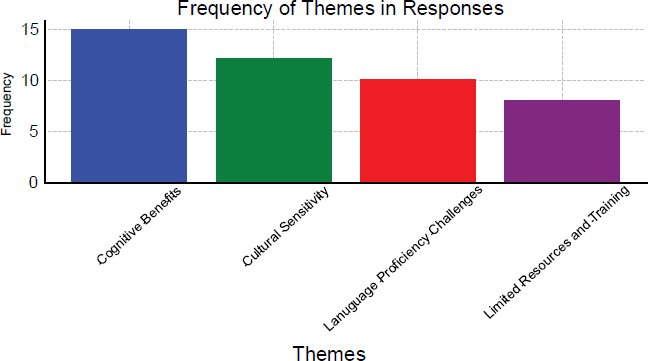
Fig. (1). Frequency of themes in responses.
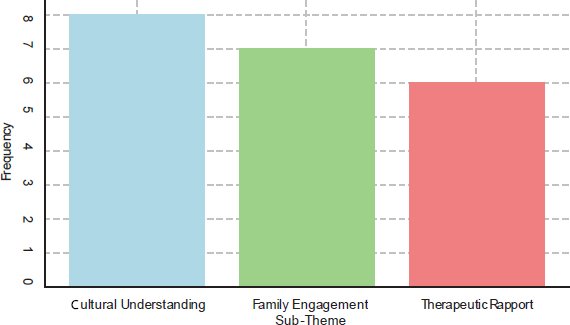
Fig. (2). Sub-themes under cultural sensitivity and engagement.
- Bottom of Form
- Cognitive Benefits of Bilingual Therapy
Bilingual therapy was found to provide significant cognitive benefits for clients, which was consistently reflected in the responses from the speech therapists. One of the respondents stated,
“Bilingual children often have better cognitive flexibility. They can switch between languages easily, improving their overall communication skills.”
The response demonstrates bilingual children’s ability to move between languages, which helps improve their complete communicative effectiveness. The ability to handle multiple tasks or concepts arises from continuous dual-language management through bilingualism (Esposito, 2020).
Another respondent also highlighted,
“Bilingualism enhances metalinguistic awareness, which allows clients to understand language structure better and improves their speech clarity.”
Bilingualism improves metalinguistic awareness, which is defined as a comprehension of language structure, grammar, and syntax. Improved metalinguistic awareness develops from bilingualism, which produces enhanced speech clarity and language development through advanced language-work knowledge acquisition (McGovern, 2023).
One respondent has also opined,
“Bilingual children develop problem-solving skills because they manage two languages, leading to better cognitive flexibility.”
Bilingualism contributes to cognitive flexibility and develops problem-solving abilities through language management in bilingual settings. Brain performance improves considerably when individuals handle different languages simultaneously, particularly in the regions that oversee cognitive control and multitasking abilities (Kim & Runco, 2022).
Speech therapists show near-universal agreement that bilingualism leads to better thinking abilities, problem-solving performance, and advanced language consciousness. Studies on bilingualism validate these findings, which show better executive functions (Grote et al., 2021; Sepioł, 2025).
- Cultural Sensitivity and Engagement
Cultural sensitivity development remains essential within bilingual speech therapy because it enables better client-family relationships that result in successful and collaborative therapy approaches.
Fig. (2) shows that cultural understanding is the main sub-theme of cultural sensitivity, but receives slightly less emphasis than Family Engagement and Therapeutic Rapport. According to these results, successful therapy depends on the therapist’s capability to grasp cultural backgrounds since they recognise this significance.
One of the respondents stated,
“Cultural sensitivity is key. Understanding the cultural framework of the language makes therapy work successful. The therapy sessions with my client succeeded better when I realised his family refused some therapeutic approaches.”
Wishing to deliver effective therapy requires professionals to display cultural sensitivity because different therapists may have opposing cultural beliefs about therapy. Therapists achieve better outcomes once they grasp the underlying values through their adapted approaches.
There was a client whose parents originated from opposite cultural backgrounds. After learning about their cultural values, the therapist found it simpler to work with this family because therapy became more of a mutual partnership. The therapist stated,
“Knowing family relationships together with cultural beliefs leads to enhanced patient participation. The ability of therapists to show cultural sensitivity enables them to establish positive family collaboration, which turns therapy into a jointly productive process.”
While adding to this, another respondent professed,
“My practice shows that becoming sensitive to cultural differences enables improved relationships between therapists and their client families. Therapists’ understanding of their clients’ complex cultural details makes their therapeutic approach more successful.”
Such findings validate that therapy success depends on a deep understanding of different cultures between the client and therapist. Clients and families establish trust more easily through cultural understanding because building rapport becomes possible. This leads to better therapy outcomes in the future. Bilingual therapy has succeeded by integrating cultural sensitivity as an essential element (Nuri, 2024). Therapeutic success increases when therapists try to understand their clients’ cultural backgrounds and language characteristics. Research demonstrates that healthcare practices must develop cultural competence skills because diverse communities need them.
- Language Proficiency Challenges
Healthcare providers who treat bilingual clients must overcome language proficiency obstacles that commonly present themselves throughout therapy sessions. The observed differences in language proficiency affect assessment and therapy work results.
Fig. (3) shows the pie segment for Code-Switching as a reported challenge by therapists, which showed the highest occurrence at 50%. The proportion of Language Imbalance among therapists reaches 30% because bilingual children’s language skills frequently create substantial therapy barriers. The actual barrier created by linguistic skills often poses problems during therapy sessions. The child understands one language better than the other, which makes me create different approaches to work through this situation. Clinical practitioners observe that their bilingual clients exhibit better fluency in one language over the other, creating inconsistencies in communication growth. When language proficiency differs between client and therapist, it creates obstacles in treatment because the professional needs to invent personalised intervention methods (Peng et al., 2022). One respondent stated,
“Certain patients use multiple languages in therapy meetings thus creating difficulties with precise language development assessment especially when one language controls.”
Therapists encounter significant obstacles due to patients who alternate between languages or mix them during sessions. Bilingual persons naturally use code-switching, but this practice hinders therapists from determining language dominance and maintaining separate tracking of language development. The respondent highlighted,
“Therapy becomes challenging to execute properly because a single language typically dominates use while certain clients refrain from using their secondary language, thus creating obstacles to the balanced development of both languages.”
Such a response demonstrates strong dominance of one language over the other, creating obstacles to balanced language development. Consistent use of one language over another could affect both languages as the development might experience delays or become unbalanced (Cruice et al., 2022). Bilingual speech therapy faces major obstacles because of the language proficiency level of its participants. The evaluation and treatment processes for bilingual clients become complicated because therapists need strategies to handle language dominance and mixing issues (Hayes et al., 2022). Due to the existing difficulties, therapy techniques that address bilingual language development must be developed.
- Limited Resources and Training
Many speech therapists identify insufficient training and access to bilingual therapy as their primary concern. The shortage of bilingual speech therapy resources prevents practitioners from delivering adequate interventions to their bilingual patients. Most bilingual therapists complain about the scarcity of resources in their bilingual practice. Therapists experience continuous challenges while seeking suitable therapy tools that address both the English and Spanish languages. One of the respondents said,
“The current situation suggests that bilingual therapy resources remain out of reach for most therapists. Bilingual therapy for clients becomes complicated due to missing materials that include specific assessment tests, therapy guides, and resources for different languages.”
The training for bilingual speech therapy remains deficient, while available educational materials do not offer full coverage. Additional support and improved tools need immediate implementation (Wolford et al., 2023). Most therapists stated they received inadequate professional training in bilingual speech therapy techniques. Many therapists lack proper training in working with bilingual clients, reducing their capacity to deliver effective therapy services. One respondent highlighted,
“The training programs dedicated to monolingual therapy account for many available therapies. Specialised resources and structured training programs need development to address bilingual language development effectively.”
Because of this issue, specialised training programs must exist to target bilingual therapy. Monolingual training programs cannot currently teach therapists the multitude of challenges involving bilingual language development. Research findings demonstrate that bilingual speech therapy requires limited resources and proper training. Bilingual clients currently deserve superior therapeutic care because there exists a deficit of specialised healthcare providers and training opportunities for therapists. Bilingual therapy resources with accompanying training infrastructure are necessary for advancing therapy results within multicultural population segments (Nelson & Wilson, 2021).
The thematic results show that bilingual speech therapy encounters three main obstacles: cognitive elements and cultural and practical aspects. Therapists across the board highlighted that bilingual therapy brings two main advantages: cognitive flexibility and enhanced metalinguistic awareness. Language proficiency between therapists and clients, cultural barriers, and minimal resources and training were cited as significant challenges during bilingual therapy sessions. Enhancing bilingual therapy services for multicultural audiences requires solving existing challenges through broader resources, specific training, and fostering cultural competency.
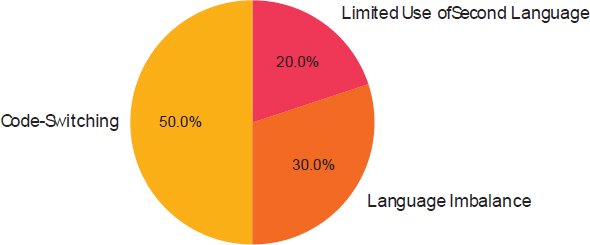
Fig. (3). Language proficiency challenges reported by therapists.
4. Discussion
Therapists observe multi-ethnic work environments in the UK. This research demonstrates that bilingual therapy in the UK delivers cognitive strengths to patients alongside major hurdles therapists handle when treating bilingual clients. This paper analyses the collected research data, followed by comparisons with published studies, before recommending ways to improve bilingual speech therapy practices.
Throughout the research, therapists repeatedly discussed that bilingual therapy leads to improved cognitive flexibility, autistic awareness, and enhanced problem-solving abilities. Current research documentation supports the cognitive benefits that bilingual individuals acquire during therapy. Data shows bilingual people in the UK achieve better cognitive flexibility through their ability to move between different tasks, where they excel in problem-solving and handling multiple tasks (Freeman & Schroeder, 2022; Sharpe & Perovic, 2024). Bilingual experiences enhance metalinguistic awareness because bilingual people understand better how language operates (Narayanan & Ramsdell, 2022). For instance, Quebec stands foremost among Canadian provinces that require bilingual speech therapy services to assist English and French communities. Bilingual therapy programs have been shown through research to advance cognitive flexibility coupled with language development in children whose first language is different (Mulgrew et al., 2022; Van Den Noort et al., 2019). Even though the participants spoke only one language, the therapists noticed that bilingual children demonstrated improved problem-solving abilities and enhanced cognitive control measures. According to (Bialystok & Craik, 2022), cognitive theories suggest that managing two languages develops improved cognitive functions because it requires people to activate executive control and adaptability.
Bilingual children in the UK possess enhanced cognitive abilities that help language development before advancing to broader cognitive abilities relevant to educational and therapeutic approaches. Bilingual therapy produces meaningful cognitive advantages, but practitioners in the UK must create specific methods that develop and measure bilingual abilities proportionately. Therapists in the UK should maintain sensitivity toward the relationships between dual languages while remaining mindful of how language dominance affects therapeutic progress. To maximise cognitive advantages, specialists must develop methods that maintain equal development in both languages.
Studies found cultural sensitivity to be an essential factor that therapists named critical for developing successful therapeutic alliances with bilingual clients and their family members (Bloder et al., 2021; Hunt et al., 2022). Healthcare professionals must develop cultural competence because it strengthens communication and builds trust, enhancing therapy outcomes (Henderson et al., 2018). Therapists in the UK noted that knowing their clients’ cultural background and family principles is crucial for better therapeutic results. The therapists indicated that dedicating their effort to learning about family cultural values enabled better interaction with clients and their families, thus enhancing therapeutic collaboration. Research confirms that culturally adaptive therapeutic approaches should be fundamental elements of speech therapy as per existing scholarly works (Albin et al., 2022). Culturally competent therapists possess the necessary skills to support diverse clients efficiently because they better grasp their specific needs, which results in superior therapeutic success (Woodruff et al., 2025). Australia experiences rising bilingual speech therapy needs due to its diverse population, and these requests mostly occur within urban settings. Interventions that are culturally appropriate and use key materials in languages other than English have been proven to enhance the therapy of indigenous and immigrant persons (Larkman et al., 2023). This study indicates that therapists in the UK who develop cultural sensitivity gain improved therapy results and enhanced family relationships. Effectiveness in bilingual therapy depends heavily on cultural sensitivity, particularly within multicultural societies that experience substantial family-related influences on patients’ views regarding therapy and language acquisition. Effective bilingual therapy requires therapists who showcase cultural competency because they can successfully develop an environment that promotes trust and safety.
Language proficiency is therapists’ most significant barrier during bilingual therapy sessions with their clients. The results showed that therapists in the UK experience language development challenges whenever one language controls the other. The language proficiency problem constitutes a widespread difficulty that exists in all bilingual therapy practices across the globe. (Parveen & Santhanam, 2021) found that bilingual individuals demonstrate different language proficiency patterns in each language, which creates challenges in language assessment and development. Research participants indicated that the primacy of a dominant language obstructs correct second language learning. Code-switching represented a significant challenge in the UK because bilingual individuals often mix their languages. The natural process of bilingual language use through code-switching creates problems during therapeutic assessments that measure individual language proficiency. Difficulty in promoting equal language development exists, particularly when a language receives minimal therapeutic use, which proves to be a substantial obstacle. Professional techniques and assessment instruments must be adapted to handle disparities in bilingual patients’ command of their languages. Treatment protocols should be tailored to therapists in the UK to evenly focus on both languages and precisely track progress in every language. Leaders within the therapeutic sessions must often conduct bilingual evaluation methods while modifying their activities to promote dual language usage.
According to this study, the lack of training materials and sufficient resources for bilingual speech therapy in the UK has emerged as an essential problem. Several UK therapists faced difficulties searching for suitable bilingual clinical resources, including therapy instruments, language materials, and assessment tools. Therapists must depend on restricted generic materials for their work since limited access complicates their ability to plan treatment sessions and deliver specialised therapy for bilingual patients. Therapists noted the absence of adequate training in bilingual speech therapy practice. Current speech therapy programs mainly address monolingual therapy but require more training in bilingual language development and therapy techniques. Many therapists in the UK find themselves unqualified because of the lack of bilingual-specific education, which results in a reduced ability to deliver competent therapy services to bilingual clients. Multiple research studies have documented how speech therapists who treat bilingual clients fail to receive enough training opportunities (Albin et al., 2022; Larkman et al., 2023). A critical challenge for delivering excellent bilingual therapy is insufficient training material and assets. Providing effective bilingual therapy to clients requires better training programs and assessments with bilingual therapy resources.
Conclusion
The research confirms how bilingual speech therapy should be integrated into UK healthcare practices to cater to its rising multilingual patient population. Therapists in the UK need to understand the growing need for bilingual therapy since it helps bilingual patients develop better cognitive flexibility and enhanced metalinguistic awareness. Expert bilingual therapy depends on clinicians’ technical proficiency but also requires their competence with cultural and linguistic challenges. Speech therapists in the UK need complete training in language expertise and cultural proficiency to implement bilingual therapy professionally. The training of therapists must include essential skills for working with bilingual clients, including methods to handle their language combination problems and code-mixing difficulties. The therapeutic process becomes too difficult to overcome when these factors remain unaddressed. Additional resources for bilingual therapy need development, assessment tools in bilingual formats, and culturally appropriate therapeutic materials. Specialised programs designed to enhance therapists’ skills in bilingual therapy need financial and policy backing to develop such programs.
Limitations
Despite its worth, this research is constrained by the limited number of participants in the study. The research base must expand to capture therapists with different characteristics serving diverse areas and healthcare facilities. Research on bilingual language and cognitive change needs to extend across multiple time points to determine the extended effects of such interventions. Research initiatives in this field support the advancement of bilingual therapy approaches, which will help provide fair care to the increasingly multicultural UK population.
ABBREVIATION
SLTs | = | Speech-Language Therapists |
Author’s contribution
The author has contributed to conceptualisation, idea generation, problem statement, methodology, results analysis, results interpretation.
Ethical Approval & Informed Consent
This study has been reviewed and approved by the Iqra University Ethical Review Board under approval number 2026/05/01. The research adheres to the ethical guidelines set forth by the board, ensuring that all procedures comply with the standards of confidentiality, integrity, and participant rights. Informed consent was obtained from all participants involved in the study, ensuring they were fully aware of the study’s purpose, procedures, potential risks, and their right to withdraw at any time without penalty. All participants voluntarily agreed to partake in the research, providing written consent prior to any data collection.
Availability of Data AND MATERIALS
The data will be made available at a reasonable request by contacting the corresponding author [R.F.A.].
Funding
None.
Conflict of Interest
The author declares that there is no conflict of interest regarding the publication of this article.
Acknowledgements
Declared none.
Appendix 1: Interview Questions
How do you perceive the cognitive benefits of bilingual speech therapy for your clients?
Can you describe any challenges you face balancing language proficiency during therapy sessions with bilingual children?
How important do you think cultural sensitivity is in delivering effective bilingual therapy? Can you provide examples?
How do you address issues of code-switching during therapy sessions?
What kind of resources do you find lacking when delivering bilingual therapy, and how do these gaps affect your practice?
Can you explain how cultural understanding has improved your therapeutic relationships with bilingual clients and their families?
What challenges do you face with bilingual resources or a lack thereof, and how do you work around these limitations?
References
Albin, M., Micsinszki, S., & Phoenix, Z. (2022). Cultural adaptation of parent-implemented early communication interventions: A scoping review. American Journal of Speech-Language Pathology, 31(5), 2229–2247. https://doi.org/10.1044/2022_AJSLP-21-0028.
Antoniou, M. (2019). The advantages of bilingualism debate. Annual Review of Linguistics, 5(1), 395–415. https://doi.org/10.1146/annurev-linguistics-011718-011820.
Bialystok, E., & Craik, F. I. M. (2022). How does bilingualism modify cognitive function? Attention to the mechanism. Psychonomic Bulletin & Review, 29(4), 1246–1269. https://doi.org/10.3758/s13423-022-02057-5.
Bloder, T., Eikerling, M., Rinker, T., & Lorusso, M. L. (2021). Speech and language therapy service for multilingual children: attitudes and approaches across four european countries. Sustainability, 13(21), 12143. https://doi.org/10.3390/su132112143.
Braun, V., & Clarke, V. (2006). Using thematic analysis in psychology. Qualitative Research in Psychology, 3(2), 77–101. https://doi.org/10.1191/1478088706qp063oa.
Crowe, K., Cuervo, S., Guiberson, M., & Washington, K. (2021). A systematic review of interventions for multilingual preschoolers with speech and language difficulties. Journal of Speech, Language, and Hearing Research, 64(11), 4413–4438. https://doi.org/10.1044/2021_JSLHR-21-00073.
Cruice, M., Aujla, S., Bannister, J., Botting, N., Boyle, M., Charles, N., Dhaliwal, V., Grobler, S., Hersh, D., Marshall, J., Morris, S., Pritchard, M., Scarth, L., Talbot, R., & Dipper, L. (2022). Creating a novel approach to discourse treatment through coproduction with people with aphasia and speech and language therapists. Aphasiology, 36(10), 1159–1181. https://doi.org/10.1080/02687038.2021.1942775.
Esposito, A. G. (2020). Executive functions in two-way dual-language education: A mechanism for academic performance. Bilingual Research Journal, 43(4), 417–432. https://doi.org/10.1080/15235882.2021.1874570.
Eikerling, M., Andreoletti, M., Secco, M., Luculli, B., Cha, G., Castro, S., Gazzola, S., Sarti, D., Garzotto, F., & Guasti, M. T. (2023). Remote screening for developmental language disorder in bilingual children: preliminary validation in Spanish–Italian speaking preschool children. Applied Sciences, 13(3), 1442. https://doi.org/10.3390/app13031442.
Fox, R., Corretjer, O., & Webb, K. (2019). Benefits of foreign language learning and bilingualism: An analysis of published empirical research 2012–2019. Foreign Language Annals, 52(4), 699–726. https://doi.org/10.1111/flan.12424.
Freeman, M. R., & Schroeder, S. R. (2022). Assessing language skills in bilingual children: current trends in research and practice. Journal of Child Science, 12(01), e33–e46. https://doi.org/10.1055/s-0042-1743575.
Fumero, K., & Tibi, S. (2020). The importance of morphological awareness in bilingual language and literacy skills: Clinical implications for speech-language pathologists. Language, Speech, and Hearing Services in Schools, 51(3), 572–588. https://doi.org/10.1044/2020_LSHSS-20-00027.
Garrido, D., López, B., & Carballo, G. (2024). Bilingualism and language in children with autistic spectrum disorder: A systematic review. Neurología (English Edition), 39(1), 84–96. https://doi.org/10.1016/j.nrleng.2023.12.007.
Gréaux, M., Gibson, J. L., & Katsos, N. (2024). `It is not just linguistically; there is much more going on’: The experiences and practices of bilingual paediatric speech and language therapists in the UK. International Journal of Language & Communication Disorders, 59(5), 1715–1733. https://doi.org/10.1111/1460-6984.13027.
Grote, K., Russell, E., Bates, O., & Gonzalez, R. (2021). Bilingual cognition and growth mindset: A review of cognitive flexibility and its implications for dual language education. Current Issues in Education, 22(2), 1233–1987. http://cie.asu.edu/ojs/index.php/cieatasu/article/view/1958.
Harvey, H., Allaway, H., & Jones, S. (2021). The effectiveness of therapies for dual language children with developmental language disorder: A systematic review of interventional studies. International Journal of Bilingual Education and Bilingualism, 24(7), 1043–1064. https://doi.org/10.1080/13670050.2018.1536112.
Hay, I., Tsourtos, G., & Bickford, J. (2021). A qualitative inquiry of professionals’ perceptions of bilingualism for children with language delay. International Journal of Speech-Language Pathology, 23(5), 497–507. https://doi.org/10.1080/17549507.2020.1869306.
Hayes, S. C., Ciarrochi, J., Hofmann, S., G., Chin, F., & Sahdra, B. (2022). Evolving an idionomic approach to processes of change: Towards a unified personalised science of human improvement. Behaviour Research and Therapy, 156(4), 104155. https://doi.org/10.1016/j.brat.2022.104155.
Henderson, S., Horne, M., Hills, R., & Kendall, E. (2018). Cultural competence in healthcare in the community: A concept analysis. Health & Social Care in the Community, 26(4), 590–603. https://doi.org/10.1111/hsc.12556.
Howard, K. B., Katsos, N., & Gibson, J. L. (2021). Practitioners’ perspectives and experiences supporting bilingual pupils on the autism spectrum in two linguistically different educational settings. British Educational Research Journal, 47(2), 427–449. https://doi.org/10.1002/berj.3662.
Hunt, E., Nang, C., Meldrum, S., & Armstrong, E. (2022). Can dynamic assessment identify language disorder in multilingual children? clinical applications from a systematic review. Language, Speech, and Hearing Services in Schools, 53(2), 598–625. https://doi.org/10.1044/2021_LSHSS-21-00094.
Kim, D., & Runco, M. A. (2022). Role of cognitive flexibility in bilingualism and creativity. Journal of Creativity, 32(3), 100032. https://doi.org/10.1016/j.yjoc.2022.100032.
Larkman, C. S., Mellahn, K., Han, W., & Rose, M. L. (2023). Aphasia rehabilitation when speech pathologists and clients do not share the same language: A scoping review. Aphasiology, 37(4), 635–657. https://doi.org/10.1080/02687038.2022.2035672.
Libesman, S., Mannion, D. J., & Whitford, T. J. (2020). Seeing the intensity of a sound-producing event modulates the amplitude of the initial auditory evoked response. Journal of Cognitive Neuroscience, 32(3), 426–434. https://doi.org/10.1162/jocn_a_01486.
McGovern, R. (2023). “This Clock Is Oop” Development of translanguaging strategies and language attitude in a deaf bimodal bilingual student. Languages, 8(1), 34. https://doi.org/10.3390/languages8010034.
Mulgrew, L., Duffy, O., & Kennedy, L. (2022). Assessment of minority language skills in English–Irish‐speaking bilingual children: A survey of SLT perspectives and current practices. International Journal of Language & Communication Disorders, 57(1), 63–77. https://doi.org/10.1111/1460-6984.12674.
Müller, L.-M., Howard, K., Wilson, E., Gibson, J., & Katsos, N. (2020). Bilingualism in the family and child well-being: A scoping review. International Journal of Bilingualism, 24(5–6), 1049–1070. https://doi.org/10.1177/1367006920920939.
Narayanan, T. L., & Ramsdell, H. L. (2022). Self-reported confidence and knowledge-based differences between multilingual and monolingual speech-language pathologists when serving culturally and linguistically diverse populations. Perspectives of the ASHA Special Interest Groups, 7(1), 209–228. https://doi.org/10.1044/2021_PERSP-21-00169.
Nelson, M., & Wilson, L. (2021). Implicit bias and multilingual assessment in school-based speech-language pathologists. Perspectives of the ASHA Special Interest Groups, 6(6), 1690–1704. https://doi.org/10.1044/2021_PERSP-21-00113.
Nuri, A. (2024). Exploring bilingualism: Cognitive benefits and cultural challenges. Acta Globalis Humanitatis et Linguarum, 1(1), 71–81. https://doi.org/10.69760/aghel.024053.
Office for National Statistics. (2021). Population of the UK by country of birth and nationality. Available from: https://www.ons.gov.uk/peoplepopulationandcommunity/populationandmigration/internationalmigration/articles/populationoftheukbycountryofbirthandnationality/2021.
Oxley, E., Cattani, A., Chondrogianni, V., Floccia, C., White, L., & De Cat, C. (2019). Assessing EAL children’s oral language: A survey of professional practices in the UK. Open Science Framework. 1-43. https://doi.org/10.31219/osf.io/2vjwe.
Parveen, S., & Santhanam, S. P. (2021). Speech-language pathologists perceived competence in working with culturally and linguistically diverse clients in the United States. Communication Disorders Quarterly, 42(3), 166–176. https://doi.org/10.1177/1525740120915205.
Peng, Y., Genç, E., Nicholson, B., & Markham, M. S. (2022). Not professional enough to be a therapist: International therapists’ experience of language discrimination. Current Psychology, 41(5), 3225–3235. https://doi.org/10.1007/s12144-020-00848-4.
Rezaeerezvan, S., Kareshki, H., & Pakdaman, M. (2022). The Effect of cognitive–behavioural play therapy on improvements in expressive linguistic disorders of bilingual children. Frontiers in Psychology, 12, 626422. https://doi.org/10.3389/fpsyg.2021.626422.
Sinclair, R. L., Finke, E. H., & Wu, L. (2025). Speech-language pathologists’ experiences working with culturally and linguistically diverse families: A scoping review. American Journal of Speech-Language Pathology, 34(2), 1-23. https://doi.org/10.1044/2024_AJSLP-24-00185.
Sepioł, A. (2025). Bilingualism, cognitive flexibility, and educational outcomes in young learners: exploring the benefits of early language acquisition. Journal of Language and Culture in Education, 2(special issue), 62-75. https://doi.org/10.5281/e1zjht25.
Sharpe, E., & Perovic, A. (2024). A survey of speech and language therapists’ opinions of bilingualism and their advice to bilingual families of children with speech, language and communication needs – a comparative study between the UK and Singapore. Clinical Linguistics & Phonetics, 38(9), 902–934. https://doi.org/10.1080/02699206.2023.2268260.
Stanford, E., Eikerling, M., Hadjadj, O., & Delage, H. (2024). Supporting multilingual children with language impairment in a multilingual environment: Experience and perspectives from speech and language therapists in Switzerland. International Journal of Multilingualism, 1–20. https://doi.org/10.1080/14790718.2024.2325999.
Van Den Noort, M., Struys, E., Bosch, P., Jaswetz, L., Perriard, B., Yeo, S., Barisch, P., Vermeire, K., Lee, S.-H., & Lim, S. (2019). Does the bilingual advantage in cognitive control exist, and what are its modulating factors? A systematic review. Behavioral Sciences, 9(3), 27. https://doi.org/10.3390/bs9030027.
Wolford, L. L., Wolford, G. W., Smith, L., Clement, A., & De Diego-Lázaro, B. (2023). The impact of treating bilingual clients on speech-language pathology students’ cultural responsiveness. American Journal of Speech-Language Pathology, 32(6), 2960–2981. https://doi.org/10.1044/2023_AJSLP-23-00060.
Woodruff, M. C., Weiss, R. A., & Tamura, K. (2025). Multilingualism and psychological assessment: Understanding the impact of language and promoting equity. Professional Psychology: Research and Practice, 56(2), 126–136. https://doi.org/10.1037/pro0000611.
Licensed
© 2026 Copyright by the Authors.
Licensed as an open access article using a CC BY 4.0 license.
Article Contents Author Mirza Amin ul Haq1 Ngan Thi Luong1 Arsalan Mujahid Ghouri1 1Faculty of Engineering, Science, Technology & Management,
Article Contents Author Usama Haider1, * 1Department of Physics, Forman Christian College University, Lahore, Pakistan Article History: Received: 22 September,
Article Contents Author Yazeed Alsuhaibany1, * 1College of Business-Al Khobar, Al Yamamah University, Saudi Arabia Article History: Received: 03 September,
Article Contents Author Gilbert Talaue1, * 1Jubail Industrial College, Al Jubail, Saudi Arabia Article History: Received: 11 November, 2025 Accepted:
Article Contents Author Burhannetin Uysal1, * Maria Malik2 1College of Business-Al Khobar, Al Yamamah University, Saudi Arabia Article History: Received:
Article Contents Author Sercan Alabay1, * 1College of Business-Al Khobar, Al Yamamah University, Saudi Arabia Article History: Received: 11 January,