



Aims and Scope
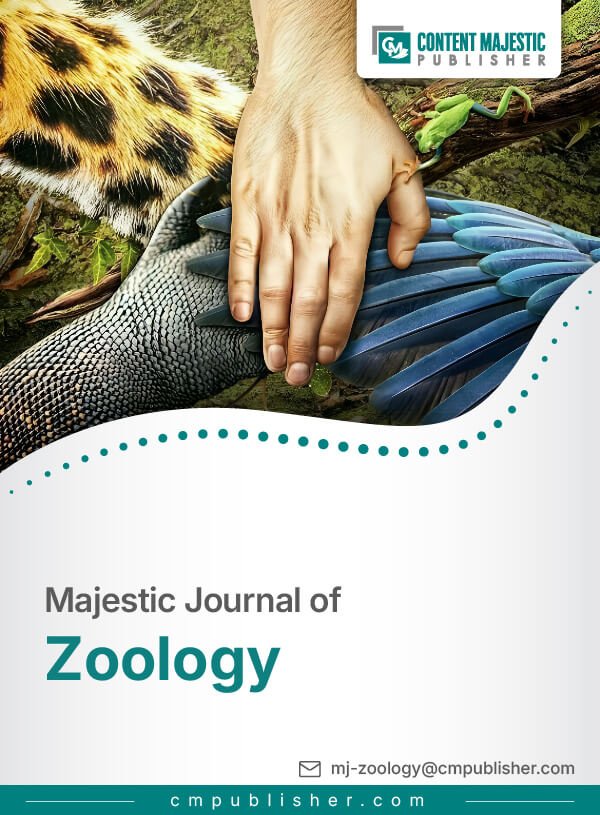
The Majestic Journal of Zoology (MJZ) invites publishers to submit high quality research articles on all fields pertaining to advancements in zoological sciences. The journal covers cellular and molecular zoology, developmental and evolutionary biology, animal taxonomy and biodiversity, including wildlife conservation.
Aims
- To promote deep understanding of animal behaviour, ecological diversity and environmental interactions.
- To explore animal diversity through systematic and taxonomic studies.
- To analyse both applied and fundamental research, including parasitology, entomology, aquaculture and host-microbe interactions.
- To emphasize on the interconnected relationship between animals, humans and the ecosystem.
- To address the challenges of public health concerns and zoonotic disease management.
- To enhance knowledge in zoology with emphasis on molecular and cellular, evolutionary, ecological and behavioural perspectives.
Scope
MJZ publishes original articles, review articles, case report studies and short communications. Scientists, academic scholars and students are appreciated to present their work regarding developments in animal biology and share it globally.
MJZ invites articles (but not limited to) in the field of zoology under the scope:
- Molecular and cell biology
- Animal genetics
- Animal biochemistry
- Genomics and proteomics of animals
- Developmental biology
- Evolutionary biology
- Phylogenetic analysis
- Animal anatomy and physiology
- Animal taxonomy and systematics
- Biodiversity
- Ecology and Ecosystem dynamics
- Environmental zoology
- Conservation strategies
- Aquaculture and marine biology
- Entomology
- Parasitology
- Animal husbandry
- Pest management
- Pathobiology and Pathology
- Zoonotic diseases and public health
- Wildlife biology
- Animal behavior
- Host-microbe interactions
Target Audience
MJZ is intended for a diverse and global audience, including:
- Evolutionary biologists.
- Wildlife researchers.
- Molecular biologists.
- Academic scholars and faculty members and students in zoological science related disciplines.
- Veterinary professionals.
- Public health sector.
- Regulatory authorities.
- Field researchers in aquaculture and marine biology.
- Field specialists working with animal populations.